پایش، زیرساخت پرداخت را با واقعیت متغیر شبکه هماهنگ نگه میدارد
یک سامانه پرداخت بلاکچینی هیچوقت تنها یک پاسخ ثابت از شبکه دریافت نمیکند. دادهها در قالب توالی مشاهدهها میرسند: تراکنش ابتدا ممکن است در صف انتظار دیده شود، سپس داخل بلوک قرار بگیرد، سطح اطمینان بیشتری پیدا کند یا در اثر سازماندهی مجدد زنجیره (Reorg) موقعیت قبلیاش را از دست بدهد. حتی یک ارائهدهنده RPC میتواند داده کهنه بدهد یا رویدادی را ثبت نکند.
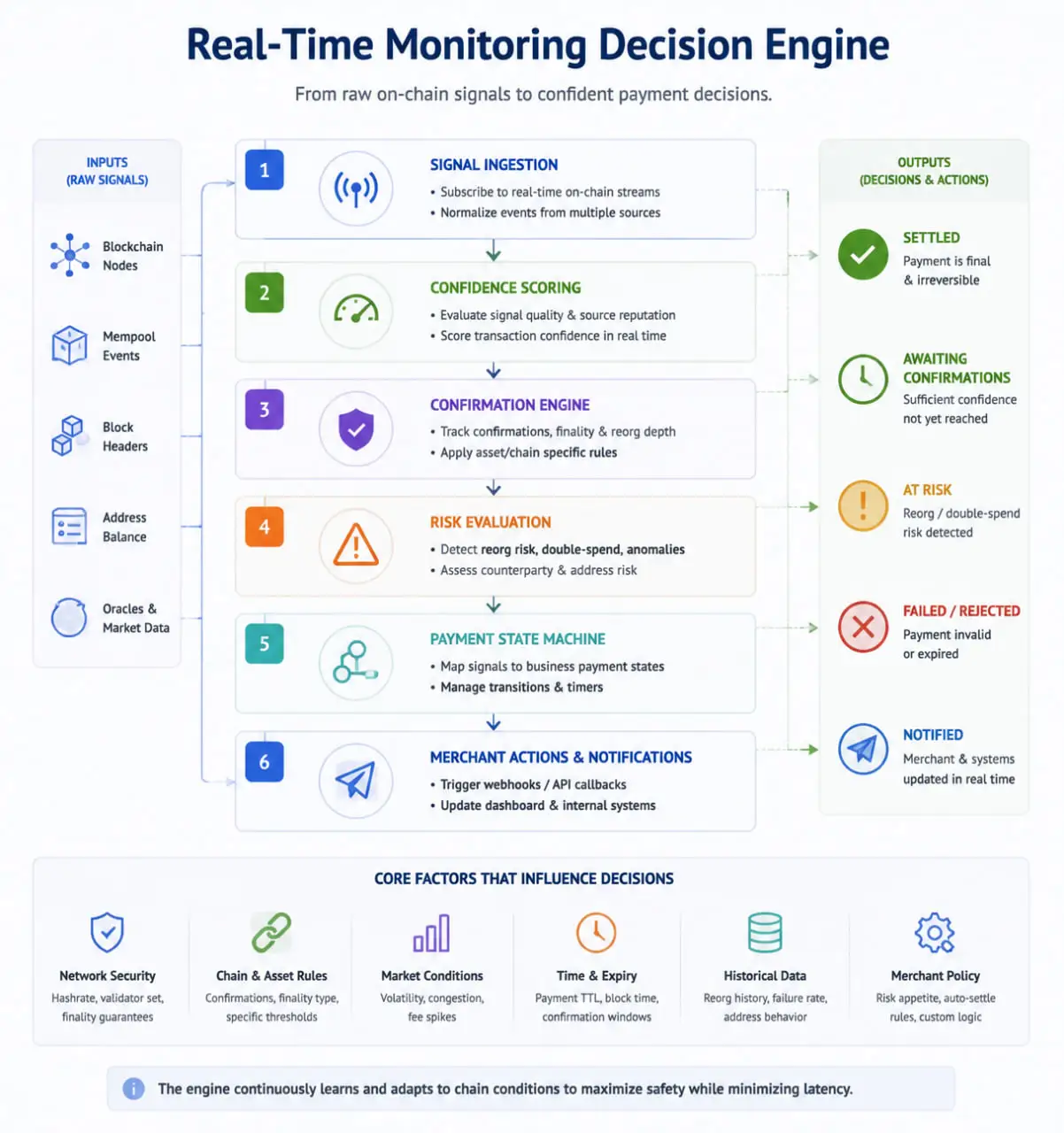
پایش لحظهای پرداخت بلاکچینی این تغییرات را دنبال میکند، دید منابع را با هم مقایسه میکند، شکافهای داده را مییابد، زنجیره معتبر را تشخیص میدهد و شواهد ساختیافته را به بخشهای دیگر سامانه میرساند. این شواهد هنوز به معنای پذیرش تجاری پرداخت نیستند.
پایش باید بتواند توضیح دهد شبکه چه چیزی گزارش کرده، مشاهده چقدر تازه است، منابع مستقل تا چه اندازه توافق دارند، موقعیت تراکنش تغییر کرده یا نه و کدام منبع یا شبکه دچار اختلال است.
اصل مرکزی: سامانه پایش واقعیت بلاکچین را خلق نمیکند؛ تصویری بهروز، قابل توضیح و قابل بازیابی از شواهد موجود در شبکه نگه میدارد.
لحظهای بودن یعنی بهروزرسانی و اصلاح مداوم، نه قطعیت آنی
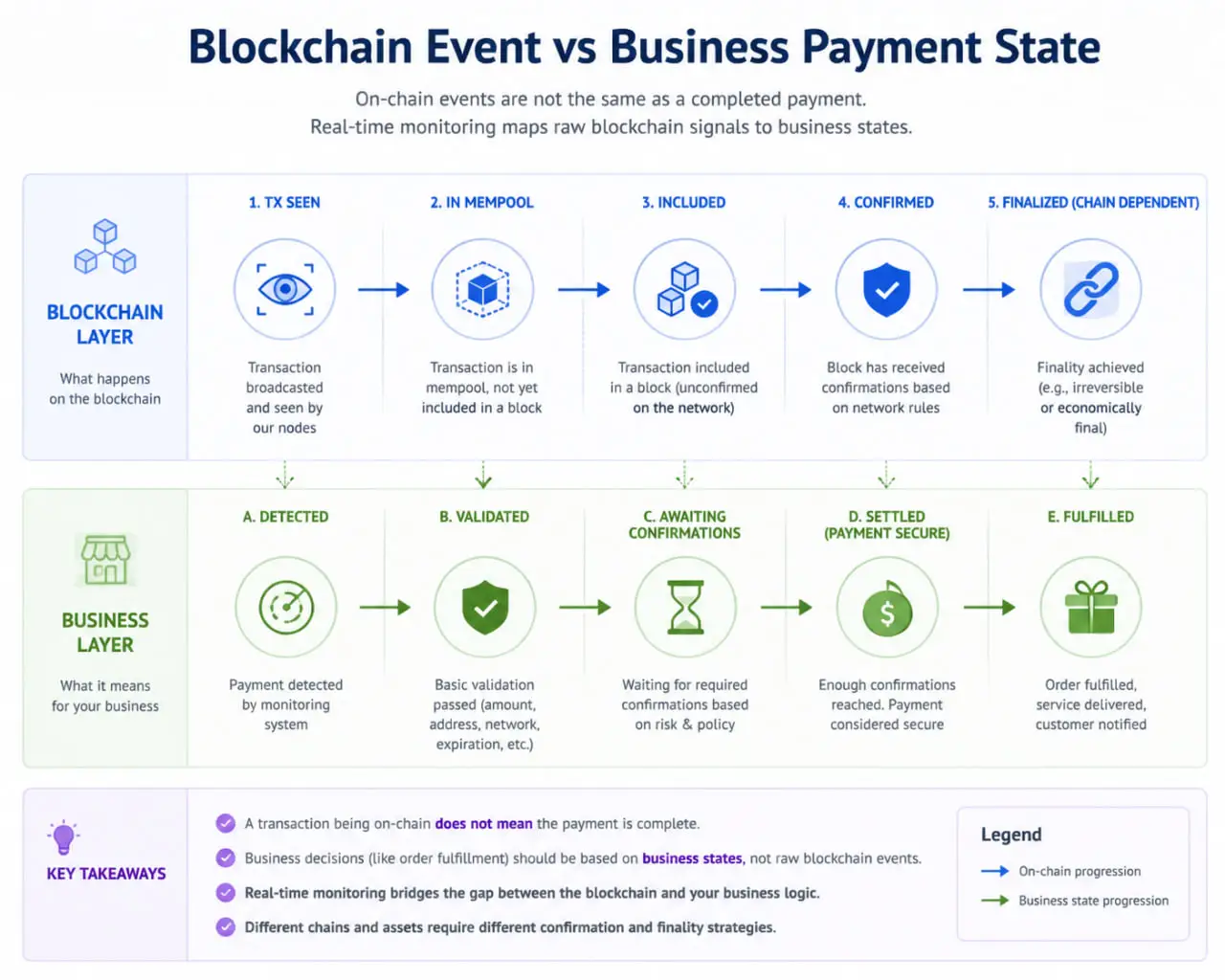
در زیرساخت پرداخت، «لحظهای» به معنای «فوری و قطعی» نیست. تعریف مفیدتر، آگاهی پیوسته با تأخیر کنترلشده است: تغییر مهم باید سریع تشخیص داده شود، توالی آن حفظ شود و هنگامی که شواهد قویتری رسید، برداشت قبلی تصحیح شود.
یک اعلان از ممپول ممکن است بسیار سریع برسد، اما اعتبار آن با قرارگرفتن تراکنش در بلوک یا نهاییشدن آن یکسان نیست. رابط پرداخت میتواند عبارت «تراکنش شناسایی شد» را فوراً نمایش دهد، بیآنکه تحویل سفارش را مجاز بداند.
- تأخیر شناسایی: رویداد چقدر سریع مشاهده شده است؟ سرعت بالاتر لزوماً اعتبار شبکه را افزایش نمیدهد.
- تازگی شواهد: اطلاعات دریافتشده تا چه اندازه با وضعیت فعلی زنجیره همخوان است؟ پاسخ صحیح اما قدیمی ممکن است برای تصمیم پرداخت نامناسب باشد.
- قابلیت اصلاح: آیا میتوان در صورت Reorg، حذف تراکنش، بازیابی ارائهدهنده یا دریافت اطلاعات دیرهنگام، مشاهده قبلی را با رویداد اصلاحی بهروزرسانی کرد؟
- ردیابی: آیا منبع، زمان، شناسه بلوک و دلیل تغییر وضعیت ثبت شده است؟
این تفکیک هم تجربه مشتری را بهتر میکند و هم جلوی تبدیل یک سیگنال ضعیف شبکه به مجوز اشتباه برای تحویل کالا یا اعتباردهی را میگیرد.
پایش عملیاتی باید جریان رویداد، استعلام RPC و بازیابی تاریخی را ترکیب کند
هیچ روش دریافت دادهای بهتنهایی برای یک سامانه پرداخت قابل اعتماد کافی نیست. اشتراک رویداد یا Push سریع است، اما قطع اتصال میتواند باعث از دست رفتن رویداد شود. Polling کندتر است، اما وضعیت فعلی را راستیآزمایی میکند. بررسی دادههای تاریخی نیز شکاف ایجادشده در زمان قطعی را پر میکند.
برای نمونه، Bitcoin Core اعلانهای تراکنش و بلوک را از طریق ZeroMQ ارائه میکند و RPC امکان استعلام ممپول و زنجیره را فراهم میسازد. در اتریوم، اشتراکهای JSON-RPC در Geth میتوانند سرآیند بلوک جدید یا رویداد قرارداد را سریع گزارش کنند.
- جریان Push: دریافت سریع بلوک، تراکنش، لاگ یا اسلات؛ همراه با تشخیص شکاف و اتصال مجدد.
- راستیآزمایی RPC: بررسی هش بلوک، رسید تراکنش، موقعیت زنجیره و سلامت منبع پیش از تصمیم حساس.
- بازیابی تاریخی (Backfill): ادامه پردازش از مکاننمای پایدار بلوک، اسلات یا شناسه رویداد پس از وقفه.
- منبع مستقل دوم: مقایسه با نود یا ارائهدهنده واقعاً مستقل، نه چند اتصال به یک زیرساخت مشترک.
قاعده معماری: جریان رویداد برای سرعت، استعلام مستقیم برای اعتبارسنجی و داده تاریخی برای کاملبودن پوشش لازم است.
منابع و پیوندهای این بخش: github.com · geth.ethereum.org

نودها و ارائهدهندگان مختلف میتوانند در یک لحظه گزارش متفاوتی بدهند
ممپول هر نود محلی است و به همتایان، سیاست بازپخش، منابع و ارتباط آن وابسته است. سرویسهای RPC نیز در زمان ایندکسکردن، حافظه نهان، روشهای پشتیبانیشده و سطح پیشفرض قطعیت تفاوت دارند. بنابراین دو پاسخ ممکن است هر دو معتبر باشند، اما از دو وضعیت زمانی یا دید متفاوت خبر دهند.
راهحل لزوماً رأیگیری ساده نیست. سه Endpoint که همگی از یک ارائهدهنده داده میگیرند، سه منبع مستقل نیستند. باید برای هر منبع تازگی، استقلال عملیاتی، قابلیت فنی، موقعیت زنجیره و سابقه اعتبار را سنجید.
- تازگی: عقبماندگی ارتفاع بلوک یا اسلات، آخرین زمان دریافت و وضعیت همگامسازی.
- استقلال: تنوع اپراتور، منطقه، نرمافزار و مسیر زیرساختی برای کاهش خطاهای همبسته.
- توافق: تطبیق هش بلوک، جایگاه تراکنش و نشانگر قطعیت، نه صرفاً متن وضعیت در داشبورد.
- توانایی منبع: بررسی اینکه پاسخ جزئیات لازم، مانند لاگ توکن، را واقعاً پوشش میدهد.
وقتی اختلاف شدید است، کاهش سطح اطمینان، ثبت شواهد خام و توقف موقت اقدامات غیرقابل بازگشت از حدسزدن پاسخ درست ایمنتر است.

برای ردیابی تراکنش باید زنجیره اطراف آن را هم ردیابی کرد
ثبت تنها TXID و تعداد تأییدها کافی نیست. سیستم باید بلوک یا اسلات محل قرارگیری تراکنش، هش آن، سر زنجیره معتبر هنگام مشاهده، رابطه بلوکهای والد و قویترین نشانگر Finality را هم ذخیره کند. دو بلوک میتوانند ارتفاع یکسان اما هش متفاوت داشته باشند.
در یک Reorg ممکن است تراکنش از بلوک قبلی خارج شود، به بلوک دیگری منتقل شود یا به وضعیت انتظار بازگردد. بنابراین پایش باید بتواند تغییر شاخه معتبر را با بررسی هش و نسب بلوکها تشخیص دهد و هر دو نسخه شواهد را حفظ کند.
- اولین مشاهده: زمان و منبع مشاهده و نوع سیگنال ممپول، بلوک، لاگ یا ایندکس.
- شناسه جایگاه: بلوک، اسلات، شماره تراکنش یا رسید معتبر برای تشخیص جابهجایی.
- پیشرفت زنجیره: عمق تأیید، برچسبهای Safe/Finalized یا سطح Commitment بومی شبکه.
- تصحیح: انتشار رویداد اصلاحی در صورت ازدسترفتن جایگاه قبلی و ثبت علت آن.
برای مثال اتریوم از برچسبهای safe و finalized استفاده میکند و سولانا سطوح processed، confirmed و finalized دارد. تبدیل همه اینها به یک شمارنده عمومی تأیید، تفاوتهای مهم امنیتی را پنهان میکند.
منابع و پیوندهای این بخش: ethereum.org
معنای رویداد را استاندارد کنید، نه اینکه شواهد بومی زنجیره را حذف کنید
سیستم چندزنجیرهای برای مصرفکنندگان داخلی به زبان مشترک رویداد نیاز دارد. در غیر این صورت هر سرویس باید جزئیات تراکنش بیتکوین، لاگ EVM، دستور سولانا، رویداد TRON، Trace در TON و پاسخ اختصاصی هر ارائهدهنده را بفهمد.
اما استانداردسازی افراطی خطرناک است. نام مشترکی مانند «نهاییشده» نباید القا کند که تمام شبکهها تضمین امنیتی یکسانی دارند. رویداد باید وضعیت خام، شناسه بلوک، منبع داده و نسخه آداپتور را نیز نگه دارد.
- هویت رویداد: کلید پایدار شامل زنجیره، نوع، TXID، موقعیت و نسخه برای جلوگیری از پردازش تکراری.
- شواهد مشاهدهشده: هش بلوک، اسلات، رسید، لاگ، خروجی، مبلغ و قرارداد توکن در صورت نیاز.
- تفسیر: رویدادهای مشترک مانند transaction_detected، inclusion_changed، finality_updated یا source_degraded.
- منشأ: زمان، روش دریافت و مؤلفهای که داده را گزارش کرده است.
قاعده: قرارداد رویداد را یکسان کنید، اما فرضیات اعتماد شبکههای مختلف و امکان ردیابی شواهد اصلی را نگه دارید.
هر شبکه به مشاهدهگر بومی خود در پشت رابط مشترک نیاز دارد
آداپتور هر زنجیره باید مدل تراکنش، روش دریافت لحظهای، نشانههای قطعیت، استاندارد توکن، نقصهای ایندکس و حالتهای خرابی مخصوص آن را بشناسد. خروجی استاندارد آداپتور به معنای یکسانبودن رفتار زنجیرهها نیست.
- Bitcoin و زنجیرههای UTXO: تراکنش، ورودی و خروجی، ممپول، جایگزینی تراکنش و سر زنجیره؛ با اعلانهای ZMQ و استعلامهای Bitcoin Core.
- شبکههای EVM: بلوک جدید، Receipt، رویدادهای قرارداد، آدرس توکن و برچسبهای قطعیت؛ اشتراک سریع و تأیید نهایی از طریق RPC.
- Solana: امضا، حساب، لاگ، اسلات، بلوک و سطح Commitment؛ برای مقیاس بالا به ایندکسگذاری مناسب نیاز دارد.
- TRON: تراکنش و رویداد قرارداد از طریق سرویسهای Event Subscription و صف پیام.
- TON: تراکنش حساب، پیام، Trace، شارد و جریان داده ایندکسشده؛ رویدادهای ازدسترفته باید جداگانه بازیابی شوند.
مستندات رسمی Bitcoin Core RPC، Solana RPC، راهنمای ایندکس پرداخت سولانا، اشتراک رویداد TRON و Streaming API شبکه TON مبنای طراحی هر آداپتور هستند. هیچ آداپتوری نباید رسید مثبت یک ارائهدهنده را بدون بررسی مفهوم بومی آن به موفقیت پرداخت تبدیل کند.
منابع و پیوندهای این بخش: bitcoincore.org · solana.com · solana.com · developers.tron.network · docs.ton.org

خود سامانه پایش نیز باید قابل مشاهده و اندازهگیری باشد
دیدن بلاکچین کافی نیست؛ تیم عملیاتی باید بداند شنوندهها، صفها، ارائهدهندگان RPC، آداپتورها و پردازشگرهای بازیابی سالم هستند یا نه. خرابی خاموش ممکن است از قطعی آشکار خطرناکتر باشد، چون سیستم همچنان با داده کهنه تصمیم میگیرد.
چارچوبهایی مانند OpenTelemetry برای متریک، لاگ و Trace و راهنمای Prometheus برای سنجش نرخ خطا، تأخیر، تعداد درخواست و صفهای پردازشی مفیدند. سنجه باید به اثر تجاری هم متصل شود.
- تازگی زنجیره: عقبماندگی Height و Slot، تأخیر Finalized و زمان آخرین بلوک.
- کیفیت منبع: تأخیر RPC، خطا، نرخ اختلاف گزارشها و تعداد اتصال مجدد.
- سلامت خط لوله: تأخیر رویداد، عمق صف، زمان پردازش و آخرین مکاننمای موفق.
- یکپارچگی داده: نرخ داده تکراری، تعداد شکافها، اصلاحات و حجم Backfill.
- اثر پرداخت: تعداد پرداختهای منتظر شواهد، سن قدیمیترین مورد و تأخیر بهروزرسانی وضعیت پذیرنده.
یک هدف خدماتی قابل اندازهگیری میتواند حداکثر زمان بین رویداد معتبر زنجیره و تولید رویداد استاندارد باشد؛ هدف دیگر زمان بازیابی شکاف پس از قطع اشتراک است. اینها از نمودار ساده روشنبودن نود کاربردیتر هستند.
منابع و پیوندهای این بخش: opentelemetry.io
هر جریان لحظهای باید راهی برای بازیابی رویدادهای ازدسترفته داشته باشد
اتصال WebSocket قطع میشود، سرویس از نو راهاندازی میشود و ارائهدهنده ممکن است محدودیت درخواست اعمال کند. حتی اتصال مجدد موفق هم به معنی دریافت بلوکها و رویدادهای جامانده نیست. بازیابی شکاف باید بخشی عادی از طراحی باشد.
- مکاننمای پایدار: آخرین بلوک، اسلات، توالی یا Cursor کاملاً پردازششده را ذخیره کنید. تنها پس از ذخیره امن داده، مکاننما را جلو ببرید.
- پنجره همپوشان: پس از اتصال مجدد، بخشی از دادههای پیشین را دوباره بخوانید؛ حذف تکراریها باید قطعی و قابل اتکا باشد.
- مقایسه تاریخی: جریان دریافتی را با تاریخچه معتبر بلوک یا ایندکس بسنجید و اختلاف را به فرایند Backfill یا بررسی ارجاع دهید.
- حالت کاهشیافته: وقتی کیفیت شواهد به حداقل قابل قبول نمیرسد، اقدامات مالی غیرقابل بازگشت را متوقف و گردآوری داده را ادامه دهید.
دریافت حداقل یکبار (at-least-once) معمولاً از حذف بیصدای رویداد امنتر است؛ اما شناسه پایدار و مصرفکننده Idempotent میخواهد. لایه پایش اطلاعات لازم برای چنین پردازشی را فراهم میکند و کنترل اجرای یکتای عمل تجاری بر عهده سرویس پاییندستی است.
پایش فعالیت احتمالی را پیدا میکند؛ تطبیق تعیین میکند به کدام سفارش تعلق دارد
شنونده ممکن است انتقالی به نشانی شناختهشده، قرارداد توکن، Memo یا برچسب مقصد ببیند؛ این فقط یک «کاندیدای پرداخت» است. موتور تطبیق باید شبکه، دارایی، مقدار، نشانی، مرجع سفارش و مهلت فاکتور را کنترل کند.
تفکیک این دو مسئولیت هم دقت را افزایش میدهد و هم تست را آسان میکند. پایش تمام شواهد مرتبط را با منبع آن نگه میدارد؛ موتور تطبیق بر اساس زمینه تجاری نتیجهای صریح مانند تطبیق کامل، کمترپرداختشده، بیشترپرداختشده، دیرهنگام، مبهم یا نامرتبط تولید میکند.
مرز معماری: سیاست پرداخت را در شنونده زنجیره پنهان نکنید. مشاهدهگر واقعیت را گزارش میکند و سرویس تطبیق قواعد فاکتور را مستقل اعمال میکند.

ماشین حالت و وبهوک از شواهد پایش استفاده میکنند، اما وظایف متفاوتی دارند
لایه پایش نباید به کل پلتفرم پرداخت تبدیل شود. ماشین حالت مشخص میکند مشاهده جدید چگونه وضعیت تجاری را تغییر میدهد. توزیعکننده Webhook این تغییر وضعیت را به سامانه پذیرنده میرساند و سیستم تطبیق مالی بعداً سازگاری تراکنش، پرداخت و حسابداری را بررسی میکند.
قرارداد هر سرویس باید شفاف باشد: پایش پس از Reorg رویداد اصلاحی منتشر میکند، ماشین حالت از گذار نامعتبر جلوگیری میکند، Webhook تکرار و تأخیر را تحمل میکند و پذیرنده وقتی پیام بهموقع نمیرسد یا ترتیبش عوض میشود، وضعیت کنونی پرداخت را از API دریافت میکند.
این تفکیک باعث میشود خرابی یک منبع یا یک نوتیفیکیشن خام مستقیماً تحویل دوباره سفارش، اعتباردهی تکراری یا ثبت اشتباه حسابداری ایجاد نکند.


OxaPay پیشرفت پرداخت را از طریق وضعیت قابل استعلام و Callback امضاشده ارائه میکند
معماری داخلی کامل هر ارائهدهنده از مستندات عمومی قابل مشاهده نیست؛ آنچه پذیرنده میتواند ارزیابی کند قرارداد بیرونی سرویس است: شناسه پرداخت، وضعیتهای قابل دریافت، تحویل اعلان و امکان استعلام مجدد.
در OxaPay، Generate Invoice امکان تعریف callbackUrl و دریافت شناسه یکتای Track ID را فراهم میکند. جدول وضعیت پرداخت میان حالتهایی مانند new، waiting، paying، paid، underpaid، refunded و expired تمایز میگذارد. مستندات Webhook درباره پیام JSON، بررسی امضای HMAC و تلاش مجدد برای ارسال توضیح میدهد؛ Payment Information API نیز راه دریافت وضعیت فعلی است.
- شناسه پایدار: Track ID و Order ID پذیرنده را کنار هم ذخیره کنید.
- اعلان معتبر: پیش از تغییر وضعیت و تحویل کالا، اصالت Callback را بررسی کنید.
- بازیابی با استعلام: هنگام قطعی، تأخیر یا ابهام اعلان از Payment Information کمک بگیرید.
- سلامت سرویس: System Status API میتواند در بررسی رخدادهای عملیاتی مفید باشد.
برای پیادهسازی مستقیم، مستندات Merchant API مرجع عملیاتی است. قاعده کلی این است که اعلان سریع و استعلام معتبر مکمل یکدیگرند و پذیرنده همچنان باید سوابق پرداخت خود را مستقل و پایدار نگه دارد.
منابع و پیوندهای این بخش: docs.oxapay.com · docs.oxapay.com · docs.oxapay.com · docs.oxapay.com · docs.oxapay.com · docs.oxapay.com
لایه پایش تولیدی باید از این آزمونهای عملیاتی عبور کند
معماری خوب تنها با نمایش داشبورد سریع سنجیده نمیشود؛ باید در برابر اختلاف منابع، قطع اتصال و تغییر تاریخچه زنجیره نیز نتیجه درست و قابل توضیح بدهد.
- تنوع منابع: آیا شبکههای حساس از منابع مستقل با سنجه سلامت روشن مشاهده میشوند؟
- دریافت ترکیبی: آیا برای هر جریان Push امکان بررسی RPC و Backfill تاریخی وجود دارد؟
- زنجیره معتبر: آیا هش بلوک، نسب، موقعیت تراکنش و نشانگرهای Finality ثبت میشود؟
- قرارداد رویداد: آیا هر رویداد قابل حذف تکرار، اجرای دوباره، نسخهبندی و ردیابی است؟
- وفاداری بومی: آیا آداپتور وضعیت اصلی و فرضیات اعتماد زنجیره خود را حفظ میکند؟
- پایش خود سیستم: آیا داده کهنه، عقبافتادن صف، شکاف و اثر بر پرداختها آشکار میشود؟
- رفتار هنگام افت کیفیت: آیا با کاهش اطمینان، تصمیمهای خودکار حساس محدود میشوند؟
- تفکیک مسئولیت: آیا پایش، تطبیق سفارش، ماشین حالت، تحویل اعلان و تسویه و تطبیق مالی جدا هستند؟
نتیجه: پایش مطمئن سریعترین اعلان ممکن نیست؛ توان حفظ تصویری تازه، اصلاحشده و قابل انتساب از شواهد شبکه است، حتی وقتی منابع اختلاف دارند یا سرویسها از کار میافتند.
منابع فنی رسمی برای مطالعه بیشتر
برای طراحی واقعی بهتر است به منابع اصلی توسعهدهندگان و استانداردهای مشاهدهپذیری رجوع شود: مستندات اعلان ZeroMQ در Bitcoin Core، راهنمای Pub/Sub در Geth، روشهای WebSocket RPC سولانا، چارچوب Event Subscription ترون، راهنمای پردازش پرداخت TON و توصیههای Instrumentation در Prometheus.
این منابع روشن میکنند هر شبکه رویداد را چگونه ارائه میکند و چه اطلاعاتی برای اعتبارسنجی یا بازیابی از قطعی موجود است. مستندات عمومی نباید جای آزمایش روی نود، سرویس RPC و فرایند پرداخت واقعی را بگیرند.
منابع و پیوندهای این بخش: github.com · geth.ethereum.org · solana.com · developers.tron.network · docs.ton.org · prometheus.io