İzleme, ödeme altyapısını ağın değişen gerçekliğiyle uyumlu tutar
Bir blokzincir ödeme sistemi ağdan tek ve değişmez bir yanıt almaz. Bunun yerine bir gözlem dizisi işler. İşlem önce beklemede görünebilir, sonra bloğa girebilir, daha güçlü kesinleşme kanıtı kazanabilir veya zincir yeniden düzenlenince konumunu yitirebilir. RPC sağlayıcısı eski veri döndürebilir ya da bir olayı tamamen kaçırabilir.
Blokzincir ödemelerinde gerçek zamanlı izleme bu değişiklikleri takip eder, kaynakları karşılaştırır, eksik aralıkları bulur ve kanonik zincir hakkında güncel görüş sağlar. Diğer ödeme servislerine ortak biçimde kanıt sunar; tek başına siparişin teslim edilmesine karar vermez.
Sistem ağın ne bildirdiğini, bilginin ne kadar güncel olduğunu, bağımsız kaynakların anlaşıp anlaşmadığını, işlemin blok konumunun değişip değişmediğini ve kaynak sağlığının bozulup bozulmadığını açıklayabilmelidir.
Temel ilke: izleme blokzincir gerçeğini üretmez; var olan ağ kanıtının güncel, açıklanabilir ve kurtarılabilir bir görünümünü korur.
Gerçek zamanlılık anında kesinlik değil, sürekli güncelleme ve düzeltmedir
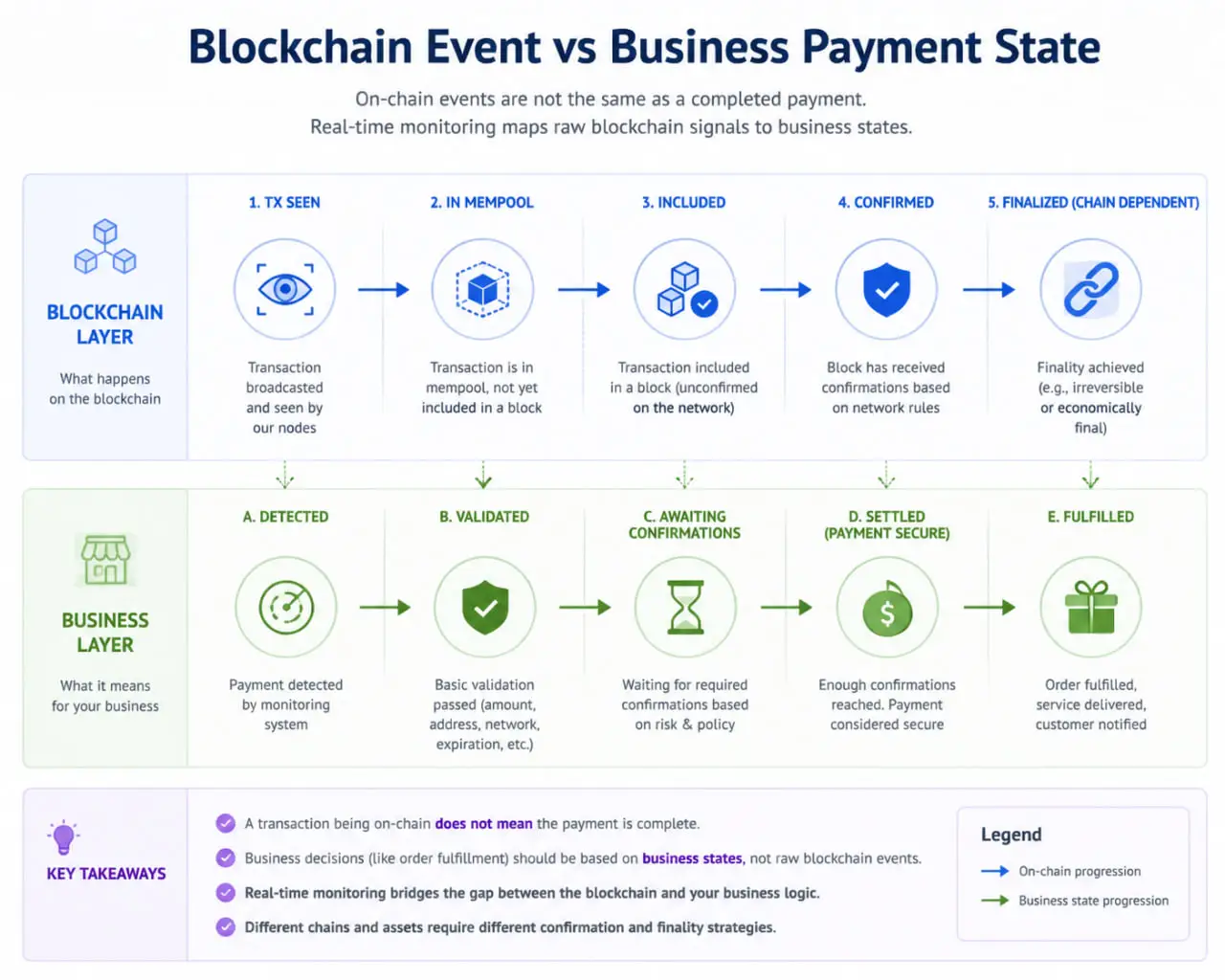
Ödeme altyapısında gerçek zamanlı olmak, işlemin anında geri döndürülemez olduğu anlamına gelmez. Değişikliklerin sınırlı gecikmeyle keşfedilmesi, sıralarının korunması ve daha güçlü kanıt geldikçe önceki yorumların düzeltilmesi anlamına gelir.
Mempool bildirimi milisaniyeler içinde ulaşabilir, ancak blok içine alınma veya protokol kesinleşmesiyle eşdeğer değildir. Ödeme arayüzü «işlem tespit edildi» derken geri alınamayan teslimatı bekletebilir.
- Tespit gecikmesi: olayın fark edilmesi ne kadar sürdü? Hız tek başına kanıtı güçlendirmez.
- Kanıtın güncelliği: yanıt güncel zinciri yansıtıyor mu, yoksa doğru olsa bile eskidi mi?
- Düzeltilebilirlik: yeniden düzenleme, kaybolan işlem, kesinti veya geç gelen veri sonrasında eski gözlem yenilenebiliyor mu?
- İzlenebilirlik: kaynak, zaman, blok kimliği ve değişiklik nedeni saklanıyor mu?
Böylece kullanıcı erken aşamadaki ilerlemeyi görürken satıcının risk ve teslimat kuralları korunur.
Üretim ortamında olay akışları, RPC sorguları ve tarihsel geri doldurma birlikte gerekir
Tek erişim yöntemi yeterli değildir. Push abonelikleri hızlıdır ama bağlantı kesildiğinde olay kaçırabilir. Düzenli RPC sorguları mevcut durumu doğrular. Tarihsel tarama ise kesinti sırasında oluşan boşlukları geri doldurur.
Bitcoin Core, işlem ve blok bildirimlerini ZeroMQ üzerinden yayınlayabilir; RPC ile zincir ve mempool sorgulanır. Ethereum'da Geth JSON-RPC abonelikleri yeni blok başlıkları ve sözleşme loglarını iletir.
- Push akışı: blok, işlem, log veya slot olaylarını hızlı almak; yeniden bağlanma ve eksik aralık tespiti gerekir.
- RPC doğrulaması: hassas bir karardan önce blok hash'i, receipt, konum ve kaynak sağlığını sorgulamak.
- Tarihsel backfill: kalıcı blok, slot ya da sıra imlecinden geriye dönük yeniden okumak.
- Bağımsız ikinci kaynak: aynı altyapıdan beslenen ek bağlantılar yerine gerçekten ayrı düğüm veya sağlayıcıyla karşılaştırmak.
Mimari kural: akışlar hız, doğrudan sorgular doğrulama, tarihsel veriler ise eksiksizlik sağlar.
Kaynaklar ve bağlantılar: github.com · geth.ethereum.org

Farklı düğüm ve sağlayıcılar aynı anı farklı bildirebilir
Mempool her düğüm için yereldir; eşler, aktarım politikası, kapasite ve ağ bağlantısı hangi işlemlerin görüldüğünü belirler. RPC sağlayıcıları indeks gecikmesi, önbellek, desteklenen yöntem ve varsayılan kesinleşme düzeyi bakımından da farklıdır. Bu yüzden iki geçerli yanıt geçici olarak uyuşmayabilir.
Çözüm her olay için basit çoğunluk oylaması değildir. Aynı sağlayıcının üç endpoint'i üç bağımsız görüş sayılmaz. Kaynakların bağımsızlığı, güncelliği, geçmiş güvenilirliği, zincirdeki konumu ve sağladıkları kanıt türü değerlendirilmelidir.
- Güncellik: blok yüksekliği veya slot geriliği, son güncelleme ve senkronizasyon.
- Bağımsızlık: farklı işletmeciler, bölgeler, istemciler ve altyapı yolları.
- Mutabakat: görünür durum etiketleri yerine blok hash'i, işlem yeri ve finality işaretlerini karşılaştırmak.
- Yeterlilik: kaynak gerekli token loglarını ve receipt ayrıntısını sağlayabiliyor mu?
Büyük görüş ayrılığında güveni azaltmak, ham kanıtı saklamak ve geri alınamaz işlemleri ertelemek rastgele bir kaynağı seçmekten güvenlidir.

İşlemi takip etmek onu çevreleyen zinciri de takip etmeyi gerektirir
Sadece işlem hash'i ve onay sayısı saklamak güvenli değildir. Dahil edildiği blok veya slot, blok hash'i, hesaplamanın dayandığı kanonik uç, ebeveyn bağlantıları ve en güçlü kesinleşme işareti de korunmalıdır. Aynı yükseklikte rakip iki blok bulunabilir.
Zincir yeniden düzenlemesi işlemi başka bloğa taşıyabilir, mempool'a geri gönderebilir veya kabul edilen geçmişten çıkarabilir. Sistem blok kimliklerini ve atalarını karşılaştırmalı; eski ve yeni kanıtı saklayan düzeltici olay yayınlamalıdır.
- İlk görülme: zaman, kaynak ve sinyalin mempool, blok, log veya indeksten gelmesi.
- Dahil edilme kimliği: blok, slot, işlem sırası veya receipt.
- Zincir ilerlemesi: derinlik, safe/finalized etiketi veya ağa özgü commitment düzeyi.
- Düzeltme: önceki kanonik konumun kaybedildiğini bildiren açık olay.
Ethereum safe ve finalized alanlarını, Solana processed, confirmed ve finalized düzeylerini kullanır. Hepsini tek evrensel onay sayacına indirgemek önemli farkları gizler.
Kaynaklar ve bağlantılar: ethereum.org
Olay anlamını standartlaştırın, ağa özgü kanıtı silmeyin
Çok zincirli sistemlerde ortak olay sözlüğü gerekir; aksi halde her servis Bitcoin UTXO, EVM logları, Solana komutları, TRON olayları, TON izleri ve sağlayıcıya özgü yanıtları ayrı ayrı çözmek zorunda kalır.
Aşırı normalizasyon da tehlikelidir. finalized adlı alanın her ağda aynı güvenlik güvencesini ifade ettiği varsayılamaz. Ortak olay, ham durumla birlikte kaynağı, blok konumunu ve adaptör sürümünü saklamalıdır.
- Olay kimliği: zincir, tür, işlem, kaynak konumu ve sürümden oluşan tekrarsız anahtar.
- Gözlenen kanıt: blok hash'i, slot, receipt, log, çıktı, miktar ve token sözleşmesi.
- Yorum: transaction_detected, inclusion_changed, finality_updated veya source_degraded gibi ortak olaylar.
- Kaynak izi: verinin nasıl, ne zaman ve hangi bileşen tarafından alındığı.
İlke: ortak arabirimi standartlaştırın, blokzincirlerin güven varsayımlarını aynıymış gibi göstermeyin.
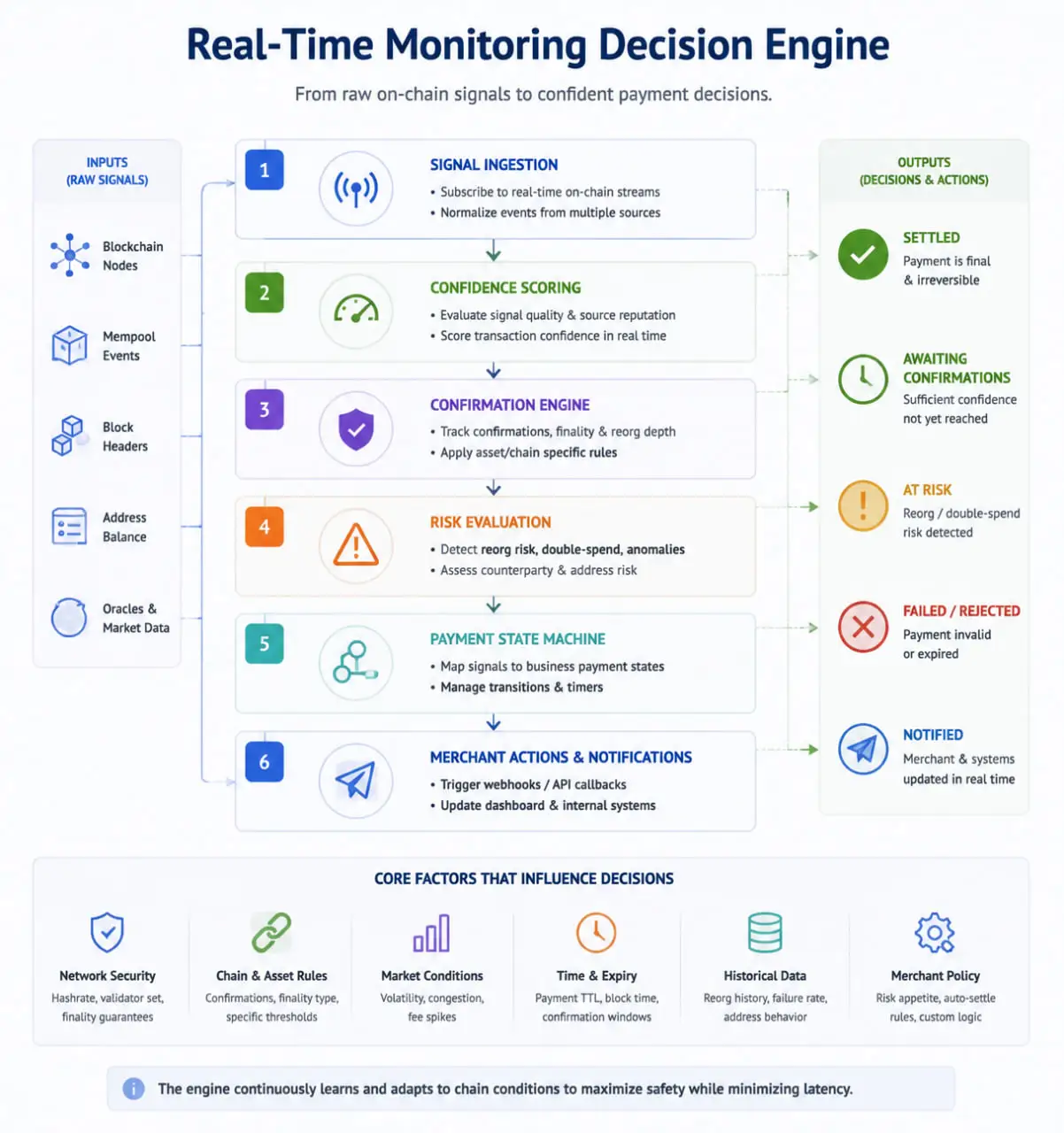
Ortak izleme arabiriminin arkasında her ağ için yerel adaptör gerekir
Zincir adaptörü işlem modelini, akış yöntemlerini, kesinleşme kanıtlarını, token temsilini, indeksleme boşluklarını ve ağın hata durumlarını anlamalıdır. Ürettiği ortak olay bu ayrıntıları kaybettirmemelidir.
- Bitcoin ve UTXO zincirleri: girişler, çıkışlar, mempool, değiştirme sinyalleri ve zincir ucu; Bitcoin Core ZMQ ile RPC sunar.
- EVM zincirleri: yeni blok başlıkları, receipts, loglar, token sözleşmeleri ve finality etiketleri; akış olayları RPC ile teyit edilir.
- Solana: imzalar, hesaplar, loglar, slotlar, bloklar ve commitment; büyük ölçekte uygun indeksleme gerekir.
- TRON: işlem ve sözleşme olayları Event Subscription ile mesaj kuyruğu altyapısından alınır.
- TON: hesap işlemleri, mesajlar, işlem izleri, shard ve indekslenmiş akışlar; önceki olayların geri doldurulması zorunludur.
Bitcoin Core RPC, Solana RPC ve ödeme indeksleme, TRON olay abonelikleri ve TON Streaming API belgeleri gerçek adaptör gereksinimlerinin belirlenmesine yardımcı olur.
Kaynaklar ve bağlantılar: bitcoincore.org · solana.com · solana.com · developers.tron.network · docs.ton.org

İzleme platformunun kendisi de gözlemlenebilir olmalıdır
Ağ takip edilirken dinleyiciler, kuyruklar, RPC sağlayıcıları, adaptörler veya backfill çalışanları sessizce bozulabilir. Özellikle sistem eski veriyi güncel kesinlik olarak göstermeyi sürdürüyorsa bu, açık bir kesintiden daha tehlikelidir.
OpenTelemetry; iz, metrik ve log kavramlarını sunar. Prometheus, istek sayısı, hata, gecikme, iş kuyruğu ve servis sağlığı ölçümlerini önerir. Teknik göstergeler üye işyeri etkisiyle ilişkilendirilmelidir.
- Zincir güncelliği: blok, slot ve kesinleşme gecikmesi ile son bloktan geçen süre.
- Kaynak kalitesi: RPC gecikmesi, hata oranı, uyuşmazlık ve yeniden bağlanma.
- Hat sağlığı: olay gecikmesi, kuyruk derinliği, işleme süresi ve son güvenli imleç.
- Veri bütünlüğü: yinelenen olaylar, veri boşlukları, düzeltmeler ve backfill hacmi.
- Ödeme etkisi: kanıt bekleyen ödemeler, en eski bekleme ve geciken durum güncellemeleri.
Bir hizmet seviyesi hedefi, zincir olayından standart olaya kadar maksimum gecikmeyi sınırlayabilir. Başka hedef, bağlantı kopmasından sonra boşluğun ne sürede tamamlanacağını belirler. Bu ölçümler yalnızca düğüm çalışma süresinden daha anlamlıdır.
Kaynaklar ve bağlantılar: opentelemetry.io
Her gerçek zamanlı akış teslim edemediği olayları geri kazanabilmelidir
Bağlantılar kopar, süreçler yeniden başlar ve sağlayıcılar istekleri sınırlar. WebSocket yeniden bağlansa da arada kaçırılan blokları otomatik olarak getirmez. Dolayısıyla boşluk kurtarma günlük işletimin parçasıdır.
- Kalıcı imleç: tamamen işlenip saklanan son blok, slot veya sıra bilgisini kaydetmek; yalnızca güvenli kayıttan sonra ilerlemek.
- Örtüşme penceresi: yeniden bağlantıdan sonra imleç öncesindeki küçük bölümü tekrar okumak ve sabit kimlikle tekrarı elemek.
- Tarihsel karşılaştırma: canlı olayları kanonik geçmişle karşılaştırarak backfill, düzeltme veya inceleme işi oluşturmak.
- Bozulmuş çalışma modu: kanıt yetersizken geri alınamaz otomatik eylemleri bekletmek.
En az bir kez teslim ve yeniden oynatma, sessiz kayıptan genellikle iyidir; ancak kararlı olay kimliği ve idempotent tüketim gerektirir. İzleme bu kimliği ve sıralamayı sağlar; ticari eylemin tek sefer uygulanması sonraki katmanların görevidir.
İzleme aday işlemi bulur, eşleştirme siparişe ait olup olmadığını belirler
Dinleyici bilinen adrese ödeme, token sözleşmesi olayı, memo veya hedef etiketi görebilir. Bu yalnızca aday kayıttır. Eşleştirme servisi beklenen ağı, varlığı, miktarı, alıcıyı, ödeme referansını ve geçerlilik süresini ayrıca doğrular.
Sorumlulukların ayrılması test edilebilirliği artırır. İzleme kaynaklarıyla birlikte veriyi saklar; eşleştirme ise tam ödeme, eksik ödeme, fazla ödeme, geç ödeme, belirsiz ödeme veya ilgisiz işlem gibi açık sonuç üretir.
Sınır: sipariş politikasını zincir dinleyicisinin içine gizlemeyin; gözlemci olguları, eşleştirme katmanı ise ticari anlamı belirler.

Durum makineleri ve webhooklar kanıtı tüketir, ancak farklı sorunları çözer
İzleme bütün ödeme platformuna dönüşmemelidir. Durum makinesi kanıtın ticari durumu nasıl değiştirdiğini belirler, webhook dağıtıcısı değişikliği üye işyerine ulaştırır, finansal mutabakat ise ağ, ödeme ve muhasebe kayıtlarının tutarlılığını kontrol eder.
Servis sözleşmeleri açık olmalıdır: yeniden düzenlemeden sonra izleme düzeltme olayı üretir; durum makinesi geçersiz geçişleri reddeder; webhook teslimatı tekrarları ve gecikmeleri tolere eder; işyeri kaybolan ya da sırasız bildirimde mevcut durumu yeniden sorgular.
Böyle bir ayrım, yinelenen ham ağ sinyalinin tekrar teslimat, bakiye yükleme veya finansal kayıt oluşturmasını engeller.


OxaPay, ödeme ilerlemesini sorgulanabilir durumlar ve imzalı callback ile sunar
Bir sağlayıcının tüm iç mimarisi kamuya açık belgelerden öğrenilemez. Üye işyeri; ödeme kimliği, sunulan durumlar, bildirim teslimatı ve güncel bilgi sorgulama kabiliyetinden oluşan dış sözleşmeyi inceleyebilir.
OxaPay Generate Invoice, callbackUrl alabilir ve benzersiz Track ID döndürür. Durum tablosu new, waiting, paying, paid, underpaid, refunded ve expired ayrımını yapar. Webhook belgeleri JSON callback, HMAC doğrulaması ve yeniden denemeleri açıklar; Payment Information API güncel kayıtları sorgulamak içindir.
- Kararlı kimlik: Track ID ile işyerinin Order ID değerini birlikte saklamak.
- İmzalı bildirim: yerine getirme öncesinde callback doğrulaması yapmak.
- Sorgulama yedeği: geciken veya şüpheli bildirimde Payment Information kullanmak.
- Servis sağlığı: sorun anlarında System Status API ile mevcut hizmet durumuna bakmak.
Merchant API belgeleri entegrasyon ayrıntılarını verir. Hızlı bildirim ile doğrulanmış sorgu birlikte çalışmalı; işyeri kendi kalıcı ödeme kaydını da korumalıdır.
Kaynaklar ve bağlantılar: docs.oxapay.com · docs.oxapay.com · docs.oxapay.com · docs.oxapay.com · docs.oxapay.com · docs.oxapay.com
Üretim seviyesindeki izleme katmanı bu kontrolleri geçmelidir
En hızlı bildirim güvenilirlik anlamına gelmez. Sistem veri kaynakları çeliştiğinde, bağlantı koptuğunda veya zincir geçmişi değiştiğinde açıklanabilir sonuç vermelidir.
- Kaynaklar: kritik ağlar gerçekten bağımsız ve ölçülebilir kaynaklardan takip ediliyor mu?
- Karma alım: her push akışında RPC doğrulaması ve tarihsel backfill var mı?
- Kanonik izleme: blok hash'leri, ebeveyn ilişkileri, işlem konumları ve finality işaretleri korunuyor mu?
- Olay sözleşmesi: olayların tekrarı elenebiliyor, yeniden oynatılıyor, sürümleniyor ve kaynağa bağlanıyor mu?
- Yerel anlam: her adaptör kendi ağ durumunu ve güven varsayımlarını koruyor mu?
- Öz izleme: eski kaynaklar, kuyruk gecikmesi, boşluklar ve işyeri etkisi bulunabiliyor mu?
- Güvenli bozulma: kanıt kalitesi düşünce otomatik geri alınamaz işlemler sınırlanıyor mu?
- Görev ayrımı: izleme, eşleştirme, durum, bildirim ve mutabakat birbirinden ayrılmış mı?
Sonuç: güvenilir izleme, uyuşmazlık ve arızalarda bile güncel, düzeltilmiş ve kaynağı açıklanabilir ağ kanıtını koruyabilmektir.
Daha ileri inceleme için resmi teknik kaynaklar
Başlıca birincil kaynaklar Bitcoin Core ZeroMQ bildirimleri, Geth JSON-RPC abonelikleri, Solana WebSocket RPC yöntemleri, TRON Event Subscription, TON ödeme işleme kılavuzu ve Prometheus enstrümantasyon uygulamalarıdır.
Bu belgeler hangi ağ sinyallerinin nasıl alınabileceğini, akışların sınırlamalarını ve veri eksikliğini giderme yollarını anlatır. Üretim tasarımı gerçek düğümler, sağlayıcılar ve ödeme akışlarıyla ayrıca doğrulanmalıdır.
Kaynaklar ve bağlantılar: github.com · geth.ethereum.org · solana.com · developers.tron.network · docs.ton.org · prometheus.io