اولین پرسش این نیست که چگونه کریپتو بگیریم؛ مسئله این است که چه مشکل پرداختی را حل میکند
پذیرش پرداخت رمزارزی میتواند مسیر تازهای برای دریافت پول فراهم کند، اما ممکن است بدون منفعت تجاری، پیچیدگی عملیاتی ایجاد کند. نقطه شروع باید نیاز واقعی مشتری و ضعفی قابلاندازهگیری در روشهای پرداخت فعلی باشد.
ردشدن مکرر پرداختهای بینالمللی، دسترسینداشتن مشتری به روشهای موجود، تأخیر در تسویه یا تقاضای آشکار برای کریپتو نمونههایی قابلآزمایش هستند. صرف داشتن فهرست ارز، API یا ارائهدهنده دلیل کافی برای راهاندازی نیست. نتیجه تحلیل میتواند اجرای کامل، آزمایش محدود یا توقف منطقی باشد.
- مشکل پرداخت و شاخص فعلی آن را مشخص کنید
- گروه مشتریانی را که با مشکل روبهرو هستند بشناسید
- سود تجاری را در برابر بار عملیاتی بسنجید
- براساس شواهد، اجرا، آزمایش یا توقف را انتخاب کنید
نتیجه کاربردی برای پذیرنده: کریپتو باید پاسخ به اصطکاک قابلاندازهگیری پرداخت باشد، نه پروژهای فنی در جستوجوی کاربرد.
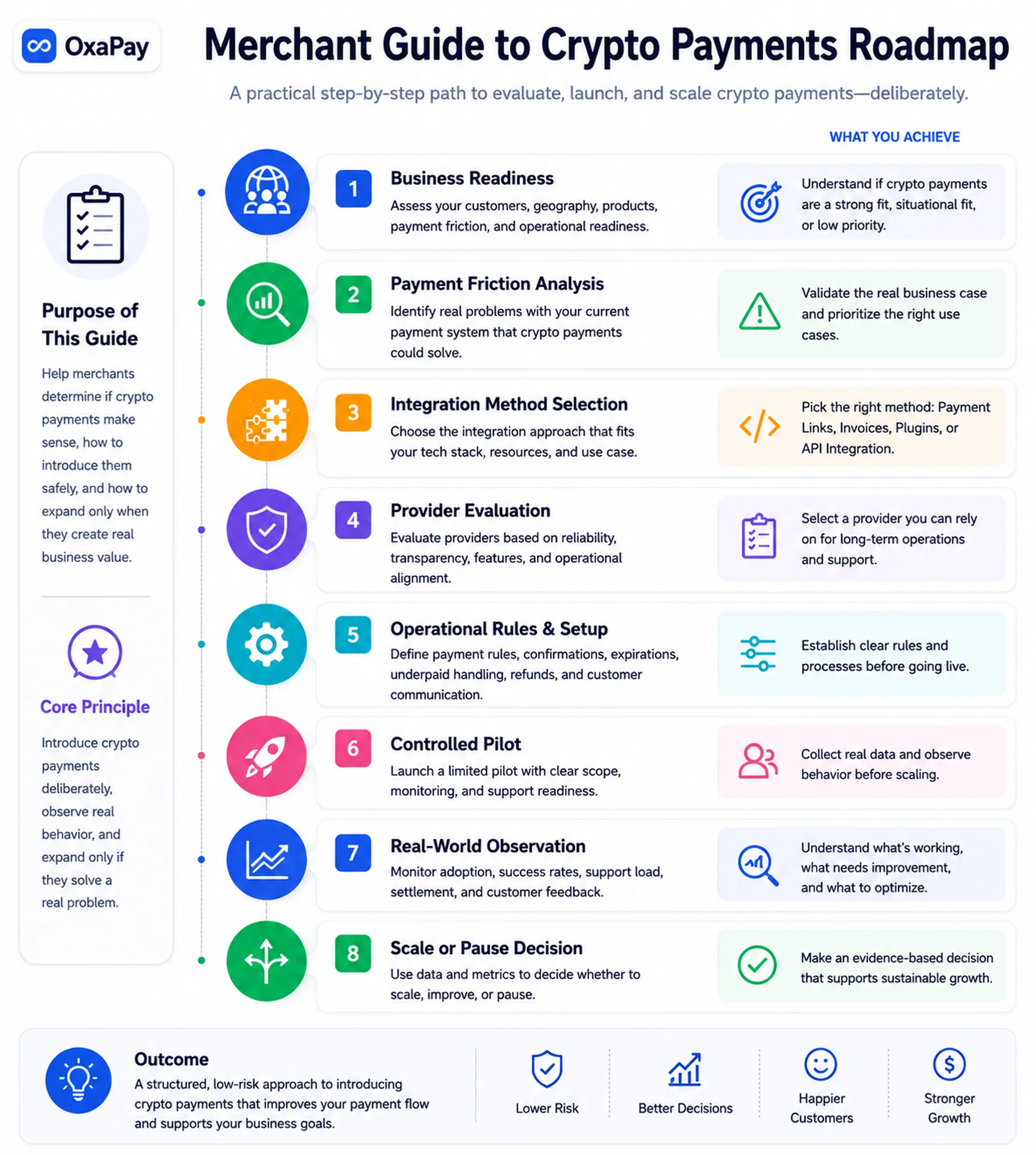
تناسب با کسبوکار به مشتری، اصطکاک پرداخت، ریسک محصول و ظرفیت تیم بستگی دارد
برای مشتریان بینالمللی یا دیجیتالمحور، روشهای رایج گاهی از نظر دسترسی، هزینه، سرعت و شفافیت مناسب نیستند. بررسیهای بانک تسویه حسابهای بینالمللی این موانع را توضیح میدهد؛ اما وجود مانع به معنای مناسببودن قطعی رمزارز نیست.
خدمات دیجیتال، نرمافزار، فریلنسری، جوامع آنلاین و فاکتورهای برونمرزی ممکن است برای پایلوت مناسب باشند. ارسال کالای فیزیکی، محصولات مقرراتگذاریشده، استرداد فراوان و تحویل غیرقابلبازگشت به کنترل دقیقتری نیاز دارند. وقتی تقاضایی وجود ندارد و پرداخت فعلی خوب کار میکند، اولویتدادن به کریپتو ضروری نیست.
- نشانه مشتری: درخواست کریپتو یا دشواری پرداخت با کارت و روشهای مرسوم
- نشانه تجاری: امکان بازگشت فروش ازدسترفته یا کاهش تأخیر
- نشانه عملیاتی: مسئول مشخص برای پشتیبانی، استثنا، ثبت مالی و تسویه
- نشانه ریسک: امکان انتظار تا تأیید ایمن یا برگشتدادن اقدام داخلی
نتیجه کاربردی برای پذیرنده: آمادگی برای آزمایش یعنی منفعت مورد انتظار مشخص و مالک عملیاتی تعیین شده باشد.
منابع رسمی و مطالب مرتبط: BIS
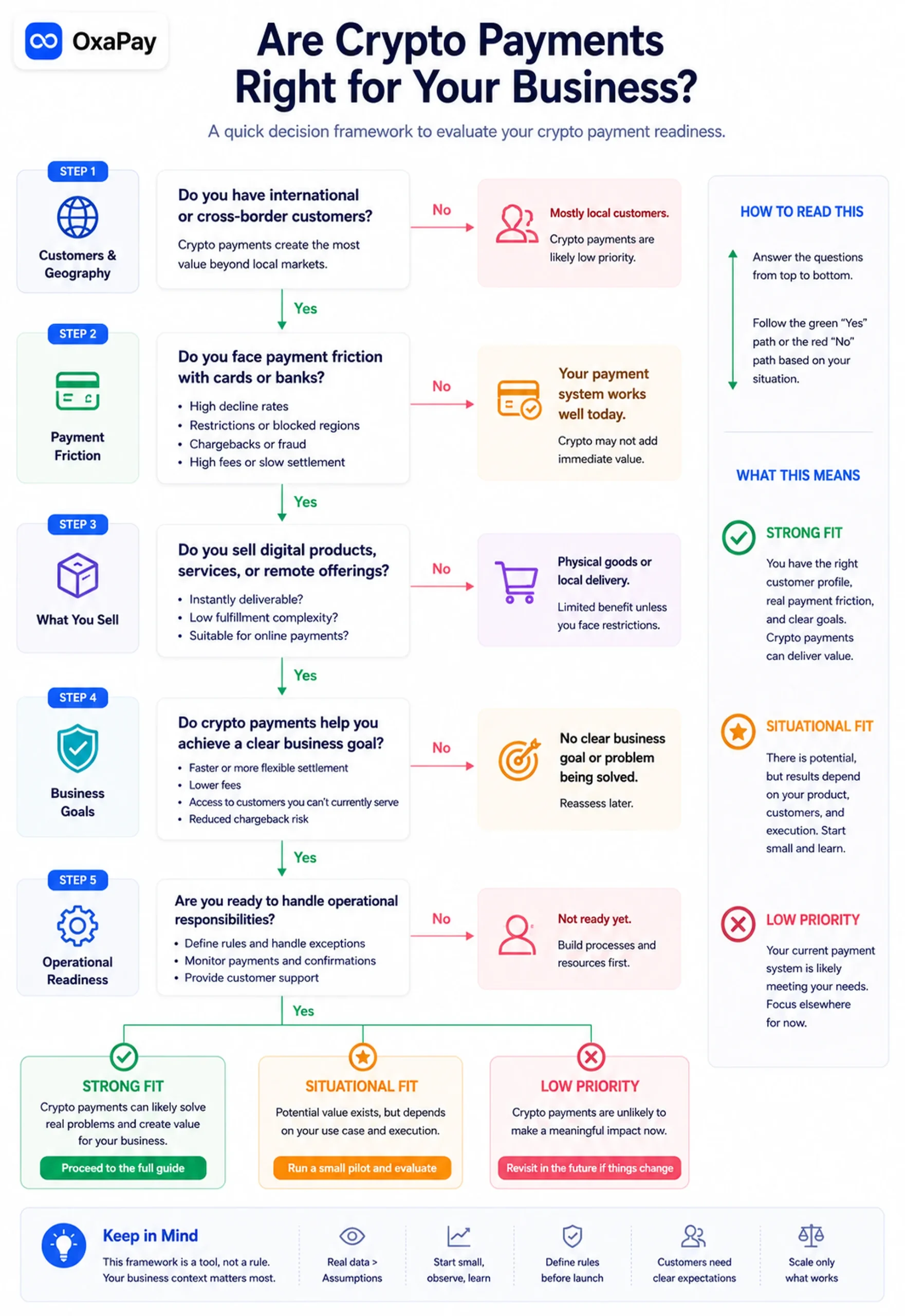
پیش از انتخاب فناوری، مشخص کنید چه کسی مسئول تفسیر پرداخت است
کیف پول میتواند ارز دریافت کند، اما لزوماً فاکتور صادر نمیکند، پرداخت را به سفارش وصل نمیکند، انقضا را مدیریت نمیکند یا کمپرداخت را تشخیص نمیدهد. دریافت تراکنش با اجرای چرخه تجاری پرداخت یکسان نیست.
درگاه پرداخت لایهای برای ایجاد درخواست، رهگیری وضعیت، ثبت سوابق و اتصال به عملیات فروش اضافه میکند. ساخت زیرساخت اختصاصی کنترل بیشتری میدهد، ولی مسئولیت امنیت، مهندسی، پایداری و بازیابی را هم افزایش میدهد. مدل درست سادهترین گزینهای است که همچنان از کسبوکار محافظت میکند.
- کیف پول مستقیم: حجم کم و تطبیق دستی قابلقبول
- درگاه پرداخت: فاکتور، وضعیت، سوابق و خودکارسازی
- زیرساخت اختصاصی: پرداخت بخش اصلی محصول است و کنترل عمیق لازم دارد
نتیجه کاربردی برای پذیرنده: کنترل فنی بیشتر فقط زمانی ارزش دارد که تیم بتواند آن را ایمن اداره کند.
پذیرنده قبل از دریافت پول واقعی باید چند واقعیت پرداخت را دقیق بداند
پرداخت کریپتویی معمولاً با اقدام پرداختکننده آغاز میشود. مشتری کیف پول، ارز، شبکه، کارمزد و زمان ارسال را انتخاب میکند؛ این رفتار با تأیید پرداخت کارتی تفاوت دارد. تراکنشِ منتشرشده لزوماً در بلوک ثبت نشده و تراکنش تأییدشده هم لزوماً شرایط سفارش را برآورده نکرده است.
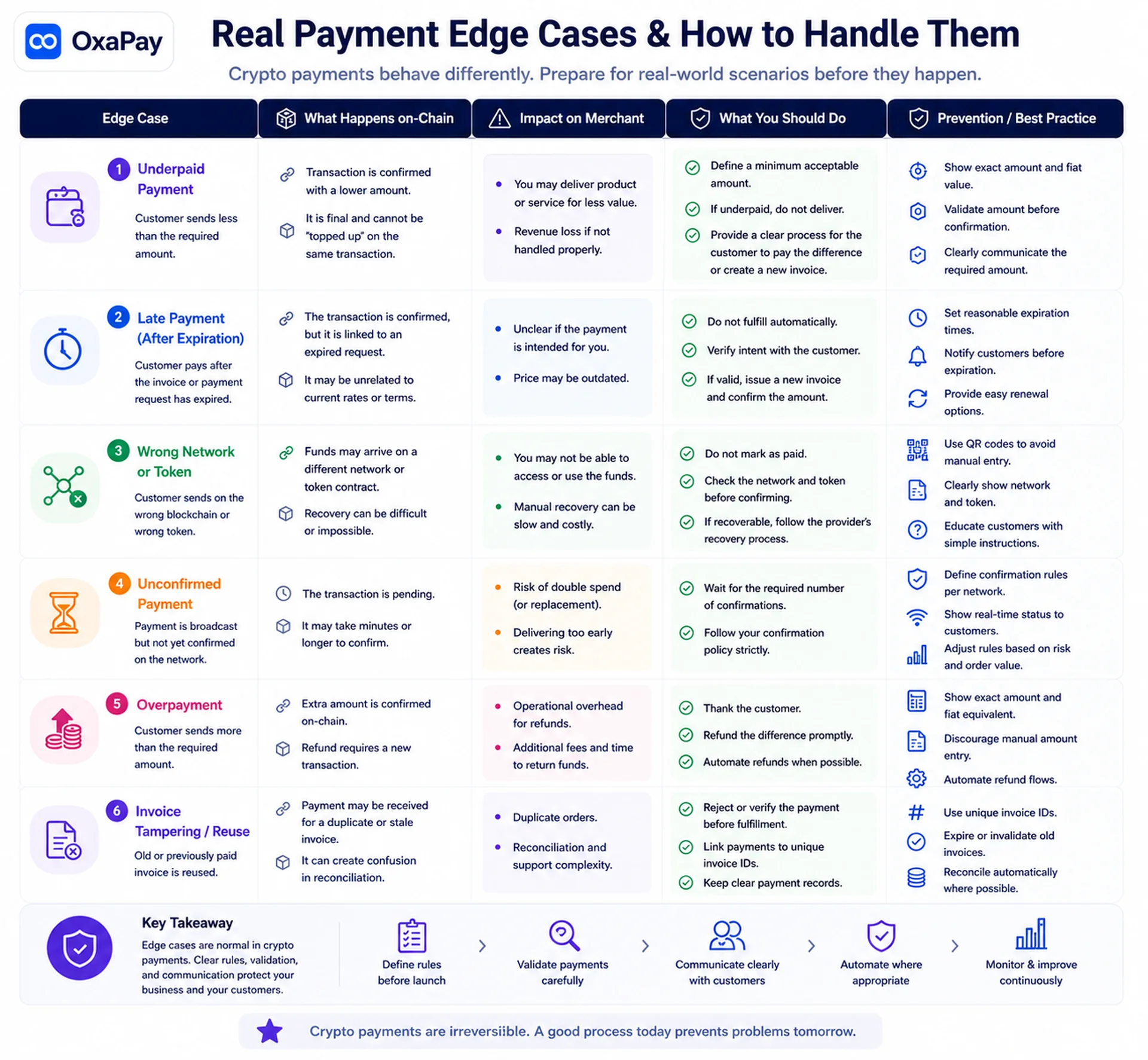
پرداخت ممکن است بعد از انقضای فاکتور برسد، مبلغ اشتباه داشته باشد یا در شبکهای پشتیبانینشده انجام شود. استرداد نیز معمولاً تراکنشی جدید است که آدرس، شبکه، تأیید مسئول و سند مالی مستقل میخواهد. راهنمای رسمی پردازش پرداخت بیتکوین تفاوت درخواست، پایش و تأیید را روشن میکند.
- زمان: شناسایی، درج در بلوک، تأیید و قطعیت یک رویداد نیستند
- مبلغ: کمپرداخت، اضافهپرداخت، گردکردن و چند تراکنش باید مدیریت شوند
- شبکه: نام مشابه توکن به معنی مسیر پرداخت یکسان نیست
- استرداد: مقصد، مبلغ، مجوز و هزینه را دوباره بررسی کنید
نتیجه کاربردی برای پذیرنده: بلاکچین ارزش را منتقل میکند؛ معنای تجاری و اقدام بعدی را پذیرنده تعیین میکند.
منابع رسمی و مطالب مرتبط: Bitcoin Developer Guide
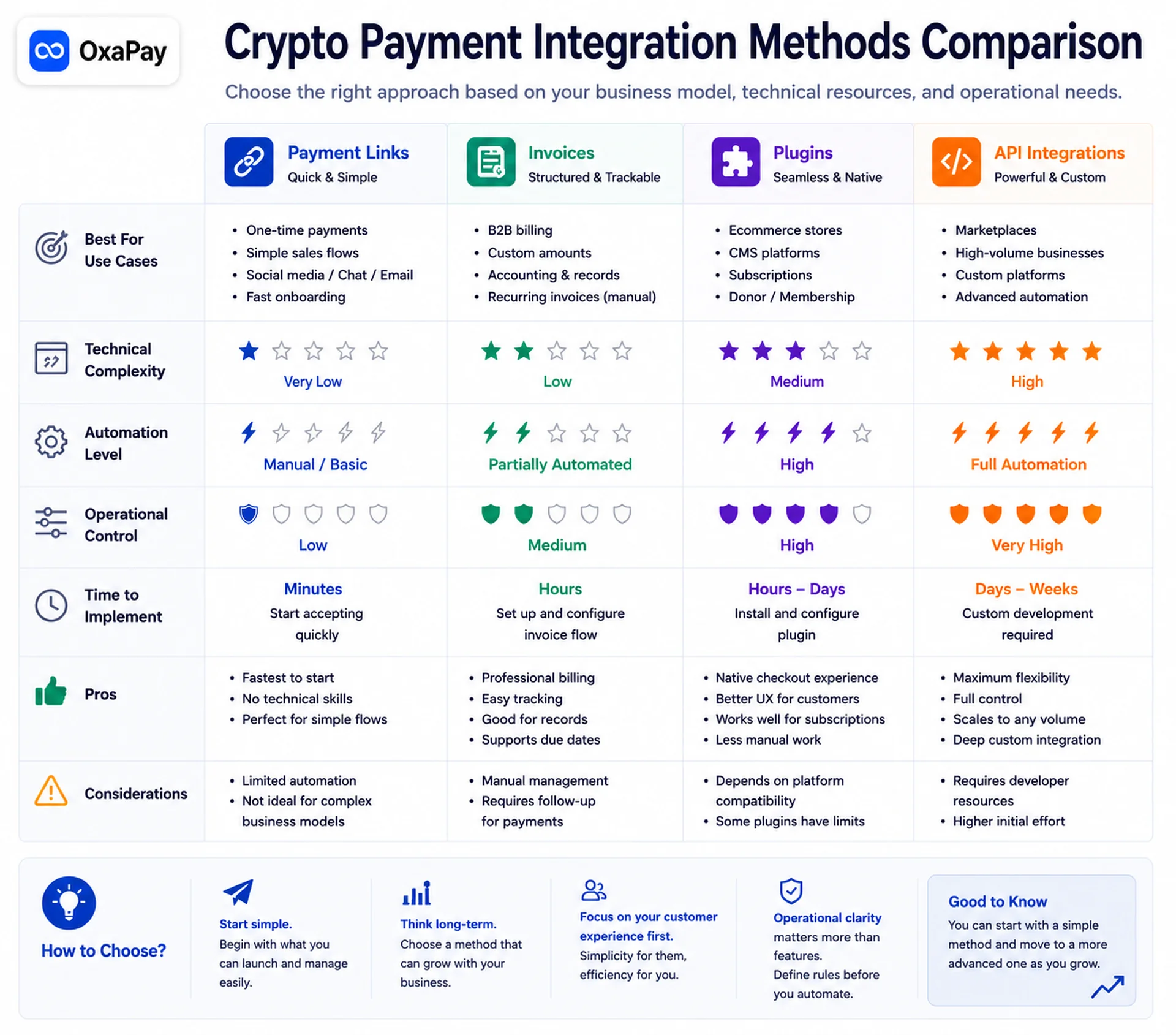
روش اتصال را بر اساس جریان فروش و میزان خودکارسازی انتخاب کنید
دریافت یک هزینه خدماتی توسط فریلنسر، خرید فروشگاهی، اشتراک نرمافزاری و شارژ کیف حساب کاربری یک جریان پرداخت ندارند. روش اتصال باید با نحوه خرید مشتری و نیاز به حفظ اطلاعات سفارش هماهنگ باشد.
لینک پرداخت برای دریافت بدون کدنویسی و سنجش تقاضا مناسب است. فاکتور میزبانیشده مبلغ، مهلت و وضعیت قابلرهگیری دارد. افزونه، فروشگاه و سیستم صورتحساب سازگار را وصل میکند؛ API جریان اختصاصی میسازد. آدرس ثابت برای واریز تکراری مناسب است، اما به تطبیق و حسابرسی دقیقتری نیاز دارد.
- لینک پرداخت: خدمات، فروش اجتماعی و آزمون اولیه بدون برنامهنویسی
- فاکتور میزبانیشده: مبلغ، انقضا، شناسه سفارش و وضعیت
- افزونه فروشگاهی: هماهنگی سفارش و پرداخت با پلتفرم پشتیبانیشده
- API پذیرنده: پرداخت درون محصول و خودکارسازی سفارشی
نتیجه کاربردی برای پذیرنده: از سادهترین راهی شروع کنید که اطلاعات سفارش و امکان پشتیبانی را حفظ میکند.
منابع رسمی و مطالب مرتبط: Payment Link · Hosted Invoice · Store Plugins · Merchant API
بهجای فعالکردن همه ارزها، مجموعهای هدفمند از دارایی و شبکه انتخاب کنید
فهرست طولانی ارزها انتخاب مشتری را بیشتر میکند، اما خطر شبکه اشتباه، پیچیدگی خزانه، پشتیبانی و تطبیق مالی را بالا میبرد. تنها ترکیبهای ارز و شبکهای را فعال کنید که مشتریان واقعاً نیاز دارند و تیم توان پشتیبانی از آنها را دارد.
تقاضا، دسترسی کیف پول، ثبات قیمت، کارمزد شبکه، زمان تأیید، نقدشوندگی و نحوه ثبت حسابداری را بررسی کنید. استیبلکوین نوسان ارزش واحد را کاهش میدهد ولی ریسک ناشر، شبکه و نقدشوندگی را حذف نمیکند. داده ارزهای پشتیبانیشده را از منبع بهروز بگیرید.
- دسترسی مشتری: آیا دارایی را روی شبکه انتخابی میتواند تهیه و ارسال کند؟
- اقتصاد پرداخت: کارمزد و زمان تأیید با مبلغ سفارش تناسب دارد؟
- خزانه: دارایی نگهداری، تبدیل یا برداشت میشود؟
- پشتیبانی: تیم میتواند خطای شبکه، تأخیر یا تراکنش ناسازگار را بررسی کند؟
نتیجه کاربردی برای پذیرنده: هر مسیر ارز-شبکه باید دلیل مشتریمحور و مسئول عملیاتی مشخص داشته باشد.
منابع رسمی و مطالب مرتبط: OxaPay Supported Currencies · Supported Currencies API
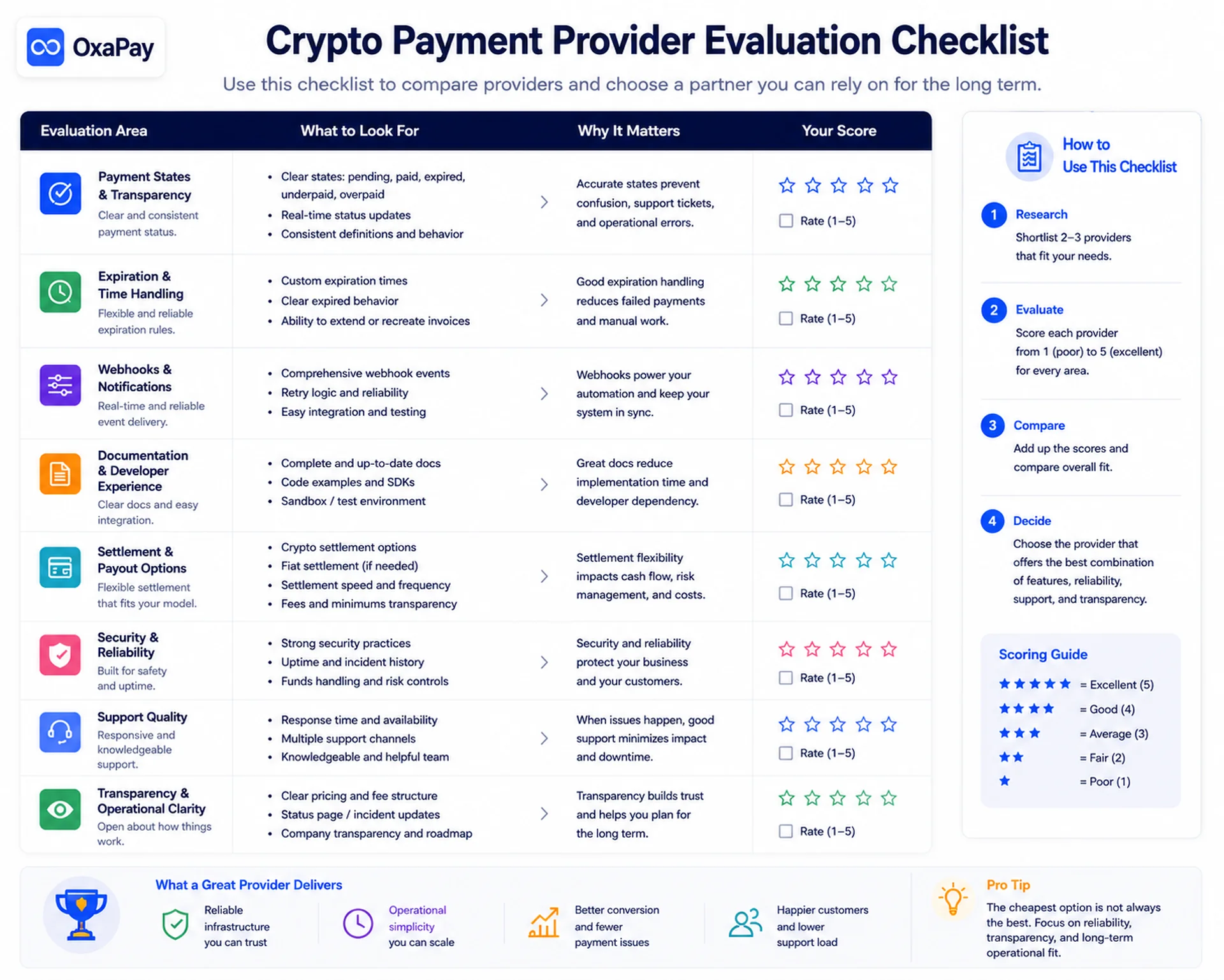
ارائهدهنده را وابستگی عملیاتی بدانید، نه صرفاً یک قابلیت تسویه
فهرست بلند امکانات نشان نمیدهد سرویس در شرایط نامطلوب چقدر قابلاتکاست. وضوح وضعیت پرداخت، بازیابی سوابق، رفتار وبهوک، امنیت، تسویه، مدیریت خطا و کیفیت پشتیبانی اهمیت اساسی دارند.
هزینه واقعی فراتر از درصد اعلامشده است: کارمزد شبکه، تبدیل، برداشت، استرداد، توسعه، پشتیبانی و تطبیق مالی را جمع بزنید. رفتار API و وضعیتهای مستند را در عمل آزمایش کنید. استاندارد OWASP مبنای مناسبی برای کنترل دسترسی، احراز هویت، محدودیت منابع و پیکربندی امن است.
- شفافیت وضعیت: تیم میتواند هر وضعیت و اقدام مجاز را توضیح دهد؟
- بازیابی: بعد از ازدسترفتن اعلان، سابقه دوباره قابلدریافت است؟
- تسویه: نگهداری، تبدیل، برداشت و زمانبندی روشن است؟
- مستندات: API واقعی با رفتار اعلامشده سازگار است؟
- امنیت: کلیدها جدا و وبهوک معتبرسنجی میشود؟
- پشتیبانی: سفارش، تراکنش و تسویه قابلردیابی هستند؟
نتیجه کاربردی برای پذیرنده: ارائهدهنده را با کیفیت عملیات واقعی انتخاب کنید، نه تعداد قابلیتها.
منابع رسمی و مطالب مرتبط: OxaPay Pricing · OWASP API Security Top 10
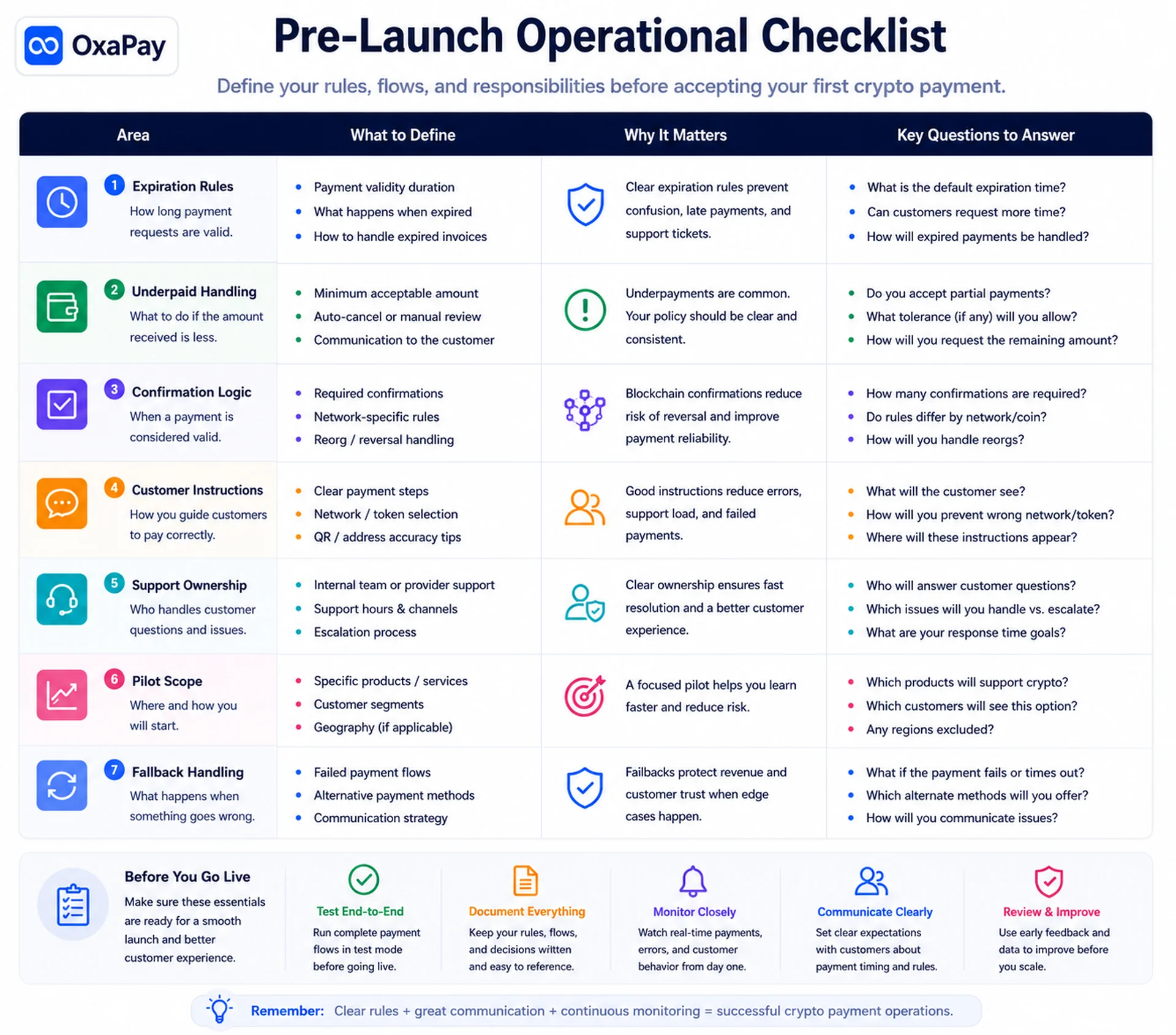
پیش از اولین پرداخت زنده، قواعد تکمیل، انقضا، استثنا و استرداد را تعریف کنید
وضعیت فنی درگاه بهتنهایی مجوز ارسال کالا یا شارژ اعتبار حساب نیست. پرداخت شناساییشده یا در حال پردازش نباید تحویل غیرقابلبازگشت را فعال کند. هر وضعیت درگاه باید به اقدام تجاری مشخص تبدیل شود.
برای پرداخت کمتر یا بیشتر، فاکتور منقضی، شبکه اشتباه و استرداد سیاست مکتوب داشته باشید. مشخص کنید چه زمانی دریافت باقیمانده، پذیرش با تلورانس، اعتبار حساب، استرداد یا بررسی انسانی مجاز است. پیام مشتری باید ساده و دقیق باشد؛ مسئول هر استثنا نیز معلوم باشد.
- کمپرداخت: تلورانس، تکمیل باقیمانده، بررسی یا رد
- پرداخت دیرهنگام: اعتبار قیمت، موجودی و سفارش قبلی
- اضافهپرداخت: اعتبار، استرداد، ثبت و تأیید مسئول
- شبکه اشتباه: قبل از وعده بازیابی بررسی فنی کنید
- استرداد: مقصد، مبلغ، کارمزد، مجوز و سند مالی را تأیید کنید
نتیجه کاربردی برای پذیرنده: هر وضعیت غیرعادی باید مسئول، اقدام مجاز و پیام مشتری داشته باشد.
منابع رسمی و مطالب مرتبط: OxaPay Payment Status Table
مقررات، تحریم، مالیات، حسابداری و ثبت سوابق بخشی از تصمیم راهاندازیاند
تعهدات با کشور، نوع کسبوکار، دارایی، مدل حضانت و خدمات تبدیل یا پرداخت خروجی تغییر میکنند. پیش از شروع، الزامات ضدپولشویی، تحریم، حمایت از مصرفکننده، مالیات و گزارش مالی را بررسی کنید. راهنمای FATF و چارچوب گزارشدهی OECD مرجع بینالمللیاند، نه جایگزین مشاوره محلی.
طبقهبندی حسابداری دارایی رمزارزی لزوماً مانند وجه نقد نیست؛ تصمیم کمیته تفسیر IFRS این تفاوت را نشان میدهد. پیش از انباشتهشدن موجودی، زمان ارزشگذاری، منبع نرخ، نگهداری مدارک، اختیار برداشت و تطبیق خزانه را مستند کنید.
- دامنه حقوقی: اثر پذیرش، حضانت، تبدیل و پرداخت خروجی
- ثبت سوابق: سفارش، شناسه پرداخت، هش تراکنش، زمان، مبلغ، کارمزد و نتیجه
- ارزشگذاری: منبع نرخ و زمان ثبت درآمد و استرداد
- سیاست خزانه: نگهداری، تبدیل، برداشت، تأیید و تطبیق
نتیجه کاربردی برای پذیرنده: این توضیحات راهنمای عملیاتی است، نه مشاوره حقوقی، مالیاتی یا حسابداری.
منابع رسمی و مطالب مرتبط: FATF Virtual Assets · OECD Crypto-Asset Reporting Framework · IFRS Cryptocurrency Holdings
آزمایشی محدود با دامنه کوچک و سناریوهای خطای ازپیشتعریفشده اجرا کنید
اولین انتشار نباید کل کسبوکار را متحول کند؛ باید نشان دهد یک کاربرد مشخص با ریسک کنترلشده قابلاجراست. پایلوت را از نظر محصول، گروه مشتری، جغرافیا، داراییها، سقف هر تراکنش و حجم روزانه محدود کنید.
موفقیت پرداخت و حالتهای سخت را جداگانه بیازمایید: تأخیر، کمپرداخت، انقضا، رویداد تکراری، استرداد و قطع اعلان. مسئول پرداخت، پشتیبانی، مهندسی و مالی را تعیین کنید. شرط توقف بهخاطر خطای امنیتی، تحویل تکراری یا سند مالی نامشخص لازم است.
- دامنه: یک کاربرد، ارزهای محدود و سقف مبلغ
- سناریوها: موفق، دیرهنگام، ناقص، منقضی، تکراری و استرداد
- مسئولیت: مالک روشن برای پرداخت، پشتیبانی، مالی و ارجاع
- توقف: حادثه امنیتی، تحویل نادرست یا مغایرت حلنشده
نتیجه کاربردی برای پذیرنده: پایلوت زمانی کامل است که تیم بتواند مسیر هر پرداخت را از سفارش تا نتیجه بازسازی کند.
منابع رسمی و مطالب مرتبط: Generate Invoice API · Webhooks · Payment Information API
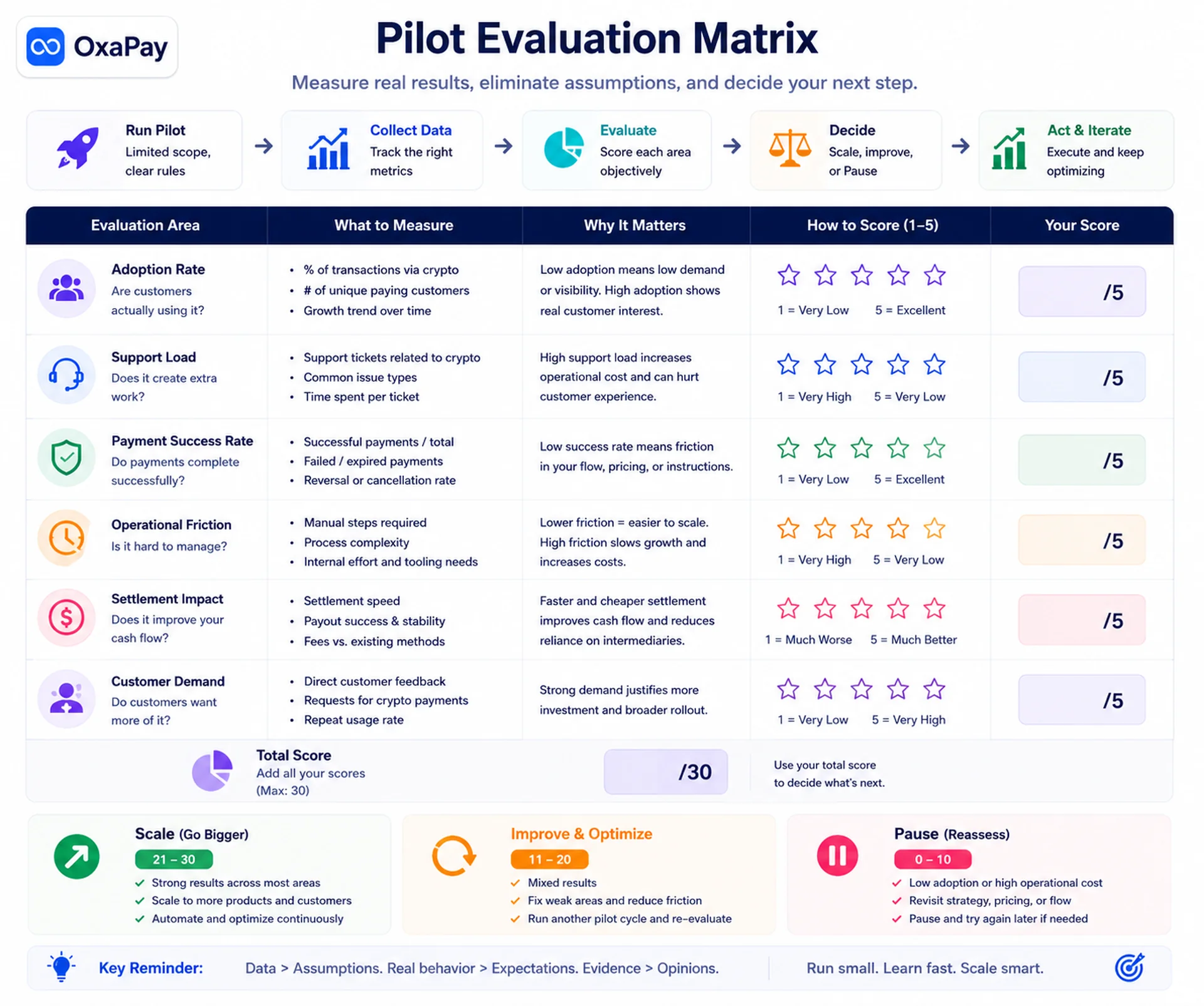
پیش از توسعه، ارزش مشتری، کیفیت پرداخت و هزینه عملیات را اندازهگیری کنید
حجم تراکنش بهتنهایی موفقیت نیست. بسنجید چند مشتری واجدشرایط کریپتو را انتخاب میکنند، چند درخواست به پرداخت پذیرفتهشده میرسد، تکمیل چقدر زمان میبرد و استثناها چقدر هزینه دارند.
تعداد تماسهای پشتیبانی و دقیقه کار کارکنان برای هر پرداخت موفق را همراه کارمزد، اختلاف تسویه و سوابق تطبیقنشده محاسبه کنید. توسعه فقط زمانی منطقی است که دسترسی تازه یا فروش بازیابیشده از مجموع هزینه و ریسک بیشتر باشد.
- نرخ استفاده: سهم مشتریان واجدشرایط که کریپتو انتخاب میکنند
- موفقیت: سهم درخواستهای رسیده به وضعیت پذیرفتهشده
- زمان: فاصله تا تحویل یا تسویه ایمن
- استثنا: پرداخت کم، دیرهنگام، منقضی یا نامنطبق
- پشتیبانی: تعداد تماس و دقیقه بهازای پرداخت موفق
- ارزش خالص: منفعت پس از همه هزینهها
نتیجه کاربردی برای پذیرنده: بر اساس شواهد توسعه دهید، طراحی را عوض کنید یا آزمایش را متوقف کنید.
منابع رسمی و مطالب مرتبط: Payment History API
ابزار OxaPay را بر اساس مسئله واقعی پذیرنده انتخاب کنید
مدلهای دریافت OxaPay برای کارهای متفاوتاند. لینک پرداخت برای آزمون تقاضا و دریافت ساده، فاکتور برای مبلغ و مهلت و شناسه سفارش، افزونه برای فروشگاه سازگار و API برای محصول سفارشی مناسب است.
در اتصال API، شناسه رهگیری OxaPay را کنار شناسه سفارش نگه دارید. وبهوکها را اعتبارسنجی و بدون تکرار اثر پردازش کنید و در صورت ازدسترفتن اعلان از اطلاعات و تاریخچه پرداخت کمک بگیرید. مسئولیت تحویل، ارتباط با مشتری، انطباق و حسابداری همچنان با پذیرنده است.
- سنجش تقاضا: لینک پرداخت برای دریافت ساده
- ساختار پرداخت: فاکتور میزبانیشده با شناسه و وبهوک
- اتصال فروشگاه: افزونه رسمی پلتفرم پشتیبانیشده
- خودکارسازی: API پذیرنده همراه ثبت پایدار وضعیت
نتیجه کاربردی برای پذیرنده: ابزار را در خدمت جریان تجاری قرار دهید، نه جایگزین سیاستهای خود کسبوکار.
منابع رسمی و مطالب مرتبط: Payment Link · Invoice · Plugins · Merchant API
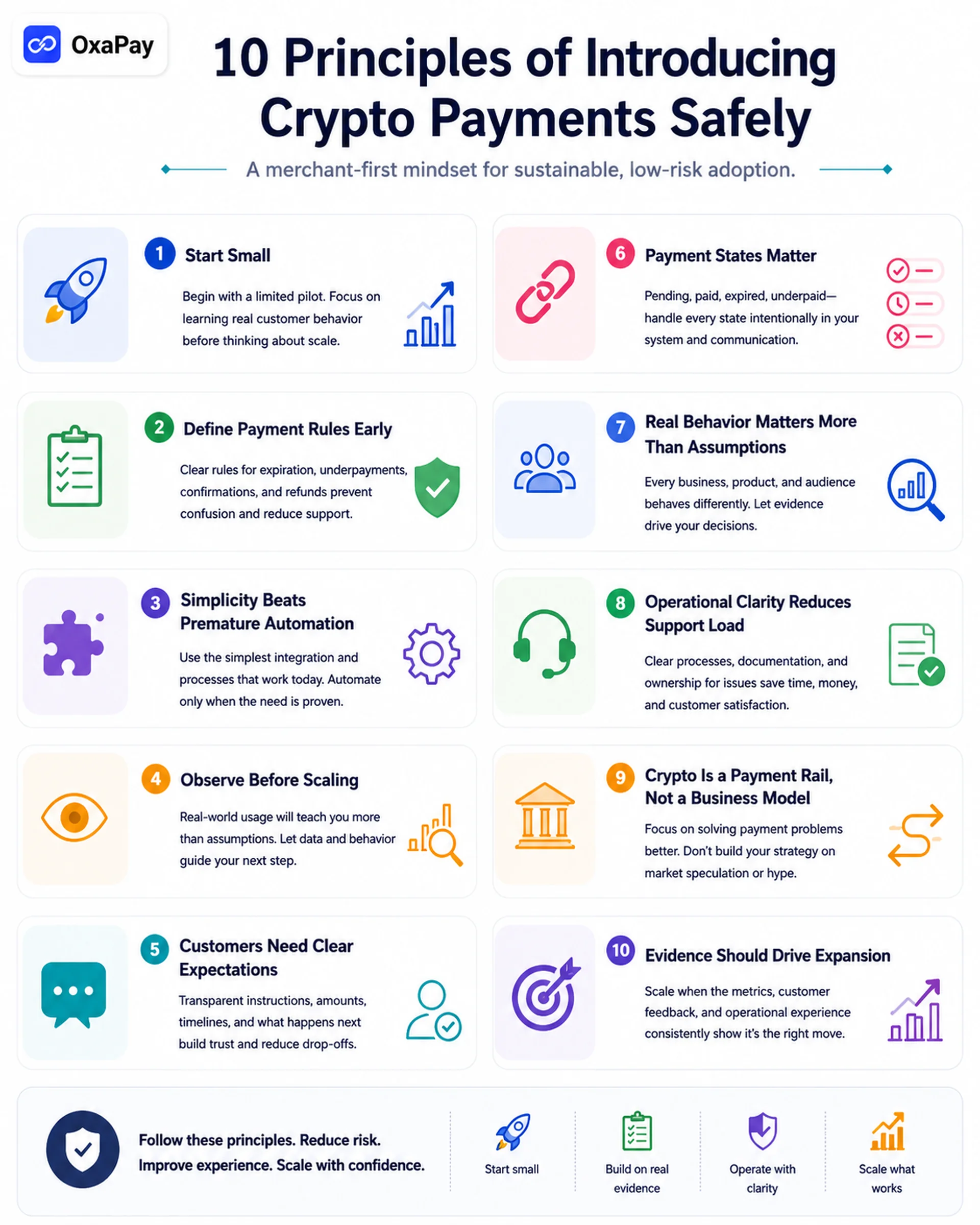
ده اصل عملیاتی برای شروع ایمن پرداخت رمزارزی
پذیرش ایمن نتیجه مجموعهای از تصمیمهای سنجیده است، نه فعالکردن یک دکمه. مسئله تجاری، مسئول اجرا، سادهترین مسیر پرداخت و حدود ریسک را روشن کنید و پیش از توسعه، رفتار واقعی مشتریان و سناریوهای خطا را بیازمایید.
اصول زیر تجربه مشتری، واقعیت شبکه، امنیت، ثبت مالی و تصمیم توسعه را به یک برنامه واحد تبدیل میکنند.
- ۱. با مشکل قابلاندازهگیری پرداخت شروع کنید
- ۲. پیش از اجرا مسئول عملیاتی تعیین کنید
- ۳. سادهترین مدل مناسب را انتخاب کنید
- ۴. فقط ارز و شبکه قابلپشتیبانی را فعال کنید
- ۵. شناسایی پرداخت را معادل تحویل ندانید
- ۶. کمپرداخت، تأخیر، اضافهپرداخت و استرداد را تعریف کنید
- ۷. کلیدها، وبهوکها و اقدامات مالی را امن کنید
- ۸. سوابق قابلبازسازی برای مالی و پشتیبانی نگه دارید
- ۹. پایلوت محدود با شرط توقف اجرا کنید
- ۱۰. فقط با شواهد مثبت مشتری و عملیات توسعه دهید
نتیجه کاربردی برای پذیرنده: این اصول خطر را حذف نمیکنند؛ مسئولیت، کنترل و اقدام بعدی را روشن میکنند.
تصمیم پذیرنده را بر مدارک پرداخت، امنیت، مقررات و حسابداری بنا کنید
مستندات BIS اصطکاک پرداخت فرامرزی و راهنمای توسعهدهنده بیتکوین سازوکار تراکنش و تأیید را توضیح میدهند. FATF و OECD دیدگاههایی درباره انطباق و گزارشدهی و IFRS درباره طبقهبندی حسابداری ارائه میکنند؛ OWASP نیز ریسک API را پوشش میدهد.
برای قابلیتهای روز، ارزها، قیمتها، پارامترها و وضعیتهای OxaPay به صفحات محصول و مستندات فعلی مراجعه کنید. این راهنما آموزشی است و جای بررسی متخصص واجدصلاحیت در حوزه قضایی شما را نمیگیرد.
- BIS: مشکلات پرداخت بینالمللی
- Bitcoin: تراکنش و تأیید شبکه
- FATF و OECD: انطباق و گزارشدهی
- IFRS: طبقهبندی حسابداری
- OWASP: امنیت API
- OxaPay: قرارداد محصول و مستندات فعلی
نتیجه کاربردی برای پذیرنده: راهبرد خوب را کیفیت استدلال، شواهد و کنترلها تعیین میکند، نه صرفاً تصمیم به پذیرش.
منابع رسمی و مطالب مرتبط: BIS Cross-Border Payments · Bitcoin Payment Processing · FATF · OECD · IFRS · OWASP