السؤال الأول ليس كيف تقبل العملات المشفرة بل أي مشكلة دفع ستحلها
يمكن للدفع بالعملات المشفرة أن يفتح مسار تحصيل مفيداً، لكنه قد يضيف تعقيداً لا يقابله عائد تجاري. ابدأ بتحديد العملاء المتضررين من وسائل الدفع الحالية والمشكلة القابلة للقياس.
رفض المدفوعات العابرة للحدود، تعذر الوصول إلى بعض الوسائل، بطء التسوية وطلب العملاء كلها فرضيات قابلة للاختبار. قائمة العملات أو واجهة API ليست مبرراً تجارياً بحد ذاتها. وقد تكون النتيجة إطلاقاً أو تجربة محدودة أو تأجيلاً مدروساً.
- حدّد المشكلة والمؤشر الذي يقيسها
- عرّف شريحة العملاء المتأثرة
- قارن المنفعة بتكلفة التشغيل
- اتخذ قرار الإطلاق أو التجربة أو التوقف بناءً على الأدلة
الخلاصة العملية للتاجر: اجعل الدفع المشفر استجابة لاحتكاك حقيقي قابل للقياس، لا مشروعاً تقنياً يبحث عن استخدام.
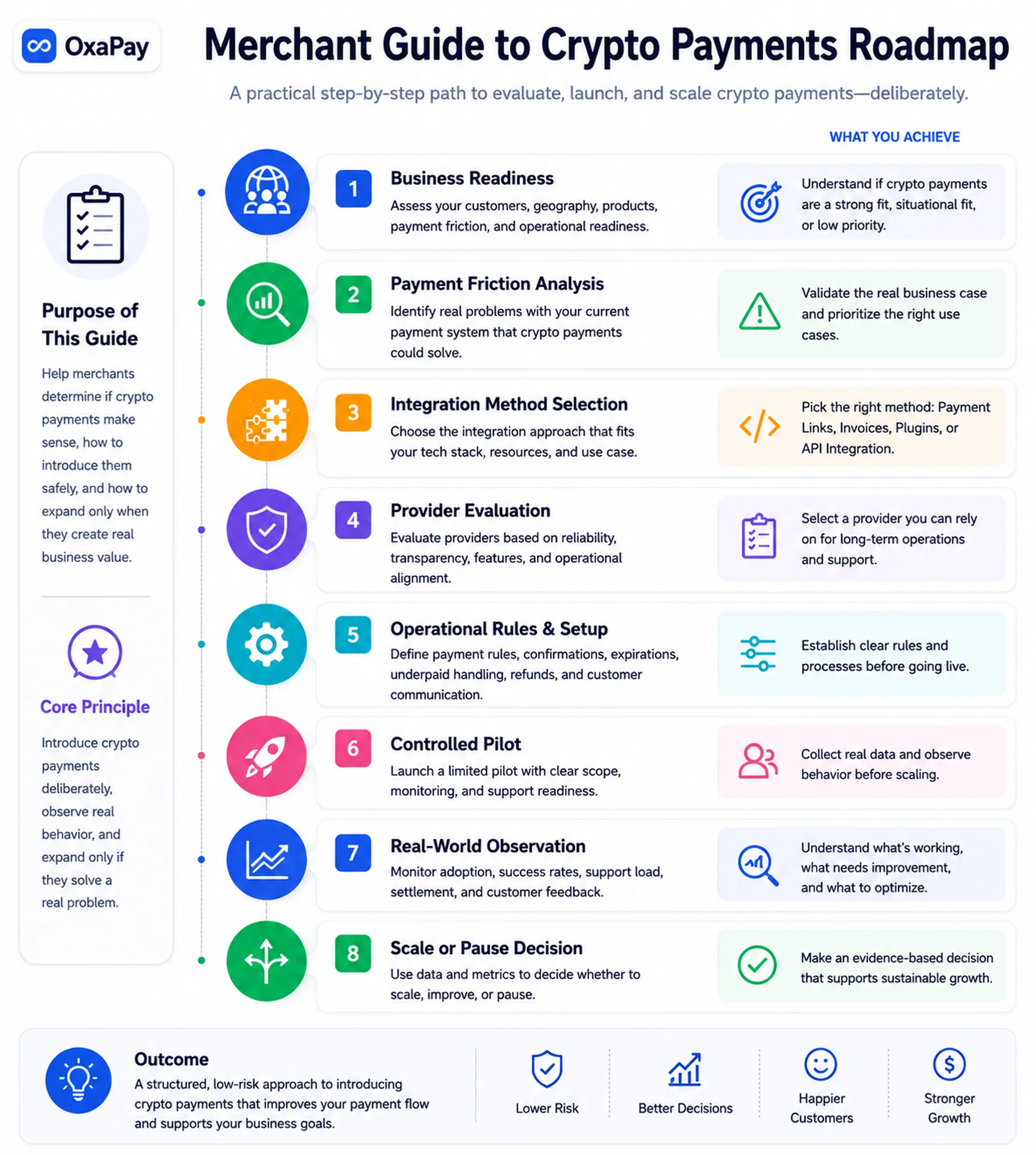
ملاءمة النشاط تتوقف على العملاء والاحتكاك والمخاطر والقدرات الداخلية
قد يواجه العملاء الدوليون والرقميون عوائق في التكلفة والسرعة والوصول والشفافية. توضح دراسات بنك التسويات الدولية هذه التحديات، لكنها لا تعني أن التشفير أفضل خيار دائماً.
تتيح البرمجيات والخدمات الرقمية والعمل الحر والفواتير الدولية فرصاً لتجربة محدودة. أما السلع المادية والمنتجات المنظمة والتسليم غير القابل للاسترجاع فيحتاج إلى ضوابط أشد. إذا كانت الوسائل الحالية ناجحة ولا يوجد طلب، فقد تكون الأولوية منخفضة.
- إشارة العميل: طلب الدفع المشفر أو مشكلة الدفع بالبطاقة
- الإشارة التجارية: مبيعات مستردة أو وقت أقل أو شريحة جديدة
- الاستعداد التشغيلي: مسؤول للدعم والاستثناءات والتسوية والسجلات
- إشارة الخطر: إمكان تأخير التسليم حتى وصول حالة آمنة
الخلاصة العملية للتاجر: تبدأ الجاهزية حين تكون المنفعة المتوقعة محددة ويوجد مسؤول واضح عن التشغيل.
المصادر الرسمية والمواد ذات الصلة: BIS
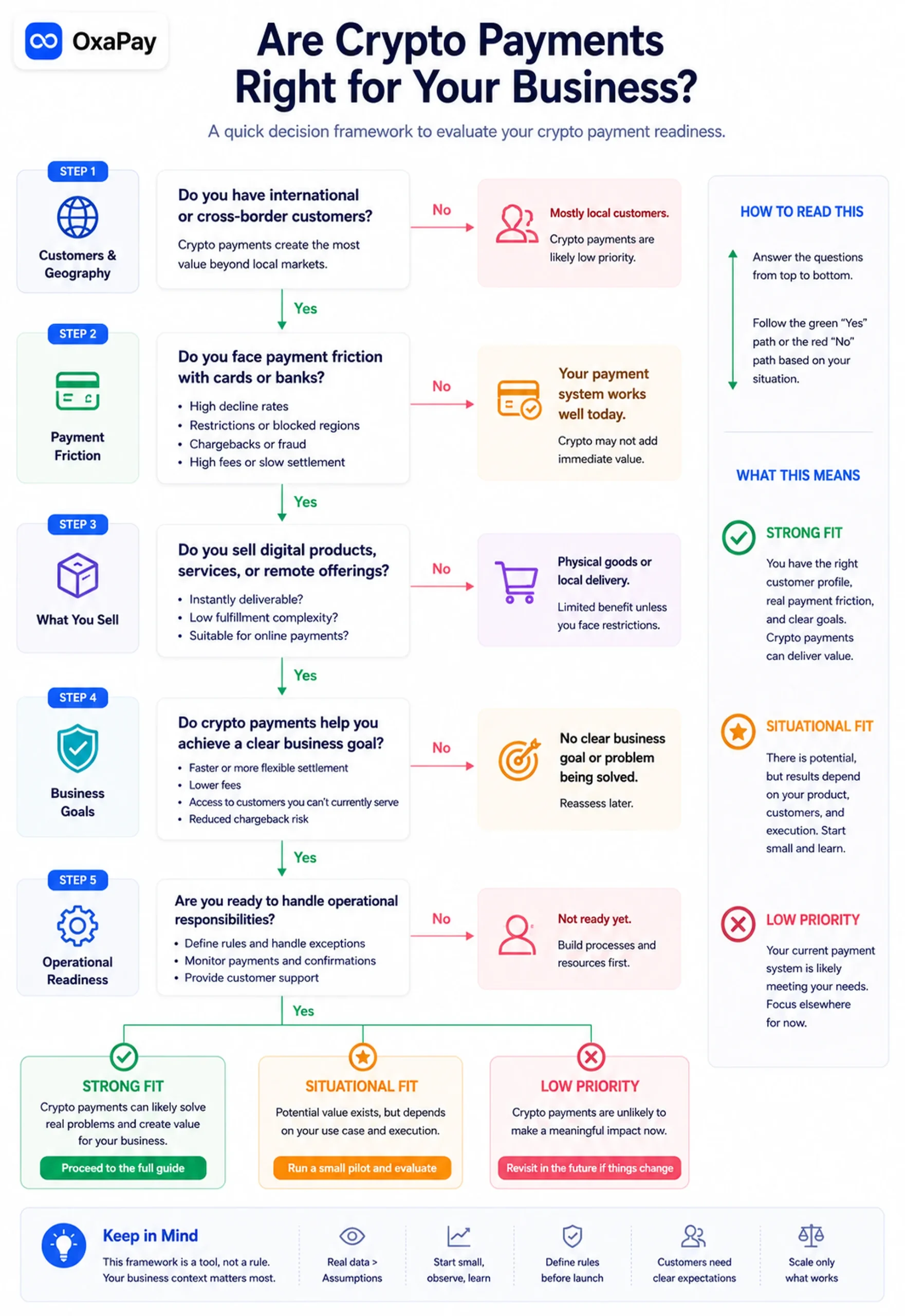
حدّد من يفسّر الدفع قبل اختيار التقنية
المحفظة تستقبل أصولاً لكنها لا تنشئ فاتورة أو تربط التحويل بطلب أو تدير انتهاء الصلاحية تلقائياً. استلام المعاملة ليس إتمام دورة الدفع التجارية.
توفر بوابة الدفع الطلبات والحالات والسجلات والأتمتة. أما البناء الداخلي فيزيد التحكم لكنه ينقل مسؤوليات التطوير والأمان والاستجابة للحوادث والصيانة إلى التاجر. اختر النموذج الأقل تعقيداً الذي يوفر الحماية المطلوبة.
- محفظة مباشرة: حجم منخفض ومطابقة يدوية مقبولة
- بوابة دفع: فواتير وتتبع حالات وأتمتة
- بنية خاصة: عندما يكون مسار الدفع جزءاً جوهرياً من المنتج
الخلاصة العملية للتاجر: التحكم الإضافي مفيد فقط إذا كان الفريق قادراً على تشغيله بأمان.
يحتاج التاجر إلى فهم دقيق لسلوك الدفع قبل قبول الأموال
غالباً ما يبدأ الدافع المعاملة ويختار المحفظة والأصل والشبكة والرسوم والتوقيت. ظهور المعاملة لا يعني إدراجها في كتلة، وإدراجها لا يثبت مطابقة شروط الطلب التجاري.
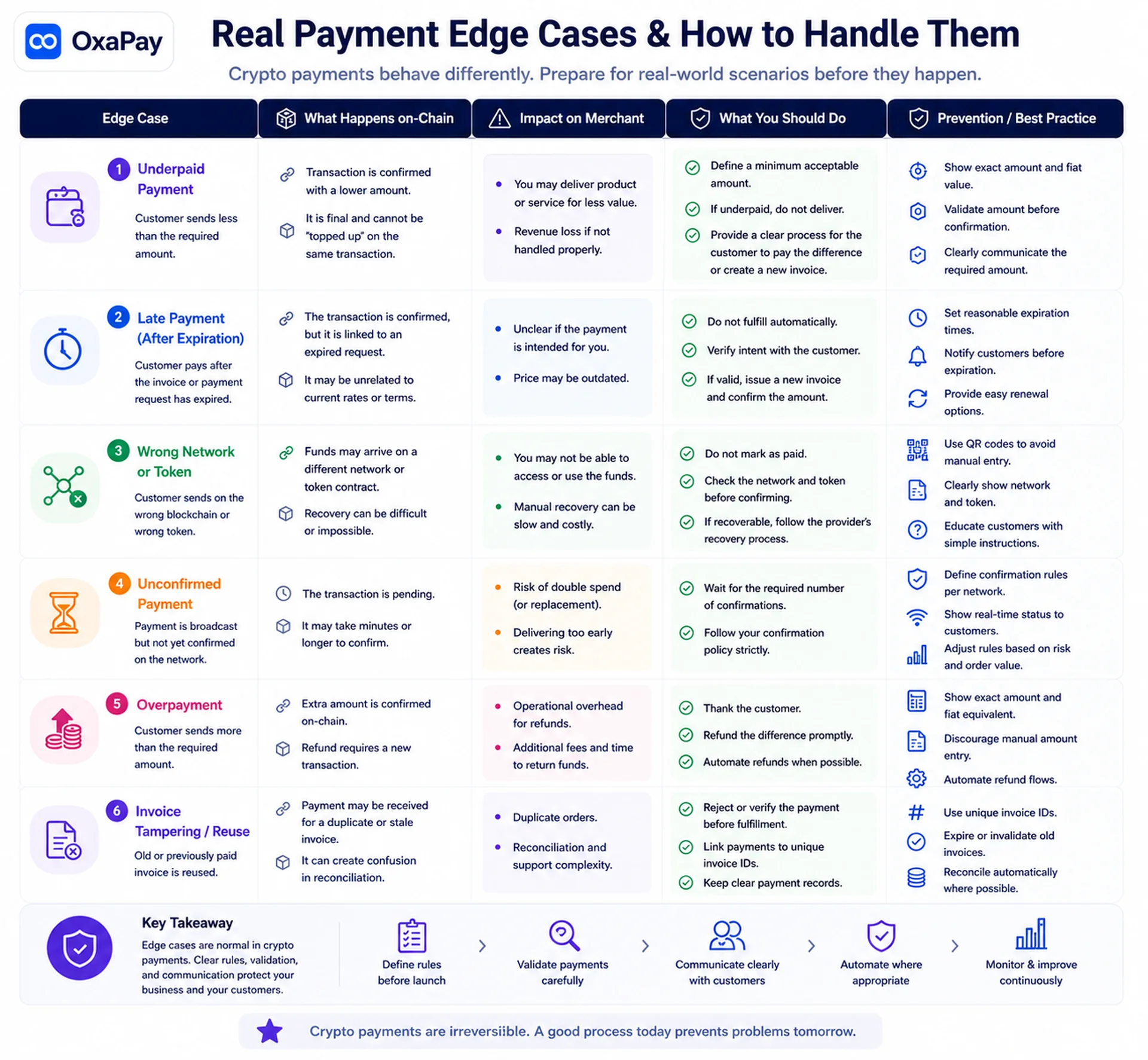
قد تصل دفعة بعد انتهاء الفاتورة أو بمبلغ خاطئ أو عبر شبكة غير مدعومة. كما أن رد الأموال يتطلب عادة تحويلاً جديداً مع التحقق من العنوان والشبكة والموافقة والتسجيل المحاسبي. توضح وثائق بيتكوين الفصل بين الطلب والمراقبة والتأكيد.
- التوقيت: الرصد والإدراج والتأكيد والنهائية مراحل مختلفة
- المبالغ: ضع قواعد للنقص والزيادة والتقريب والتحويلات المتعددة
- الشبكات: اسم الرمز وحده لا يحدد مساراً صحيحاً
- الاسترداد: تحقق من الوجهة والمبلغ والرسوم والتفويض
الخلاصة العملية للتاجر: تنقل الشبكة القيمة؛ أما المعنى التجاري والإجراء التالي فيحددهما التاجر.
المصادر الرسمية والمواد ذات الصلة: Bitcoin Developer Guide
اختر طريقة الدمج بحسب عملية البيع ومستوى الأتمتة
تحصيل أجر مستقل يختلف عن متجر أو اشتراك SaaS أو منصة حسابات. يجب أن يحافظ أسلوب الدفع على معلومات الطلب الضرورية دون تحميل تجربة الشراء تعقيداً غير لازم.
رابط الدفع مناسب للتحصيل بلا برمجة واختبار الطلب. الفاتورة المستضافة تحفظ المبلغ والمهلة والحالة. الإضافات تربط المنصات المدعومة، وواجهات API تخدم التطبيقات الخاصة. يناسب العنوان الثابت الإيداعات المتكررة لكنه يحتاج مطابقة وتسوية دقيقة.
- رابط الدفع: خدمات ومبيعات اجتماعية واختبار أولي
- فاتورة مستضافة: مبلغ وصلاحية ومرجع وحالة
- إضافة متجر: مزامنة الطلبات مع منصة مدعومة
- واجهة التاجر: تدفق مخصص وأتمتة للمنتج
الخلاصة العملية للتاجر: ابدأ بأبسط طريقة تحافظ على سياق الطلب وإمكانية الدعم.
المصادر الرسمية والمواد ذات الصلة: Payment Link · Hosted Invoice · Store Plugins · Merchant API
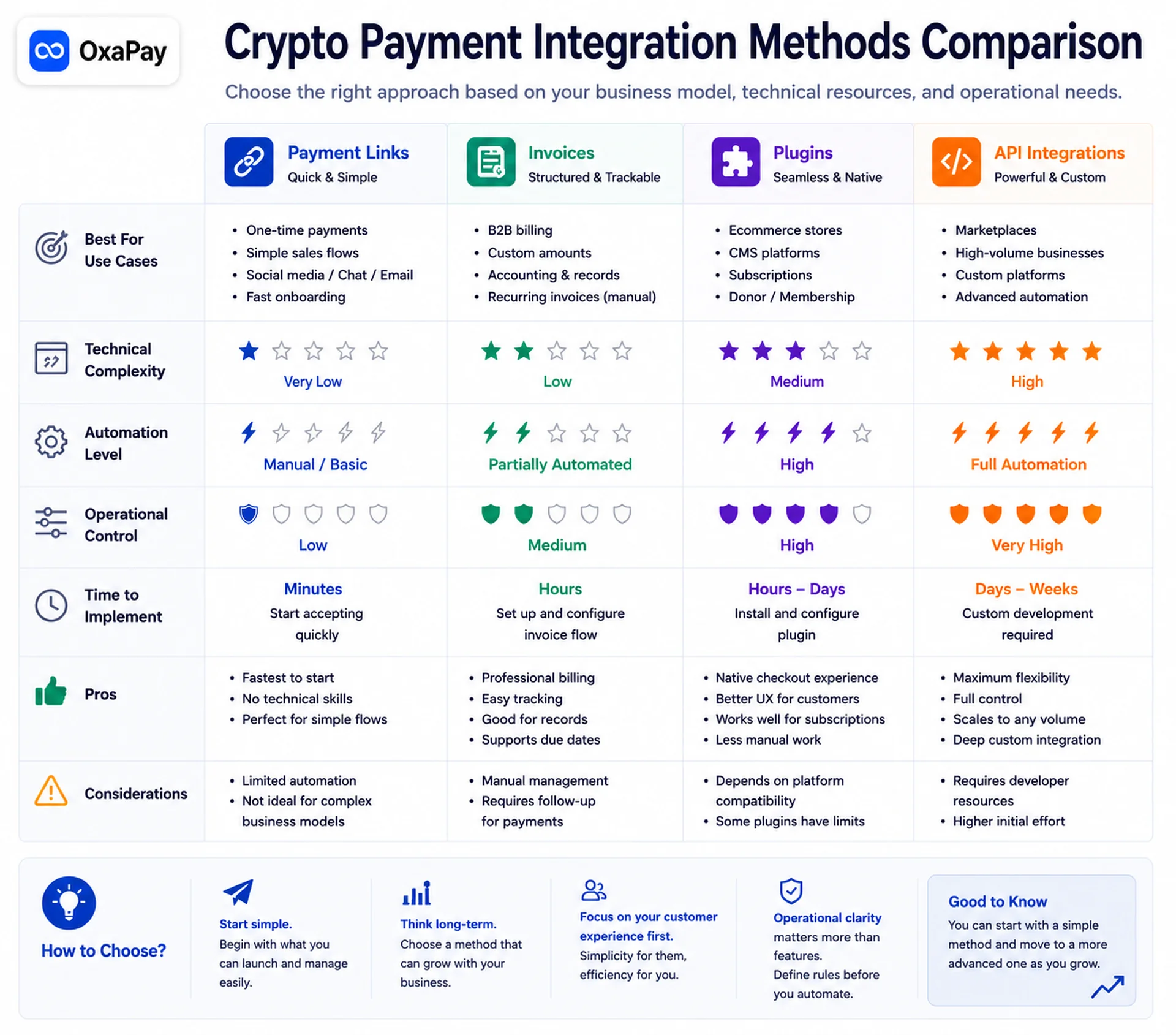
اعرض مجموعة مقصودة من الأصول والشبكات بدلاً من كل الخيارات
قد تزيد قائمة العملات الطويلة الخيارات لكنها ترفع مخاطر الشبكة الخاطئة وتكاليف الدعم والتسوية والخزانة. اختر فقط المسارات التي يستخدمها العملاء ويمكن للفريق إدارتها.
قيّم الطلب وتوفر المحافظ واستقرار السعر والرسوم والتأكيد والسيولة والمحاسبة. العملات المستقرة تخفف تقلب وحدة التسعير ولا تلغي مخاطر المُصدر أو الشبكة والسيولة. استمد الخيارات المدعومة من بيانات محدثة.
- وصول العميل: هل يستطيع الحصول على الأصل وإرساله على الشبكة؟
- الجدوى: هل الرسوم ووقت التأكيد ملائمان لحجم الطلب؟
- الخزانة: هل ستحتفظ بالأصل أم تحوله أو تسحبه؟
- الدعم: هل يمكن معالجة التأخير أو الشبكة الخاطئة؟
الخلاصة العملية للتاجر: كل مسار أصل وشبكة يحتاج سبباً يخدم العميل ومسؤولاً عن تشغيله.
المصادر الرسمية والمواد ذات الصلة: OxaPay Supported Currencies · Supported Currencies API
قيّم مزود الدفع بوصفه اعتماداً تشغيلياً لا مجرد زر للدفع
كثرة المزايا لا تثبت موثوقية العمليات وقت المشكلات. افحص وضوح الحالات والسجلات وإعادة الاستعلام والإشعارات والأمن والتسوية والدعم ومعالجة الأخطاء.
احسب التكلفة الكاملة: رسوم الخدمة والشبكة والتحويل والسحب والاسترداد والتطوير والدعم والمطابقة. اختبر الواجهات الفعلية مقابل الوثائق. توفر إرشادات OWASP أساساً للتحقق من الهوية والصلاحيات وحدود الموارد والإعداد الآمن.
- الحالات: هل يستطيع الدعم شرح الحالة والإجراء المسموح؟
- الاستعادة: هل يمكن جلب السجل بعد ضياع الإشعار؟
- التسوية: هل الحيازة والتحويل والسحب واضحان؟
- الوثائق: هل السلوك الفعلي يطابق الوصف؟
- الأمن: هل المفاتيح منفصلة والإشعارات موثقة؟
- الدعم: هل يمكن تتبع الطلب والمعاملة والتسوية؟
الخلاصة العملية للتاجر: اختر قدرة التشغيل عند التعطل وليس طول قائمة الوظائف.
المصادر الرسمية والمواد ذات الصلة: OxaPay Pricing · OWASP API Security Top 10
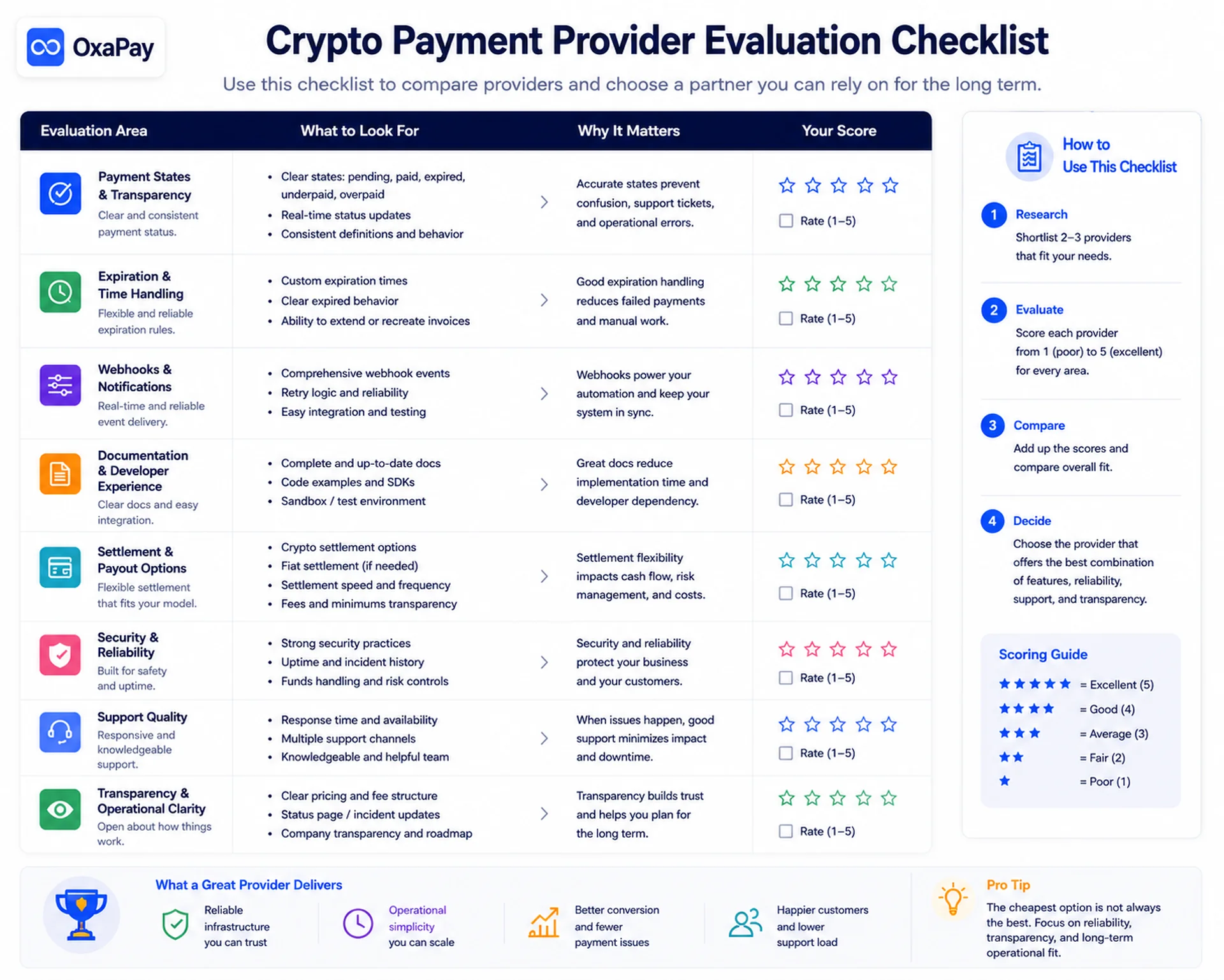
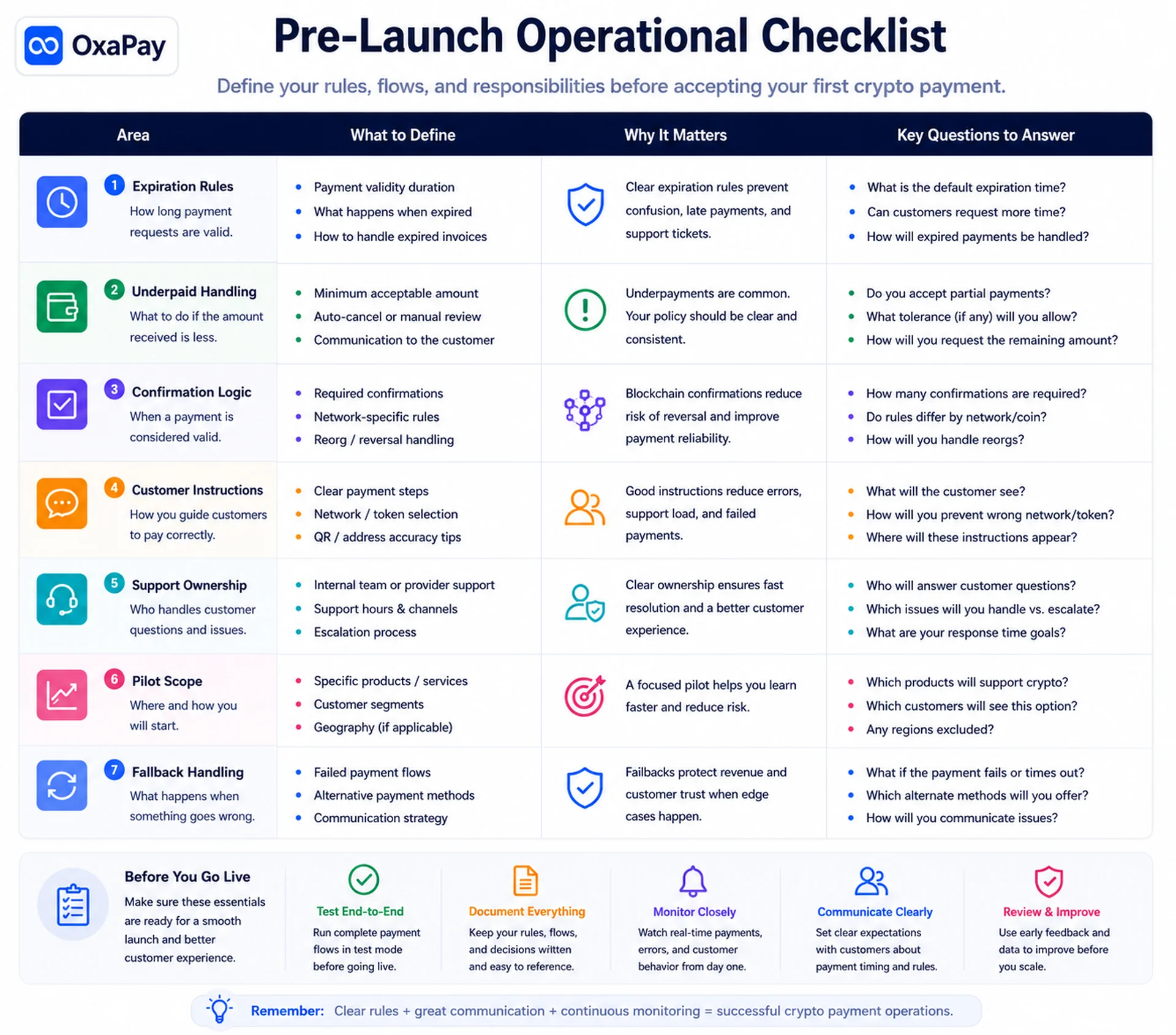
حدّد الإتمام والصلاحية والاستثناءات والاسترداد والتسليم قبل الإطلاق
حالة الدفع التقنية ليست أمراً تلقائياً بالشحن أو إضافة الرصيد. لا ينبغي أن تؤدي حالة الرصد أو المعالجة إلى تسليم غير قابل للاسترجاع. اربط كل حالة بإجراءات تجارية مسموحة.
اكتب سياسات للنقص والزيادة والدفع المتأخر والشبكة الخاطئة والاسترداد. وضح قبول هامش النقص أو طلب المتبقي أو المراجعة أو الرفض والجهة المخولة بكل قرار. حافظ على رسائل واضحة يفهمها العميل.
- دفع ناقص: هامش قبول أو استكمال أو مراجعة أو رفض
- دفع متأخر: تحقق من السعر والمخزون والطلب
- دفع زائد: رصيد أو رد مع توثيق وموافقة
- شبكة خاطئة: قيّم إمكان الاستعادة قبل تقديم وعد
- استرداد: تحقق من الوجهة والمبلغ والرسوم والإذن
الخلاصة العملية للتاجر: كل حالة غير مثالية تحتاج مسؤولاً وإجراءً مسموحاً ورسالة للعميل.
المصادر الرسمية والمواد ذات الصلة: OxaPay Payment Status Table
التنظيم والعقوبات والضرائب والمحاسبة والسجلات جزء من قرار الإطلاق
تختلف الالتزامات بحسب الدولة والأصل ونموذج الحفظ والنشاط وخدمات التحويل والسحب. راجع متطلبات مكافحة غسل الأموال والعقوبات وحماية المستهلك والضرائب والتقارير قبل الإطلاق. إرشادات FATF وإطار OECD مرجعان دوليان لا يغنيان عن التحليل المحلي.
تحتاج الأصول المشفرة إلى سياسة محاسبية مستقلة؛ فقد لا تصنف مثل النقد وفق تفسيرات IFRS. حدد مصدر سعر التقييم والتوقيت وحفظ المعرفات والسيطرة على الأموال والمطابقة قبل تراكم الأرصدة.
- النطاق القانوني: القبول والحفظ والتحويل والمدفوعات الخارجة
- السجلات: رقم الطلب والدفع والمعاملة والتوقيت والرسوم والنتيجة
- التقييم: مصدر السعر ولحظة التسجيل
- الخزانة: الصلاحيات والتحويل والسحب والمطابقة
الخلاصة العملية للتاجر: هذه إرشادات تشغيلية وليست مشورة قانونية أو ضريبية أو محاسبية.
المصادر الرسمية والمواد ذات الصلة: FATF Virtual Assets · OECD Crypto-Asset Reporting Framework · IFRS Cryptocurrency Holdings
أطلق تجربة ضيقة النطاق مع سيناريوهات اختبار مقصودة
لا ينبغي أن تثبت النسخة الأولى ملاءمة العملات المشفرة لكل نشاط الشركة، بل صلاحية استخدام محدد بمخاطر مضبوطة. قيّد المنتج والجمهور والدول والأصول وحد المبلغ والحجم اليومي.
اختبر المدفوعات الناجحة والمتأخرة والناقصة والمنتهية والمكررة والاسترداد وتعطل الإشعارات. عين مسؤولين للمدفوعات والدعم والتطوير والمالية وضع شروط إيقاف واضحة.
- النطاق: حالة استخدام واحدة وأصول محدودة وسقف للمعاملة
- الاختبار: نجاح وتأخير ونقص وانتهاء وتكرار ورد
- المسؤولية: أشخاص للدفع والدعم والمالية والتصعيد
- الإيقاف: حادث أمني أو تسليم خاطئ أو سجلات غير قابلة للمطابقة
الخلاصة العملية للتاجر: لا تكتمل التجربة حتى يمكن إعادة بناء كل دفعة من الطلب إلى الإجراء النهائي.
المصادر الرسمية والمواد ذات الصلة: Generate Invoice API · Webhooks · Payment Information API
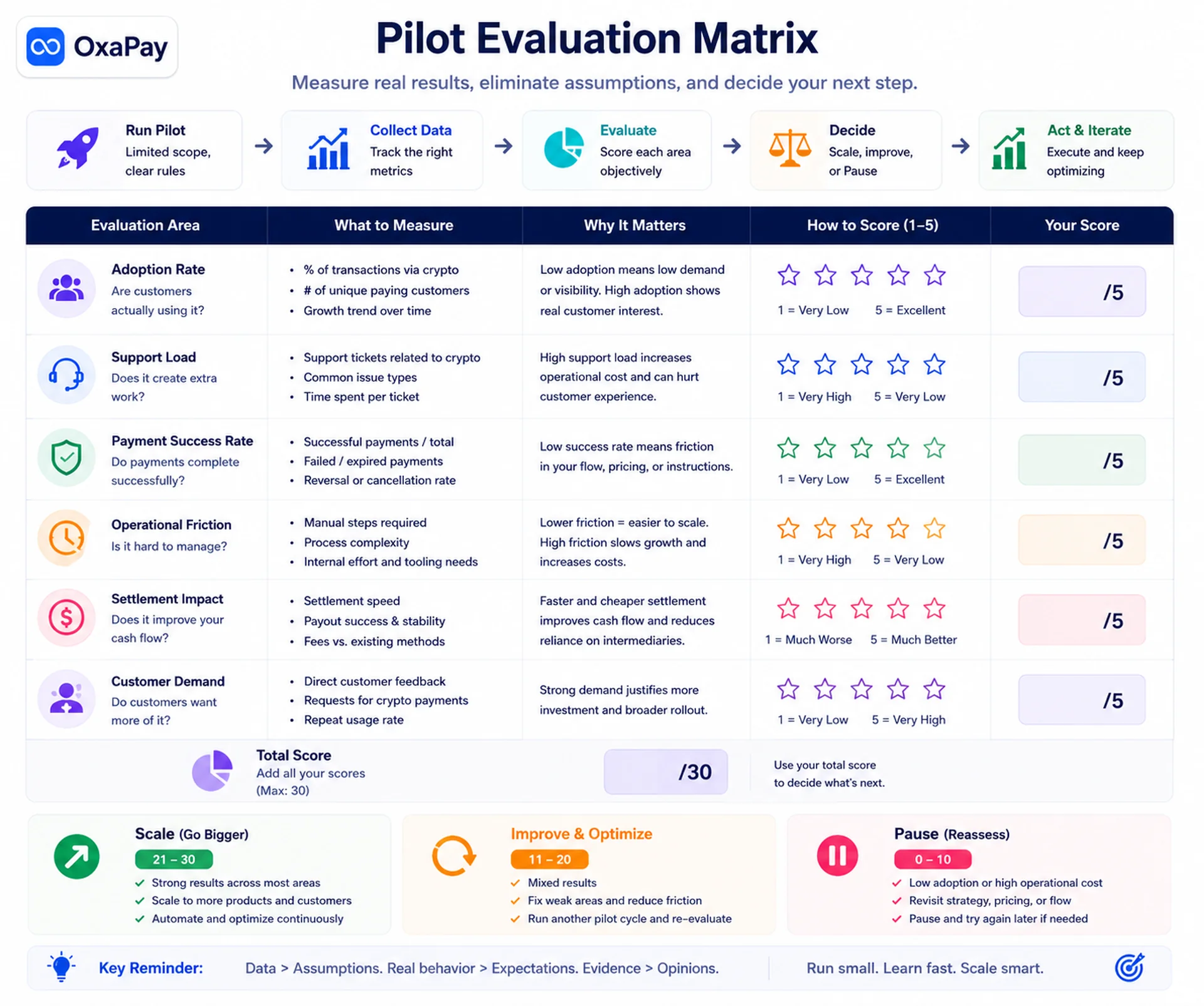
قِس قيمة العميل وجودة الدفع وكلفة التشغيل قبل التوسع
عدد المعاملات وحده لا يثبت النجاح. قِس اختيار العملاء المؤهلين للخيار ونسبة الطلبات المكتملة والوقت حتى القبول وحجم الاستثناءات.
أضف عدد تذاكر الدعم ودقائق عمل الفريق وتفاوت التسوية ومشكلات المطابقة إلى الرسوم المباشرة. توسع فقط إذا حقق المسار سوقاً جديدة أو مبيعات إضافية تفوق التكلفة والمخاطر.
- التبني: نسبة العملاء الذين يختارون العملات المشفرة
- الإتمام: الطلبات التي تصل لحالة مقبولة
- الوقت: التأخر قبل التسليم أو التسوية
- الاستثناءات: نقص وتأخر وانتهاء وعدم تطابق
- الدعم: الاتصالات والدقائق لكل دفعة ناجحة
- القيمة الصافية: المنفعة بعد كل الأعباء
الخلاصة العملية للتاجر: قرّر التوسع أو إعادة التصميم أو التوقف بالأرقام وليس بالنشاط التقني.
المصادر الرسمية والمواد ذات الصلة: Payment History API
اختر أدوات OxaPay على أساس مشكلة التاجر
لا يناسب أسلوب واحد كل عمليات التحصيل. رابط الدفع لتجربة بسيطة، والفاتورة لتعريف المبلغ والمهلة والمرجع، والإضافة لمنصة متجر مدعومة، وAPI لإنشاء جلسات دفع داخل منتج خاص.
احتفظ بمعرف تتبع OxaPay إلى جانب رقم طلبك. تحقق من صحة إشعارات webhook وعالج التكرار دون آثار إضافية، ثم استعلم عن معلومات الدفع أو سجله عند فقد الأحداث. يظل التسليم والدعم والامتثال والمحاسبة ضمن مسؤولية التاجر.
- اختبار الطلب: رابط دفع بسيط
- إضافة هيكل: فاتورة مع مرجع وwebhook
- ربط متجر: إضافة رسمية لمنصة مدعومة
- أتمتة خاصة: API مع حالة داخلية دائمة
الخلاصة العملية للتاجر: خدمة الدفع تدعم سياسة التاجر التشغيلية ولا تحل محلها.
المصادر الرسمية والمواد ذات الصلة: Payment Link · Invoice · Plugins · Merchant API
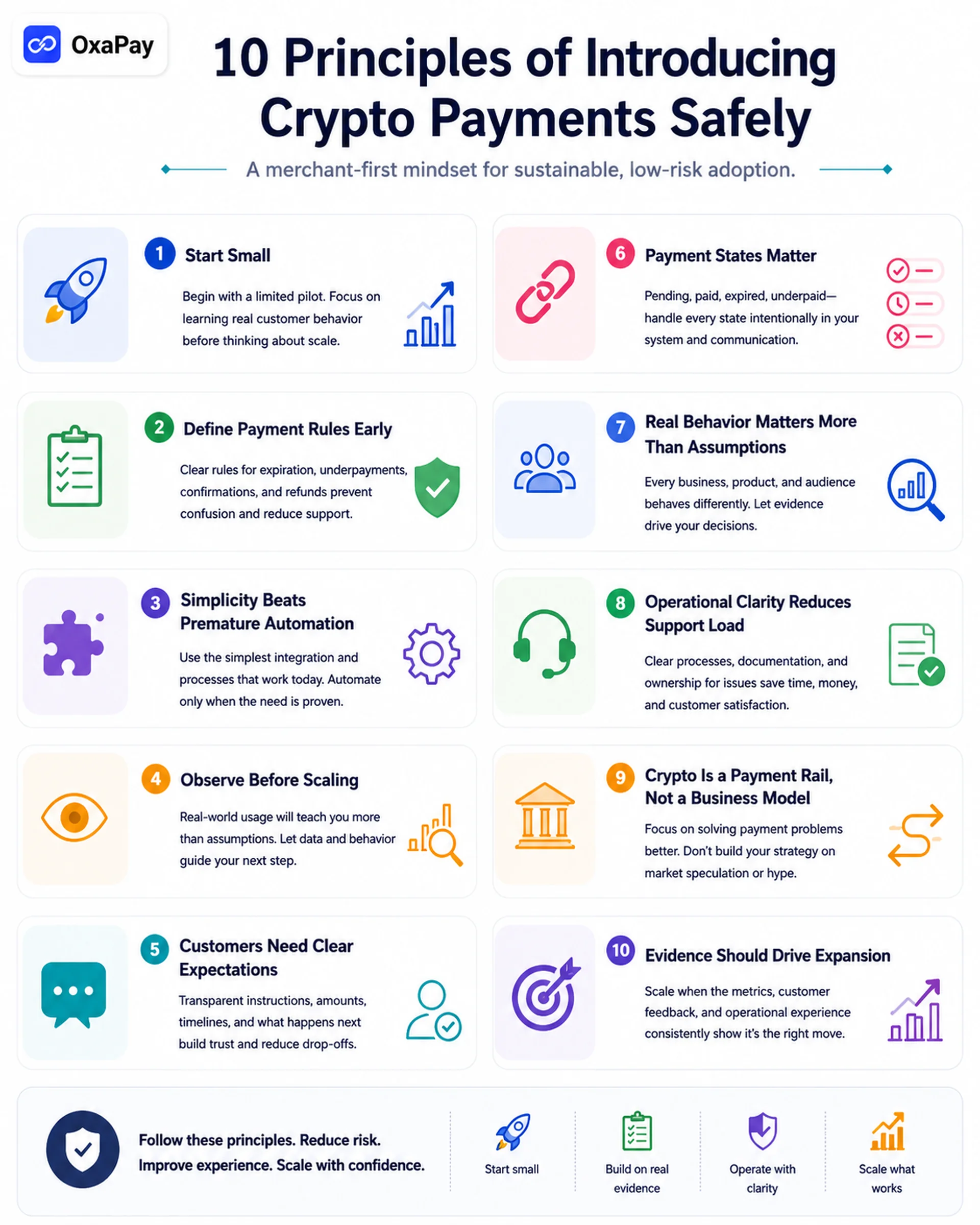
عشرة مبادئ تشغيلية لإدخال الدفع المشفر بأمان
التبني الآمن سلسلة قرارات حول المشكلة والمالك والمسار وحدود المخاطر وليس مجرد تفعيل خيار دفع. اختبر حالات الإخفاق الفعلية قبل توسيع الخدمة.
تجمع المبادئ التالية تجربة العميل ومعنى حالات الشبكة وأمن الأحداث والسجلات المالية ودليل القرار.
- ١. ابدأ بمشكلة دفع قابلة للقياس
- ٢. عين مسؤولاً تشغيلياً
- ٣. اختر أبسط نموذج مناسب
- ٤. ادعم أصولاً وشبكات يمكن تشغيلها
- ٥. لا تساوِ بين الرصد والتسليم
- ٦. عرّف النقص والتأخر والزيادة والفشل والاسترداد
- ٧. أمّن المفاتيح وwebhook والإجراءات
- ٨. احتفظ بسجلات قابلة لإعادة البناء
- ٩. ابدأ بتجربة محدودة وشروط توقف
- ١٠. توسع فقط بدليل تجاري وتشغيلي
الخلاصة العملية للتاجر: لا تزيل هذه المبادئ كل المخاطر لكنها تجعل المسؤولية والإجراء التالي واضحين.
استند إلى مصادر الدفع والأمن والتنظيم والمحاسبة
تشرح BIS مشكلات المدفوعات عبر الحدود، وتشرح وثائق بيتكوين معالجة المعاملات والتأكيد. تقدم FATF وOECD مراجع تنظيمية وضريبية؛ وتناقش IFRS التصنيف المحاسبي، وتوضح OWASP مخاطر أمن واجهات البرمجة.
تحقق من مستندات OxaPay الحالية فيما يتعلق بالخدمات والأصول والأسعار ومعاملات API والحالات لأنها تتغير. المحتوى تعليمي ولا يغني عن الاستشارة المهنية المختصة.
- BIS: عوائق الدفع الدولي
- Bitcoin: المعاملات والتأكيد
- FATF وOECD: الامتثال والتقارير
- IFRS: التصنيف المحاسبي
- OWASP: أمن API
- OxaPay: قدرات الخدمة والوثائق الحالية
الخلاصة العملية للتاجر: قوة الاستراتيجية في جودة الأدلة والسياسات والرقابة، لا في مجرد قرار قبول التشفير.
المصادر الرسمية والمواد ذات الصلة: BIS Cross-Border Payments · Bitcoin Payment Processing · FATF · OECD · IFRS · OWASP