بیشتر مردم فقط زمانی با کارمزدهای بلاکچین مواجه میشوند که مجبور به پرداخت آنها باشند.
ممکن است یک تراکنش امروز چند سنت و فردا چند دلار هزینه داشته باشد. همان پرداخت میتواند روی یک شبکه ارزان و روی شبکهای دیگر بهمراتب گرانتر باشد. گاهی پرداخت سریع تأیید میشود و گاهی بیشتر از انتظار در حالت انتظار باقی میماند.
در نگاه اول، این تفاوتها ممکن است غیرقابلپیشبینی به نظر برسند.
در واقع، کارمزدهای بلاکچین هزینههای تصادفیای نیستند که به تراکنشها اضافه شده باشند. آنها بخشی از سازوکاری هستند که شبکههای بلاکچینی برای تخصیص منابع محدود، اولویتبندی فعالیت و مدیریت تقاضا استفاده میکنند.
بنابراین درک کارمزدهای بلاکچین فقط به کاهش هزینهها مربوط نیست. بلکه به درک این موضوع مربوط است که سیستمهای پرداخت بلاکچینی در شرایط واقعی چگونه کار میکنند، چرا کارمزدها در طول زمان تغییر میکنند و چرا همان پرداخت میتواند در شبکههای مختلف رفتار بسیار متفاوتی داشته باشد.
وقتی بدانید کارمزدها در واقع برای چه منبعی رقابت میکنند، بخش زیادی از رفتار آنها قابلدرکتر میشود.
کارمزدهای بلاکچین وجود دارند چون Blockspace محدود است
هر بلاکچین با محدودیتهایی کار میکند.
برخلاف سیستمهای سنتی که اغلب میتوانند با افزایش تقاضا زیرساخت را گسترش دهند، شبکههای بلاکچین باید تراکنشها را در محدودههای از پیش تعریفشده پردازش کنند. هر بلاک، بسته به طراحی بلاکچین، تنها میتواند مقدار محدودی داده، محاسبات یا فعالیت شبکه را در خود جای دهد.
Blockspace یک منبع کمیاب است
این ظرفیت محدود معمولاً Blockspace نامیده میشود.
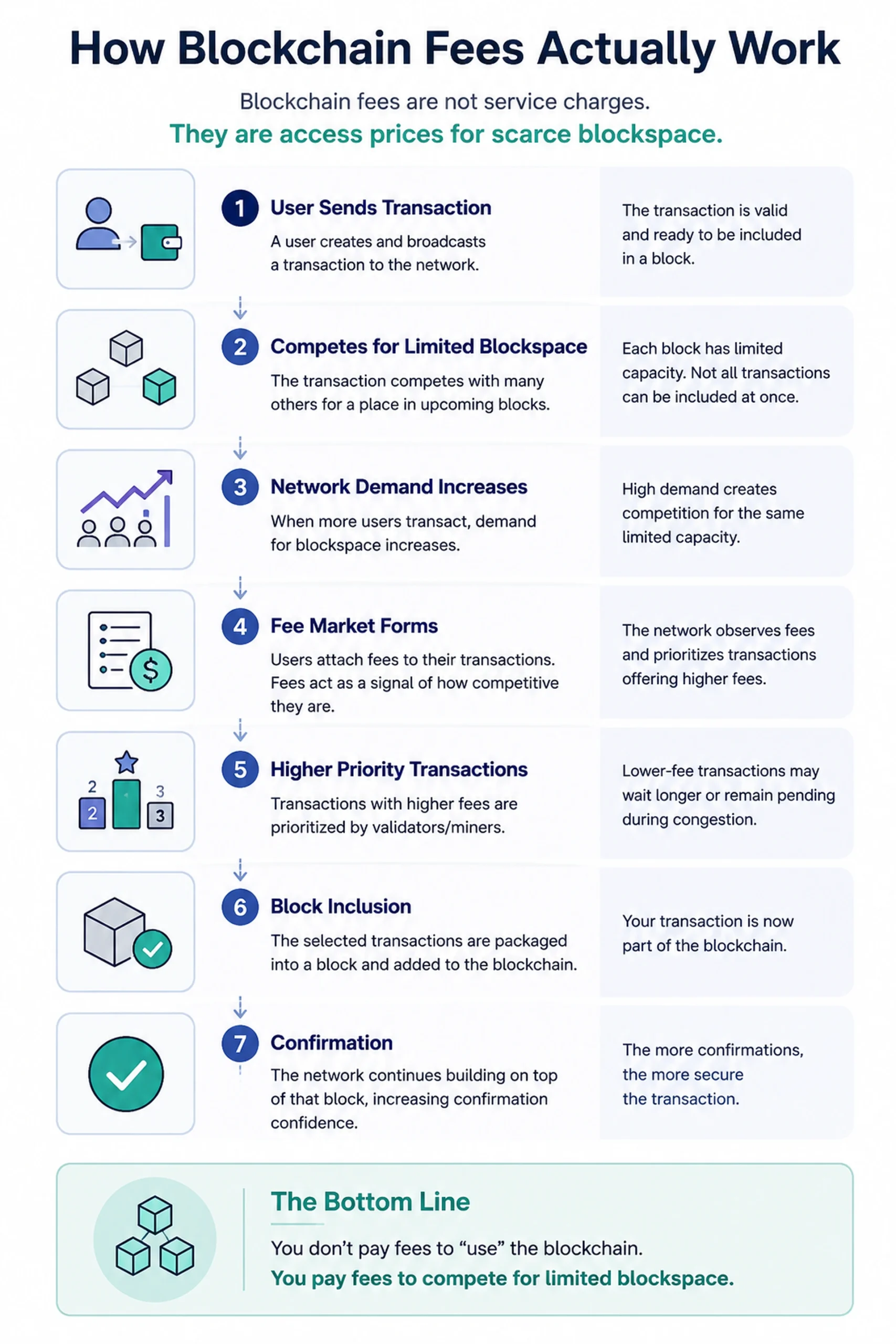
وقتی کاربر تراکنشی ارسال میکند، در عمل برای دسترسی به بخشی از این Blockspace محدود درخواست میدهد. سپس شبکه باید تصمیم بگیرد کدام تراکنشها زودتر در بلاک قرار بگیرند و کدامها منتظر بلاکهای بعدی بمانند.
این موضوع یک واقعیت اقتصادی بنیادی ایجاد میکند.
Blockspace کمیاب است.
و هر زمان تقاضا برای یک منبع کمیاب افزایش پیدا کند، رقابت بهطور طبیعی شکل میگیرد.
در دورههای آرام، Blockspace موجود ممکن است برای پردازش سریع بیشتر تراکنشها با هزینه نسبتاً پایین کافی باشد. اما وقتی فعالیت تراکنشها افزایش مییابد—مثلاً بهدلیل نوسان بازار، معاملات سنگین، عرضه توکن یا رشد استفاده از شبکه—کاربران بیشتری برای همان ظرفیت محدود رقابت میکنند.
کارمزدها چگونه ظرفیت محدود را تخصیص میدهند؟
در این مرحله، شبکه به سازوکاری برای اولویتبندی تراکنشها نیاز دارد.
اینجاست که کارمزدها اهمیت پیدا میکنند.
بهجای تکیه بر یک نهاد مرکزی برای تصمیمگیری درباره اینکه کدام تراکنش زودتر پردازش شود، بیشتر بلاکچینها از بازار کارمزد استفاده میکنند. کاربران به تراکنشهای خود کارمزد اضافه میکنند و این کارمزد نشان میدهد تراکنش نسبت به تراکنشهای دیگری که در انتظار ورود به بلاک هستند چقدر رقابتی است.
بنابراین کارمزدها هدفی بسیار فراتر از صرفاً پوشش هزینههای عملیاتی دارند.
آنها به تخصیص Blockspace محدود در یک محیط غیرمتمرکز کمک میکنند.
وقتی از این زاویه نگاه کنیم، درک کارمزدهای بلاکچین بسیار آسانتر میشود. در بسیاری از موارد، کاربر فقط برای انتقال ارزش پول نمیپردازد؛ بلکه برای دسترسی به یک منبع کمیاب شبکه رقابت میکند که میزان در دسترس بودن آن دائماً با تغییر تقاضا تغییر میکند.
کارمزدها در واقع سیگنالهایی برای شبکه هستند
یکی از بزرگترین سوءبرداشتها این است که کارمزدهای بلاکچین مانند هزینههای معمول پردازش در نظر گرفته شوند.
آنها چیزی فراتر از این هستند.
کارمزد بهعنوان یک سیگنال عمل میکند:
«این تراکنش با چه فوریتی باید در بلاک قرار بگیرد؟»
تراکنشهایی با کارمزد بالاتر معمولاً اولویت بیشتری میگیرند. تراکنشهایی با کارمزد پایینتر ممکن است بیشتر در حالت انتظار بمانند، بهخصوص هنگام ازدحام. (مرکز راهنمای BVNK)
این موضوع رفتار عملیاتی تراکنشها را تغییر میدهد.
یک تراکنش ممکن است در یکی از این وضعیتها باشد:
- کاملاً معتبر باشد
- بهطور کامل امضا شده باشد
- بهدرستی در شبکه منتشر شده باشد
و با این حال منتظر تأیید بماند، چون کارمزد آن در شرایط فعلی شبکه به اندازه کافی رقابتی نیست.
شبکه پرداخت را رد نمیکند.
بلکه تراکنشهای دیگر را زودتر در اولویت قرار میدهد.

بلاکچینهای مختلف کارمزد را به روشهای کاملاً متفاوت محاسبه میکنند
The term “blockchain fee” often sounds like a single concept.
در عمل، شبکههای بلاکچینی مختلف کارمزدها را با مدلهای بسیار متفاوتی محاسبه و اولویتبندی میکنند.
شبکههای متفاوت، مدلهای کارمزد متفاوت
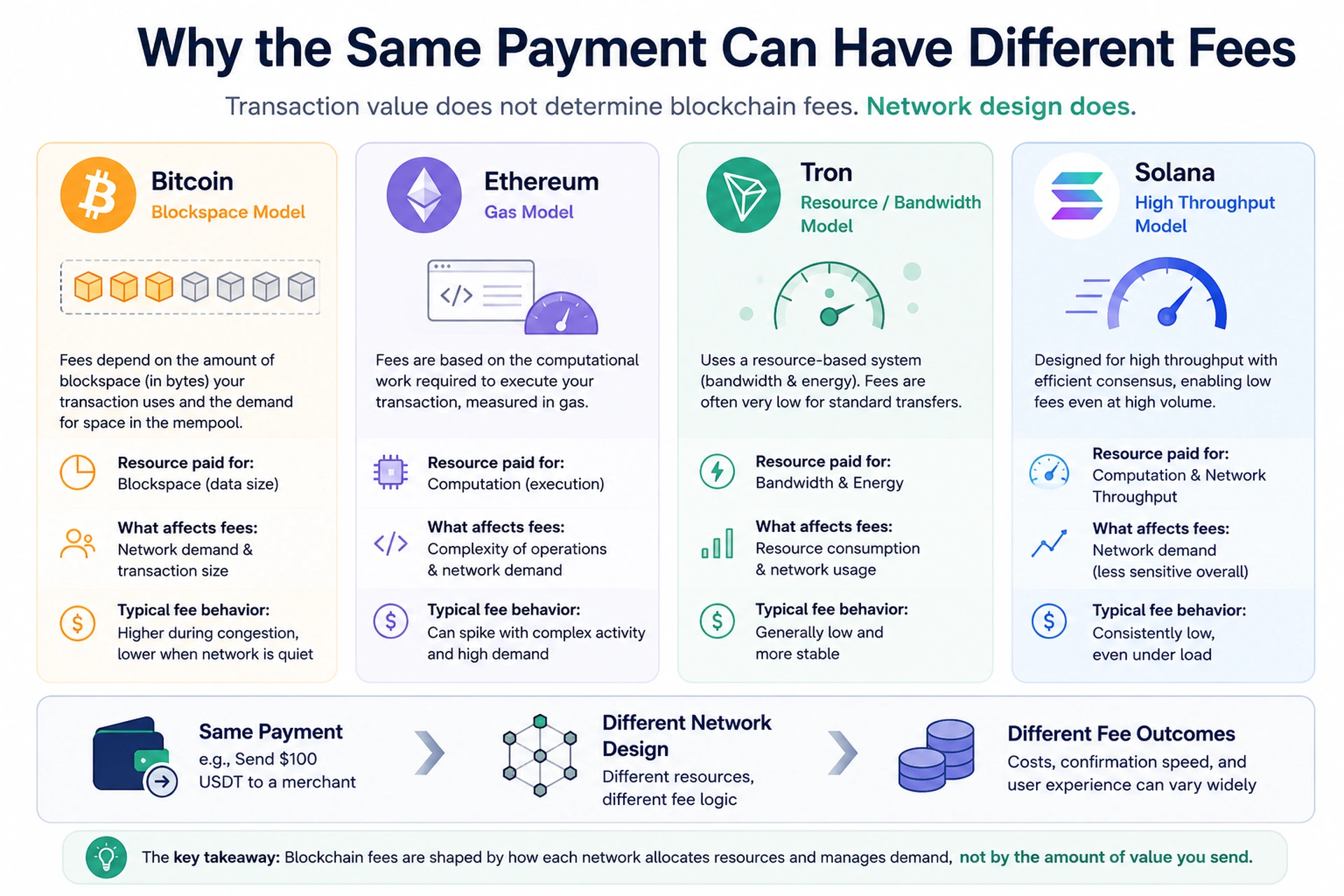
Bitcoin با Blockspace بهعنوان یک منبع کمیاب برخورد میکند. تراکنشها برای ورود به بلاکهای بعدی رقابت میکنند و کاربران معمولاً بر اساس اندازه تراکنش و رقابتی بودن کارمزد هزینه میپردازند. هرچه تراکنش Blockspace بیشتری مصرف کند و تقاضا برای آن فضا بیشتر باشد، کارمزد لازم نیز ممکن است بیشتر شود. (Bitpanda)
Ethereum به این مسئله متفاوت نگاه میکند. بهجای تمرکز اصلی بر اندازه تراکنش، هزینه اجرای محاسبات را از طریق مدل Gas دریافت میکند. هر عملیاتی که شبکه انجام میدهد منابع مصرف میکند و عملیات پیچیدهتر به Gas بیشتری نیاز دارند. در نتیجه، تعامل با قرارداد هوشمند میتواند بسیار گرانتر از یک انتقال ساده باشد. (Investopedia)
شبکههای دیگر نیز رویکردهای متفاوتی دارند.
شبکههایی مانند Tron و BNB Chain معمولاً با ساختارهای کارمزدی متفاوت و توان عملیاتی بالاتر، هزینه تراکنش کمتری ارائه میدهند.
Solana رویکرد متفاوتی دارد و روی پردازش کارآمد حجم بالای تراکنشها در کنار حفظ هزینه نسبتاً پایین تمرکز میکند.
چرا همان پرداخت میتواند ارزانتر یا گرانتر باشد؟
برای کسبوکارها، نکته مهم این است که کارمزدهای بلاکچین فقط بر اساس مبلغ پرداخت تعیین نمیشوند. آنها تحت تأثیر نحوه تخصیص منابع، اولویتبندی تراکنشها و مدیریت تقاضا در هر شبکه هستند.
یک پرداخت ۱۰۰ دلاری و یک پرداخت ۱۰٬۰۰۰ دلاری ممکن است روی یک بلاکچین کارمزد مشابهی داشته باشند، چون ارزش تراکنش اغلب ارتباطی با مقدار Blockspace یا منابع محاسباتی مصرفشده ندارد. در عین حال، دقیقاً همان پرداخت روی شبکههای مختلف میتواند هزینه، رفتار تأیید و تجربه کاربری بسیار متفاوتی داشته باشد.
این موضوع تفاوت زیادی با بسیاری از سیستمهای پرداخت سنتی دارد که در آنها هزینه پردازش معمولاً به ارزش تراکنش وابسته است. در شبکههای بلاکچینی، کارمزدها معمولاً بر اساس مصرف منابع و تقاضای شبکه تعیین میشوند، نه مبلغ منتقلشده.
به همین دلیل پذیرندگان شبکهها را فقط بر اساس امنیت و میزان پذیرش ارزیابی نمیکنند، بلکه پیشبینیپذیری کارمزد، سرعت تأیید و کارایی کلی پرداخت را نیز در نظر میگیرند.
چرا تراکنشهای قرارداد هوشمند معمولاً گرانترند؟
یک انتقال ساده بلاکچینی نسبتاً سبک است.
اما تراکنشهای توکن و تعامل با قراردادهای هوشمند یک لایه دیگر اضافه میکنند:
اجرا.
برای مثال:
- ارسال ETH سادهتر از ارسال توکن ERC20 است
- تعامل با پروتکلهای DeFi پیچیدهتر از انتقال استیبلکوین است
- اجرای چند فراخوانی قرارداد، تقاضای محاسباتی را بیشتر افزایش میدهد
شبکه باید تمام این منطق را پردازش کند.
به همین دلیل کارمزدهای بلاکچین اغلب همراه با پیچیدگی اپلیکیشن افزایش پیدا میکنند، نه فقط با حجم تراکنش. (Investopedia)
ازدحام همهچیز را تغییر میدهد
کارمزدها در دورههای ازدحام بیشتر به چشم میآیند.
وقتی تقاضای تراکنش از ظرفیت موجود شبکه بیشتر شود، تراکنشها برای فضای محدود ورود به بلاک رقابت میکنند. با افزایش رقابت، اعتبارسنجها و ماینرها معمولاً تراکنشهایی را در اولویت قرار میدهند که کارمزد رقابتیتری پیشنهاد میکنند. (Bitpanda)
به همین دلیل جهش کارمزدها اغلب در دورههای فعالیت شدید مانند نوسان بازار، عرضههای بزرگ توکن یا افزایش ناگهانی استفاده از شبکه رخ میدهد.
چیزی که ممکن است غیرقابلپیشبینی به نظر برسد معمولاً نتیجه عرضه و تقاضا روی ظرفیت محدود بلاکچین است.
همان پرداخت میتواند هزینههای بسیار متفاوتی داشته باشد
این موضوع بسیاری از کاربران را غافلگیر میکند.
یک انتقال کوچک گاهی میتواند گرانتر از انتظار باشد، در حالی که یک انتقال بسیار بزرگتر نسبتاً ارزان باقی بماند.
دلیلش این است که کارمزد بلاکچین معمولاً مستقیماً به مبلغ پرداخت وابسته نیست.
در عوض، کارمزد به این عوامل بستگی دارد:
- ساختار تراکنش
- پیچیدگی اجرا
- وضعیت Mempool
- تقاضای شبکه
- و معماری بلاکچین
این موضوع بهخصوص برای پذیرندگانی مهم است که با این موارد سروکار دارند:
- ریزپرداختها
- پرداختهای بینالمللی
- سیستمهای اشتراک
- یا محیطهای با حجم بالای تراکنش
چون امکانپذیری عملیاتی بهشدت به رفتار قابلپیشبینی کارمزدها وابسته است.
تخمین کارمزد در واقع یک مسئله پیشبینی است
کیف پولهای مدرن تلاش میکنند کارمزد مناسب را بهطور خودکار تخمین بزنند.
اما تخمین کارمزد قطعی نیست.
پیشبینی است.
کیف پولها این موارد را تحلیل میکنند:
- وضعیت فعلی Mempool
- بلاکهای اخیر
- الگوهای ازدحام
- و میزان رقابتی بودن تراکنش
سپس تخمین میزنند چه کارمزدی احتمالاً میتواند به زمان تأیید هدف برسد. (arXiv)
مشکل این است که شرایط شبکه میتواند بهسرعت تغییر کند.
به همین دلیل تراکنشها گاهی:
- با تأخیر مواجه میشوند
- کارمزد ناکافی دارند
- یا بهطور غیرمنتظره گران میشوند
کیف پول قطعیت را محاسبه نمیکند.
بلکه یک بازار دائماً در حال تغییر را تخمین میزند.
کارمزد کمتر اغلب به معنای اطمینان دیرتر است
بسیاری از کاربران میپرسند:
«چطور میتوانم کارمزدهای بلاکچین را کاهش دهم؟»
پرسش عمیقتر این است:
«در مقابل چه چیزی را میپذیرم؟»
کارمزد کمتر معمولاً به معنای:
- اولویت کمتر تراکنش
- زمان انتظار طولانیتر
- و زمان تأیید کمتر قابلپیشبینی
برای برخی پرداختها، این کاملاً قابلقبول است.
برای برخی دیگر، بهخصوص تراکنشهای حیاتی برای کسبوکار، تأخیر ریسک عملیاتی ایجاد میکند.
به همین دلیل بهینهسازی کارمزد فقط به حداقل رساندن هزینه نیست.
بلکه ایجاد تعادل میان این موارد است:
- فوریت
- قابلیت اطمینان
- و کارایی
چرا کارمزدها از نظر عملیاتی برای پذیرندگان اهمیت دارند؟
برای پذیرندگان، کارمزدهای بلاکچین فقط روی هزینه تراکنش اثر نمیگذارند.
آنها روی سرعت تأیید پرداخت، روان بودن تجربه پرداخت برای مشتری و میزان قابلپیشبینی بودن عملیات پرداخت هنگام افزایش فعالیت شبکه اثر دارند.
وقتی کارمزد کمتر رقابتی باشد، ممکن است ورود تراکنش به بلاک بیشتر طول بکشد. مشتریان ممکن است پرداخت را بیشتر از انتظار در حالت Pending ببینند، تیم پشتیبانی با پرسشهای بیشتری روبهرو شود و کسبوکار نسبت به زمانبندی پرداخت عدمقطعیت بیشتری داشته باشد.
این موضوع برای پذیرندگانی که حجم بالای تراکنش دارند، پرداختهای بینالمللی میپذیرند یا تراکنشهای حساس به زمان را مدیریت میکنند اهمیت بیشتری دارد؛ چون تأخیر میتواند تجربه مشتری و کارایی عملیاتی را تحت تأثیر قرار دهد.
در نتیجه، کارمزد بلاکچین صرفاً یک ویژگی فنی شبکه نیست.
بلکه بخشی از تجربه گستردهتر پرداخت است و روی قابلیت اطمینان، پیشبینیپذیری و کارایی کلی حرکت ارزش در سیستمهای بلاکچینی اثر میگذارد.
نتیجهگیری
کارمزدهای بلاکچین اغلب بهعنوان یک مشکل هزینه مطرح میشوند.
اما هزینه معمولاً نتیجه قابلمشاهده است، نه سازوکار زیرین.
چیزی که در نهایت کارمزد را شکل میدهد رقابت برای منابع محدود شبکه است.
با افزایش پذیرش بلاکچین، کاربران، اپلیکیشنها و کسبوکارهای بیشتری برای همان ظرفیت رقابت میکنند. شبکههای مختلف این رقابت را به روشهای متفاوت مدیریت میکنند، اما هیچکدام آن را بهطور کامل حذف نمیکنند.
به همین دلیل کارمزدها یکی از مهمترین سیگنالها در هر اکوسیستم بلاکچینی باقی میمانند. آنها نشان میدهند شبکه در یک لحظه مشخص چگونه میان تقاضا، ظرفیت و اولویت تراکنش تعادل ایجاد میکند.
برای هر کسی که پرداختهای بلاکچینی را میسازد، استفاده میکند یا میپذیرد، درک کارمزدها کمتر درباره پیشبینی هزینه دقیق تراکنش بعدی و بیشتر درباره فهم اقتصاد سیستمی است که آن تراکنش را پردازش میکند.
درک کارمزدهای بلاکچین فقط یکی از اجزای ساخت یک تجربه پرداخت قابلاعتماد است. ببینید درگاه کریپتوی OxaPay چگونه به کسبوکارها کمک میکند پرداختهای کریپتویی را روی چند شبکه بلاکچینی با سادگی عملیاتی بیشتری مدیریت کنند.