
Большинство мерчантов, принимающих криптовалюту, рано или поздно сталкиваются с терминами Proof of Work и Proof of Stake. Эти концепции часто встречаются в обсуждениях Bitcoin, Ethereum, безопасности блокчейна и надёжности транзакций.
На первый взгляд они могут казаться чисто техническими темами. Многие объяснения сосредоточены на майнерах, валидаторах, оборудовании или энергопотреблении. Эти детали важны, но не поэтому мерчантам стоит обращать на них внимание.
На практике мерчанты имеют дело с платежами.
Некоторые транзакции требуют нескольких подтверждений, прежде чем бизнес будет готов выполнить заказ. Одни сети, кажется, завершают расчёты быстрее других. Разные блокчейны могут обрабатывать одинаковую сумму платежа, создавая при этом совершенно разный уровень уверенности в нём.
Причина часто начинается с механизма консенсуса, лежащего в основе сети.
Proof of Work и Proof of Stake — это разные способы, с помощью которых децентрализованные сети договариваются об истории транзакций. Понимание этой разницы помогает объяснить, почему блокчейн-платежи ведут себя по-разному и почему надёжность платежа может отличаться от одной сети к другой.
Почему блокчейнам нужен консенсус
Любой платёжной системе нужен способ определить, что является истинным.
Когда клиент отправляет деньги, система должна проверить, что отправитель владеет этими средствами, транзакция действительна и те же средства не были уже потрачены где-то ещё.
Традиционные платёжные системы полагаются на централизованные организации — банки, карточные сети и платёжные процессоры — для принятия таких решений.
Блокчейны работают без центрального лица, принимающего решения.
Вместо этого тысячи независимых участников должны согласовать общую историю транзакций. Они должны прийти к одному выводу о том, какие транзакции действительны и какой версии реестра следует доверять.
Этот процесс называется консенсусом.
Без консенсуса блокчейн не мог бы работать как надёжная платёжная сеть, поскольку разные участники могли бы не соглашаться относительно балансов и транзакций.
Proof of Work и Proof of Stake — это просто два разных подхода к достижению такого согласия.
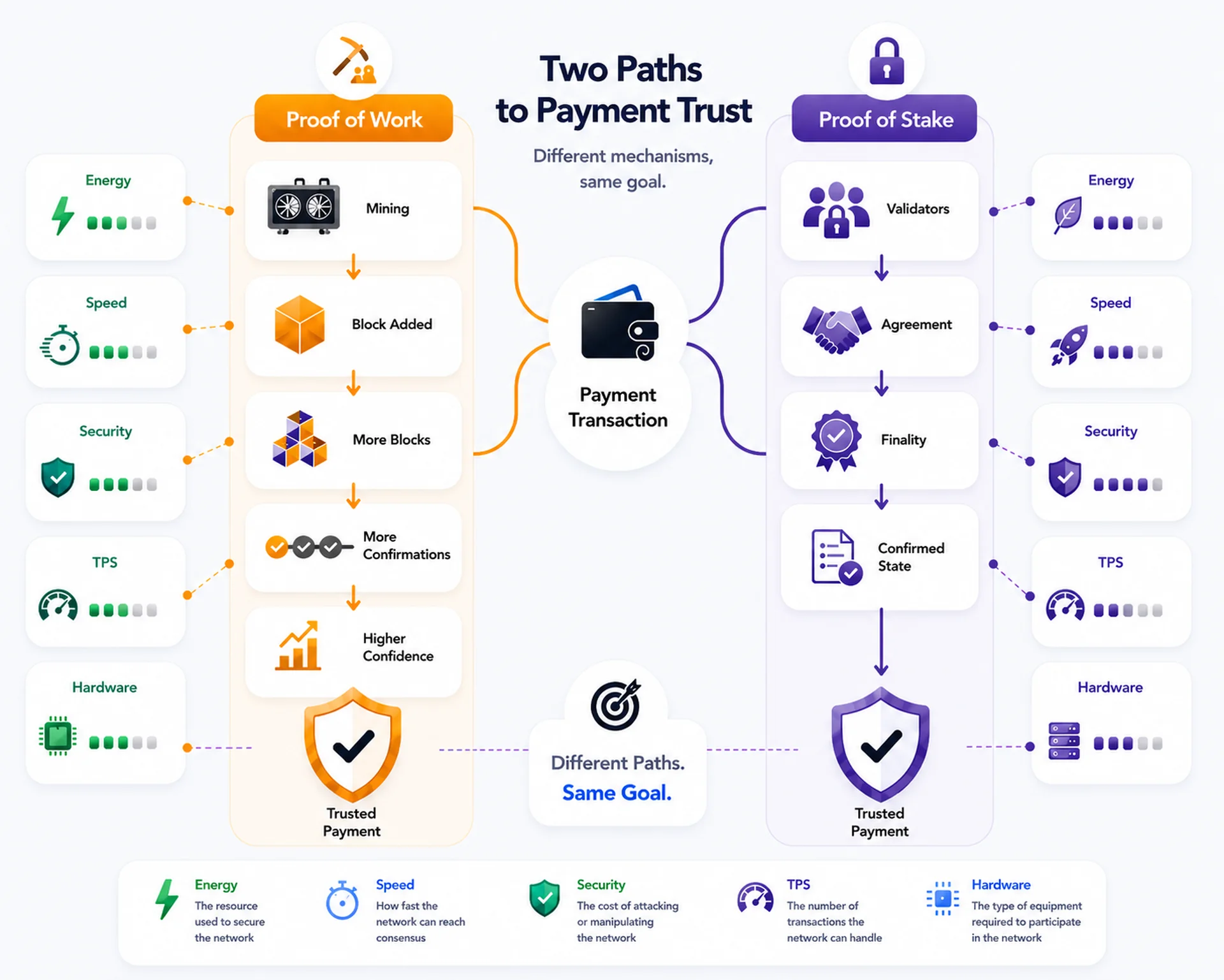
Как Proof of Work создаёт безопасность
Proof of Work — механизм консенсуса, используемый Bitcoin.
В сети Proof of Work майнеры конкурируют за право добавлять блоки в блокчейн, выполняя вычислительную работу. Для этого требуются оборудование, электроэнергия и постоянные операционные затраты.
Идея Proof of Work проста.
Если создание истории блокчейна требует значительных ресурсов реального мира, изменение этой истории должно требовать ещё больше ресурсов.
Атакующему, пытающемуся переписать транзакции, пришлось бы воспроизвести огромный объём вычислительной работы и одновременно конкурировать с остальной сетью. На практике это становится чрезмерно дорого.
Для мерчантов главный вывод не в том, как работает оборудование для майнинга.
Главное то, что сеть создаёт безопасность, делая атаки дорогостоящими. Уверенность в транзакциях растёт, поскольку изменить блокчейн становится всё сложнее по мере накопления дополнительной работы поверх него.
Как Proof of Stake создаёт безопасность
Proof of Stake решает ту же задачу иначе.
Вместо расходования вычислительных ресурсов участники блокируют средства в сети в качестве стейка и становятся валидаторами.
Валидаторы помогают проверять транзакции и участвуют в создании блоков. Если они соблюдают правила, то получают вознаграждение. Если пытаются действовать нечестно, рискуют потерять часть своего стейка.
Вместо защиты сети через расход энергии Proof of Stake защищает её с помощью экономических стимулов.
Сеть исходит из того, что участники, рискующие значительными средствами, мотивированы защищать систему, а не подрывать её.
From a merchant’s perspective, the result is similar: a network capable of maintaining a trustworthy transaction history.
Разница заключается в том, как это доверие формируется.
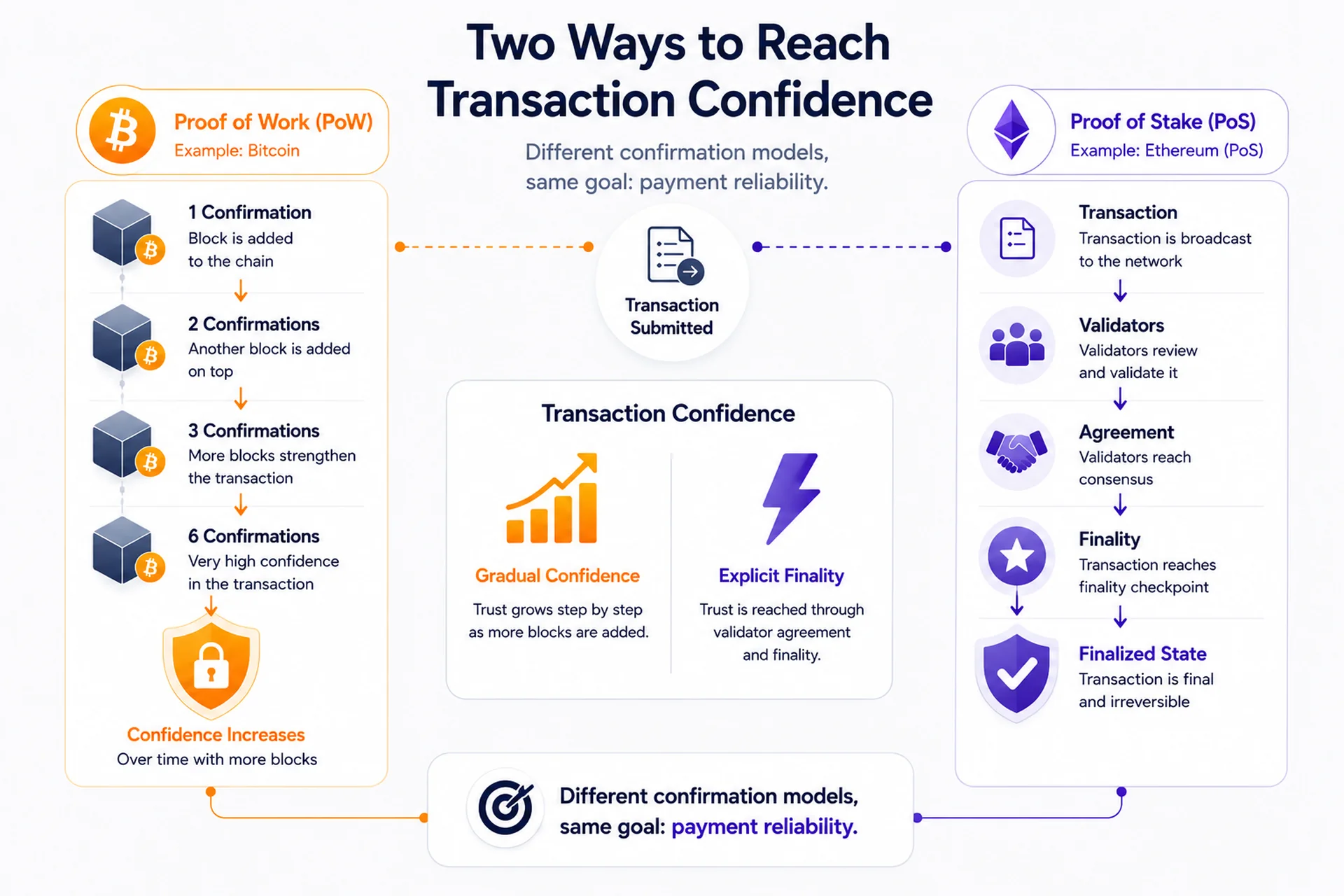
Почему подтверждения транзакций ощущаются по-разному
Одно из самых практических различий между Proof of Work и Proof of Stake проявляется в том, как формируется уверенность в транзакциях.
В Bitcoin уверенность растёт постепенно.
Каждое дополнительное подтверждение делает вероятность отката транзакции всё ниже. Нет точного момента, когда сеть внезапно объявляет транзакцию абсолютно финальной. Вместо этого уверенность растёт шаг за шагом по мере добавления новых блоков.
Это часто называют вероятностной финальностью.
Транзакция Bitcoin с шестью подтверждениями обычно считается гораздо надёжнее транзакции с одним подтверждением, поскольку вероятность отката становится крайне малой.
Многие современные сети Proof of Stake подходят к финальности иначе.
Вместо полной зависимости от накопления подтверждений валидаторы могут явно согласовать определённое состояние блокчейна. После достижения такого согласия откат этих транзакций становится значительно сложнее при нормальных условиях работы.
Это часто называют детерминированной или явной финальностью.
Для мерчантов практическую разницу проще понять на примере.
Представьте два бизнеса, каждый из которых получает платёж на $20 000.
Один получает Bitcoin.
Другой получает платёж в сети Proof of Stake с явной финальностью.
Мерчант Bitcoin может ориентироваться на число подтверждений, поскольку уверенность растёт постепенно со временем.
The Proof of Stake merchant may place greater emphasis on reaching the network’s finality point, where validators have formally agreed on the transaction history.
Оба подхода могут обеспечивать сильную безопасность. Они просто по-разному приходят к уверенности в транзакции.

Быстрее не всегда означает лучше
В обсуждениях Proof of Work и Proof of Stake скорость часто становится первым показателем, который замечают мерчанты.
Клиенты ценят быстрый платёжный опыт, а бизнес естественно хочет, чтобы транзакции проходили эффективно.
Однако сама по себе скорость не определяет качество платежа.
Более быстрая сеть не обязательно надёжнее, как и более медленная сеть не обязательно безопаснее.
Разные блокчейнами оптимизируются под разные приоритеты.
Одни делают акцент на консервативности расчётов и долгосрочной устойчивости. Другие — на эффективности и быстром отклике.
Это различие становится важнее по мере увеличения суммы платежа.
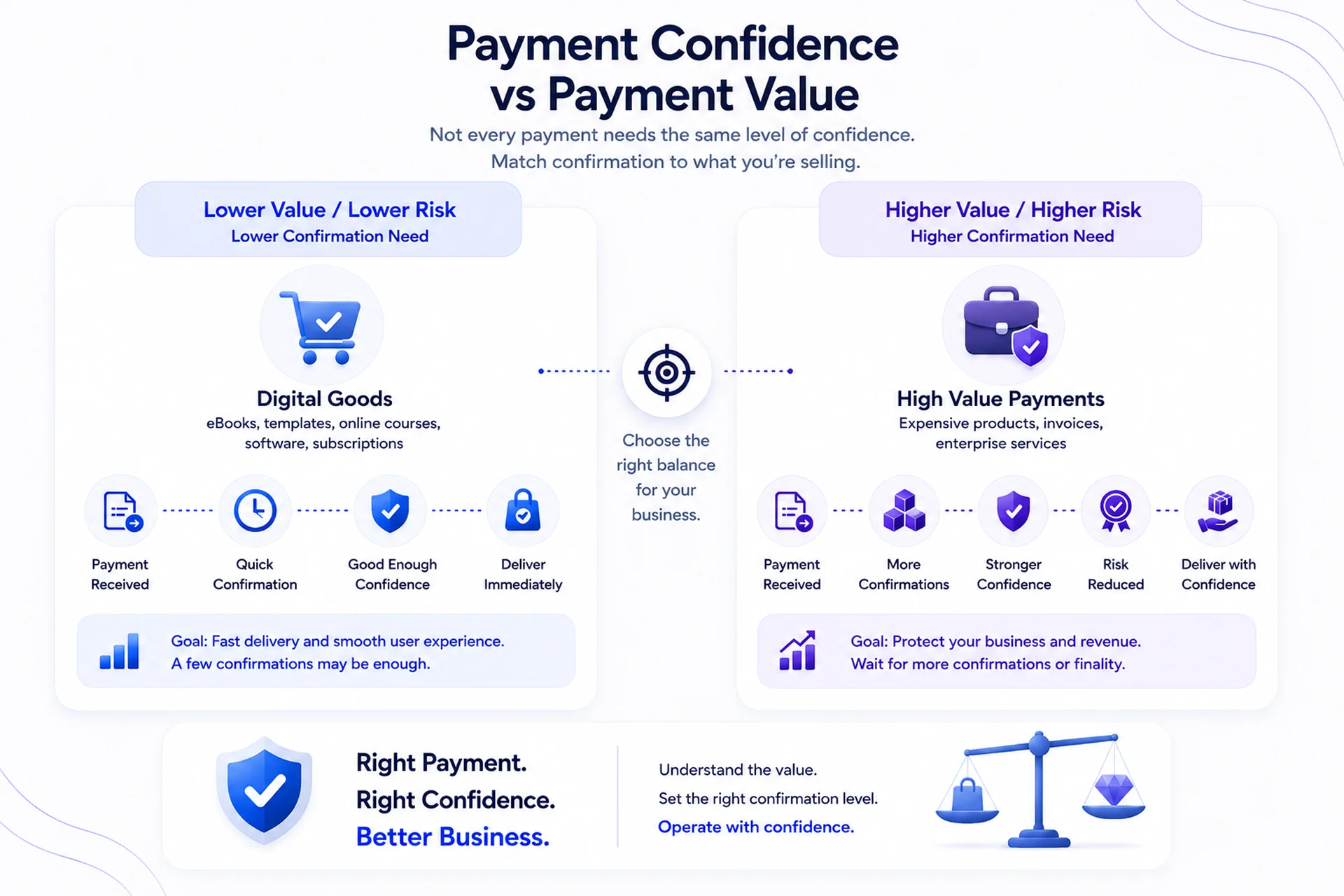
Мерчант, продающий цифровой файл за $5, может ставить на первое место пользовательский опыт и быстрое подтверждение.
Компания, получающая инвойс на $50 000, может больше ценить уверенность в транзакции, чем экономию нескольких минут.
Понимание консенсуса помогает объяснить, почему разные сети идут на разные компромиссы и почему ожидания по подтверждениям могут отличаться между блокчейнами.
Как перегрузка влияет на разные сети
Каждый блокчейн рано или поздно переживает периоды высокого спроса.
Когда больше пользователей хотят провести транзакции, чем сеть может сразу обработать, конкуренция за блокспейс возрастает.
В сетях Proof of Work, таких как Bitcoin, перегрузка часто делает рынок комиссий более конкурентным. Когда спрос на транзакции растёт, пользователи конкурируют за ограниченное место в ближайших блоках, что может повышать комиссии и задерживать транзакции с более низким приоритетом.
Proof of Stake networks can also experience congestion, but the effects may appear differently depending on the network’s architecture and activity levels.
Ethereum — хороший пример. Даже после перехода на Proof of Stake стоимость транзакций всё ещё может значительно расти в периоды высокого спроса, потому что пользователи конкурируют за ограниченные ресурсы сети.
Для мерчантов важный вывод не в том, что один механизм консенсуса устраняет перегрузку, а другой — нет.
Rather, consensus is only one part of a blockchain’s design. Network activity, block capacity, application usage, and user demand all contribute to the payment experience.
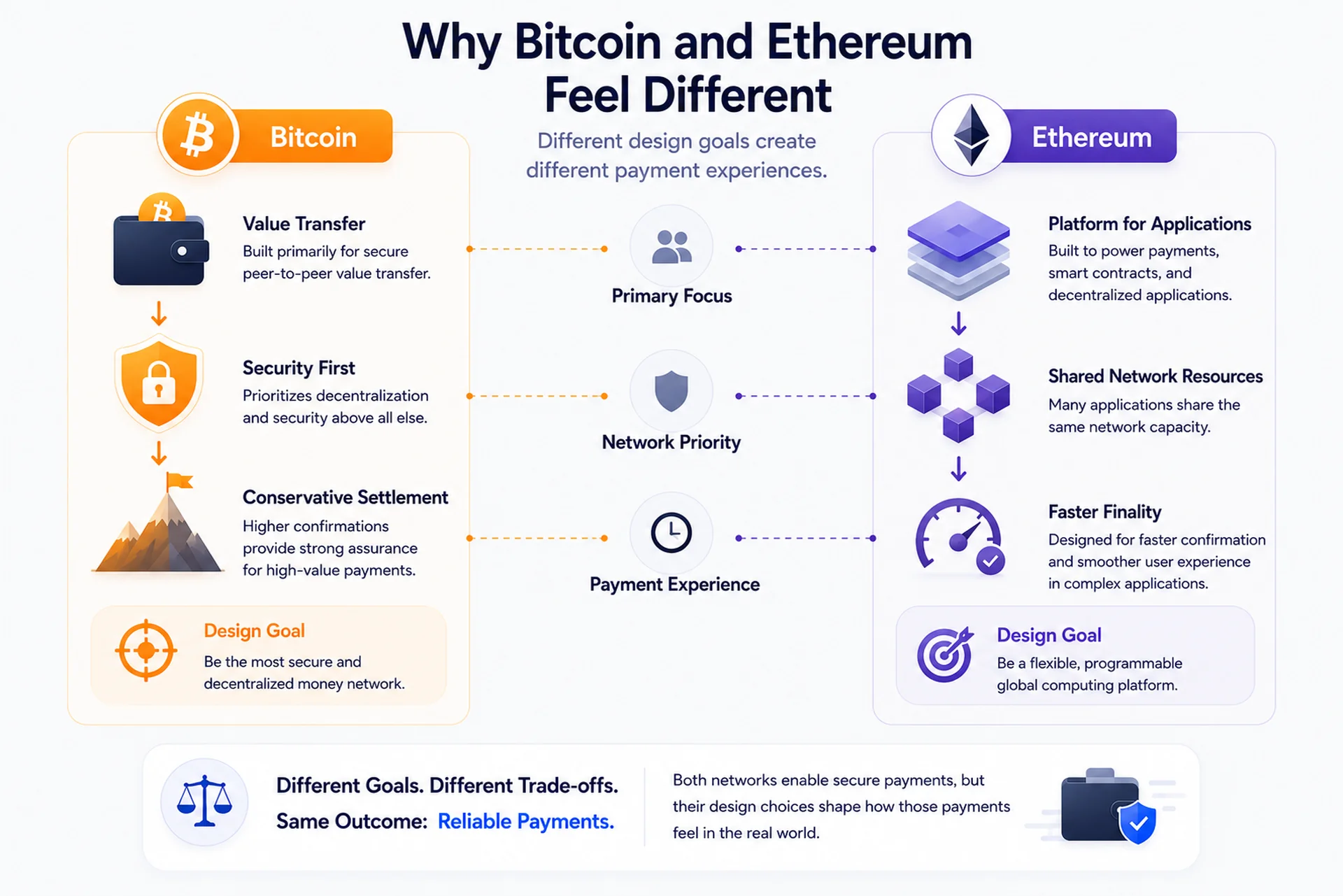
Почему Bitcoin и Ethereum часто ощущаются по-разному
Bitcoin и Ethereum часто сравнивают, потому что это крупнейшие блокчейн-экосистемы.
Но они создавались с разными целями.
Bitcoin прежде всего проектировался для безопасной децентрализованной передачи стоимости. Его архитектура делает акцент на надёжности, безопасности и долгосрочной целостности транзакций.
Ethereum создавался как программируемая платформа, способная поддерживать приложения, смарт-контракты, экосистемы токенов и децентрализованные сервисы наряду с платежами.
Эти приоритеты влияют на поведение сетей.
Когда мерчант принимает Bitcoin, он взаимодействует с системой, в основном ориентированной на передачу и защиту стоимости.
Когда мерчант принимает платежи в Ethereum, он взаимодействует с более широкой экосистемой, где платежи сосуществуют со многими другими типами сетевой активности.
Это не означает, что одна сеть лучше другой.
Это означает лишь, что они были созданы для решения разных задач, поэтому платёжный опыт в них может отличаться.
Какие мерчанты сильнее всего ощущают эти различия?
Не каждому бизнесу нужно глубоко разбираться в Proof of Work и Proof of Stake.
Небольшой интернет-магазин, который лишь иногда принимает криптовалютные платежи, может почти не замечать различий между PoW и PoS.
Однако некоторые мерчанты сталкиваются с этими различиями напрямую.
Компании, получающие крупные платежи, обычно внимательнее оценивают уверенность в транзакции перед предоставлением товара или услуги.
Компании, работающие сразу с несколькими блокчейн-сетями, могут замечать, что ожидания по подтверждениям зависят от конкретной сети.
Платформы с высоким объёмом транзакций могут быть более чувствительны к колебаниям комиссий и поведению сети при перегрузке.
Цель не в том, чтобы мерчанты стали экспертами по блокчейн-консенсусу.
Цель — понимать, почему платёжные сети ведут себя по-разному, чтобы эти различия не становились неожиданностью при оценке или приёме блокчейн-платежей.
Что мерчантам стоит запомнить
Важно понимать, что каждый блокчейн опирается на механизм консенсуса для создания доверия и поддержания общей истории транзакций. Proof of Work и Proof of Stake достигают этой цели по-разному, поэтому поведение подтверждений, уверенность в транзакции и надёжность платежей могут различаться между сетями.
Понимание этих различий помогает мерчантам принимать более обоснованные решения при приёме и оценке блокчейн-платежей.
Заключение
Proof of Work и Proof of Stake — это в конечном счёте сравнение способов, которыми блокчейн-сети создают доверие и уверенность в транзакциях.
Для мерчантов ключевое различие не в том, как работают майнеры или валидаторы. Важно, как формируется уверенность в платеже, как достигается финальность и как управляется платёжный риск до предоставления товара или услуги.
Понимание Proof of Work и Proof of Stake помогает объяснить, почему требования к подтверждениям различаются между блокчейнами и почему надёжность платежей может отличаться, даже если две сети обрабатывают один и тот же тип транзакции.
Компаниям, принимающим платежи в нескольких блокчейн-сетях, нужна видимость подтверждений, статуса транзакции и хода расчётов. криптошлюз OxaPay помогает мерчантам управлять этими платёжными процессами через единую инфраструктуру.