Birisi “Kripto ödeme ağ geçidi nedir ve nasıl çalışır?” diye aradığında, genellikle moda bir kelime tanımı aramazlar. Net bir zihinsel model isterler. Bu sistem aslında hangi sorunu çözüyor, perde arkasında neler oluyor ve basit bir cüzdan adresi gerçek bir işletme için neden yeterli değil.
Bu makale tam olarak iki soruya odaklanmaktadır, başka bir şeye değil:
- Kripto ödeme ağ geçidi nedir?
- Pratikte nasıl işliyor?
Kripto Ödeme Ağ Geçidi Nedir?
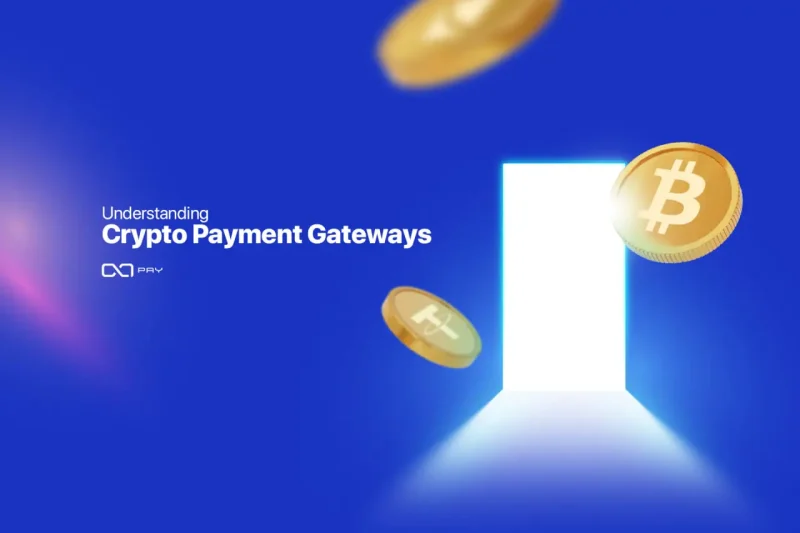
A kripto ödeme ağ geçidi bir işletmenin kripto para ödemelerini yapılandırılmış, izlenebilir ve otomatik bir şekilde almasına olanak tanıyan bir yazılım altyapısıdır.
Özünde, üç katman arasında bir köprü görevi görür:
- Kripto para ile ödeme yapmak isteyen müşteri.
- The blockchain ağı, Yalnızca işlemleri kaydeden ve siparişler, faturalar veya iş kuralları hakkında hiçbir şey bilmeyen.
- Ödemeleri siparişlere, kullanıcılara, fiyatlandırmaya, muhasebeye ve yerine getirme mantığına bağlayan iş sistemi.
Bir blok zinciri tek başına yalnızca ham gerçekleri sağlar:
A adresi, X miktarını belirli bir ağdaki B adresine, belirli bir zamanda, bir işlem karması.
Ancak bir işletmenin çok farklı sorulara yanıt vermesi gerekir:
→ Bu ödeme hangi siparişe ait?
→ Miktar doğru mu, eksik mi ödendi yoksa fazla mı ödendi?
→ Müşteri ödemeyi zamanında mı yoksa süresi geçtikten sonra mı gönderdi?
→ İşlem nihai midir yoksa hala geri alınabilir mi?
→ Sistem erişim izni vermeli mi yoksa malları şimdi mi göndermeli?
→ Sistem bunu muhasebe ve raporlama için nasıl kaydetmelidir?
Bir kripto ödeme ağ geçidi bu eksik iş katmanını ekler. Bir blok zinciri işlemini kullanılabilir bir ödeme olayına dönüştürür.
Kripto Ödeme Ağ Geçidi vs Cüzdan
A cüzdan kripto para tutmak ve göndermek için bir araçtır. Bir ödeme sistemi değildir.
Bir cüzdanda para almak, ticari anlamda otomatik olarak bir ödeme almak anlamına gelmez. Ticarette ödemenin bir yapısı vardır:
- Tanımlanmış bir miktar
- Tanımlanmış bir amaç
- Tanımlanmış bir zaman aralığı
- Tanımlanmış bir durum
- Sisteminizde tanımlanmış bir sonuç
Bir ödeme ağ geçidi bu yapıyı oluşturur ve yönetir. Bu olmadan işletmelerin blok zinciri verilerini manuel olarak yorumlaması gerekir ve bu süreç hacim arttıkça çok hızlı bir şekilde kırılgan ve hataya açık hale gelir.
Ödeme Geçidi Neden Sadece Bir QR Kodu Değildir?
Bir cüzdan adresi veya QR kodu yayınlamak yalnızca çok sınırlı senaryolarda işe yarar. Gerçek kullanım başlar başlamaz sorunlar ortaya çıkar:
- Ödemeleri belirli siparişlerle güvenilir bir şekilde eşleştiremezsiniz.
- Kısmi ödemeler ve fazla ödemeler belirsiz hale gelir.
- Geç ödemeler, fiyatlar veya siparişler değiştikten sonra gelir.
- Müşteriler tek bir satın alma işlemi için birden fazla işlem gönderebilirler.
- Ağ tıkanıklığı onayları geciktirir ve müşterilerin kafasını karıştırır.
- Yinelenen bildirimler doğru şekilde ele alınmazsa çifte yerine getirmeye neden olabilir.
- Yanlış ağ veya yanlış token transferleri operasyonel kaos yaratır.
Bir kripto ödeme ağ geçidi, bu durumları öngörülebilir, otomatik bir şekilde ele almak için mevcuttur.
Pratik Bir Tanım
Bir kripto ödeme ağ geçidi, izlenebilir bir ödeme talebi oluşturan, eşleşen işlemler için blok zinciri ağlarını izleyen, bu işlemleri ağ kurallarına göre doğrulayan ve sonuçlandıran, ödeme durumlarını yöneten ve sonuçları güvenilir ve otomatikleştirilebilir bir biçimde iş sistemine raporlayan bir sistemdir.
Şimdi bunun gerçekte nasıl çalıştığına bakalım.
Kripto Ödeme Ağ Geçidi Uygulamada Nasıl Çalışır?
Bunu anlamanın en kolay yolu, tek bir ödemenin yaşam döngüsünü baştan sona takip etmektir.
Adım 1: Ödeme Talebi Oluşturma
Her profesyonel ödeme, genellikle ödeme talebi olarak adlandırılan bir ödeme talebi ile başlar. fatura.
Ağ geçidi bir ödeme talebi oluşturduğunda, genellikle kayıt yapar:
- Benzersiz bir ödeme veya fatura tanımlayıcısı
- The expected amount and pricing currency
- The selected cryptocurrency and network
- An expiration time
- A reference to an order, user, or service
- Rules for accepting or rejecting payments
The output shown to the customer usually includes:
- A payment address or payment link
- A QR code
- The exact amount to send in crypto units
- Clear network instructions
- A live payment status indicator
If pricing is based on fiat values, the gateway also records the exchange rate used at this moment for later reconciliation.
Step 2: Address Generation Models
Crypto payment gateways generally use one of two address models.
Dynamic or per-invoice addresses
A unique address is generated for each payment. This makes transaction matching straightforward because any incoming transfer to that address belongs to that specific invoice.
Static or per-user addresses
Each user or account is assigned a fixed address per currency. This is useful for recurring deposits, account top-ups, or membership systems. Matching payments requires more logic because multiple transactions arrive at the same address.
Many gateways support both models and apply them based on the use case.
Step 3: Customer Sends the Transaction
When the customer sends the payment, the transaction is first broadcast to the network. At this point, two concepts matter:
- Broadcast or detection, the network has seen the transaction.
- Confirmation or finality, the transaction has been included in blocks and is becoming irreversible.
These are not the same thing. Seeing a transaction does not mean it is final.
Step 4: Blockchain Monitoring
Blockchain monitoring is the core of a crypto payment gateway.
The gateway continuously watches the blockchain using node connections, indexing logic, or multiple data sources. The goal is to detect transactions that match known payment requests.
At this stage, the gateway must answer:
- Is this transaction on the correct network?
- Does it target the expected address?
- Is the token contract correct?
- Is the amount sufficient?
- Did it arrive before expiration?
This is where weak implementations fail by assuming that any incoming transaction equals a valid payment.
Step 5: Matching Transactions to Payment Requests
Once a transaction is detected, it is evaluated against the payment rules.
Common scenarios include:
- Exact payment
- Eksik ödeme
- Fazla ödeme
- Multiple transactions for one invoice
- Late payment after expiration
- Wrong network or wrong token
A professional gateway has explicit policies for each case. These policies remove ambiguity and reduce manual intervention.
Step 6: Confirmations and Finality
Most blockchains are probabilistic. A transaction becomes more secure as more blocks are added after it.
Gateways define confirmation thresholds based on network behavior, transaction value, and business risk tolerance. A payment may be visible quickly but only considered final after a certain number of confirmations.
This distinction allows businesses to balance speed and security.
Step 7: Payment State Management
Payments are not binary. They move through states.
Typical payment states include:
- Created
- Waiting for payment
- Detected
- Confirming
- Paid
- Completed
- Expired
- Underpaid
- Refunded
- Cancelled
This state machine is critical to how a crypto payment gateway operates. Without it, systems cannot scale safely and errors become unavoidable.
Step 8: Notifications and Webhooks
When a payment state changes, the business system needs to know.
Gateways usually notify systems through dashboards, APIs, and web kancaları. Webhooks are often delivered more than once to ensure reliability, which means receiving systems must be idempotent and able to handle duplicates safely.
Security measures such as signatures and event identifiers are essential here.
Step 9: Settlement and Funds Handling
What happens to the funds depends on the gateway architecture.
Direct-to-merchant models send funds directly to the merchant’s wallet. The gateway observes and reports, but does not custody funds.
Managed models credit funds to an internal balance within the gateway, enabling features such as automated conversions, withdrawals, refunds, and unified reporting.
Both models are valid, as long as the business understands the trade-offs.
Resmi Tamamlayan Önemli Detaylar
A complete explanation must include these realities:
- Exchange rates must be recorded for accurate accounting.
- Wrong network transfers are common and must be clearly prevented.
- Detection speed and finality are different stages and should be shown clearly to users.
- Partial and late payments must follow defined rules.
- Duplicate notifications are normal and must be handled safely.
Ignoring these details leads to broken payment systems.
Nihai Özet
A crypto payment gateway does not change how blockchains work. It adds meaning and structure on top of them.
It transforms raw blockchain transactions into reliable business payments by creating traceable payment requests, monitoring networks, validating transactions, managing payment states, and communicating outcomes to business systems in a predictable way, forming the foundation of a complete crypto payment system architecture.
If the goal is only to receive funds, a wallet may seem sufficient. If the goal is to run a real payment flow with automation, accuracy, and scale, a crypto payment gateway becomes essential.
This article intentionally focuses only on what a crypto payment gateway is and how it works. The questions of why businesses use them and how to choose the right one belong to separate discussions with their own intent and depth.
SSS
OxaPay ile Kripto Kabul Etmeye Başlayın
If you plan to implement crypto payments in your business in a professional, structured, and automated way, starting with a reliable payment gateway is essential. The OxaPay kripto ödeme ağ geçidi provides a ready and dependable infrastructure for managing crypto payments at real business scale.