Когда кто-то ищет “Что такое платежный шлюз для криптовалют и как он работает?”, он обычно не ищет определение на модном жаргоне. Он хочет получить четкую ментальную модель. Какую проблему на самом деле решает эта система, что происходит за кулисами и почему простого адреса кошелька недостаточно для реального бизнеса.
Эта статья посвящена ровно двум вопросам, и больше ничему:
- Что такое криптоплатежный шлюз?
- Как это работает на практике?
Что такое криптовалютный платежный шлюз?
Размещенная у провайдера криптоплатёжный шлюз - это программная инфраструктура, которая позволяет бизнесу получать криптовалютные платежи структурированным, отслеживаемым и автоматизированным способом.
По своей сути, он действует как мост между тремя уровнями:
- Клиент, который хочет оплатить криптовалютой.
- Руководство Блокчейн-сеть, который записывает только транзакции и ничего не знает о заказах, счетах-фактурах или бизнес-правилах.
- Бизнес-система, которая связывает платежи с заказами, пользователями, ценами, учетом и логикой исполнения.
Блокчейн сам по себе предоставляет только необработанные факты:
Адрес A отправил сумму X на адрес B в определенной сети, в определенное время, с хеш транзакции.
Однако бизнесу нужны ответы на совсем другие вопросы:
→ К какому заказу относится этот платеж?
→ Сумма верна, недоплачена или переплачена?
→ Клиент отправил платеж вовремя или после срока?
→ Является ли транзакция окончательной или ее все еще можно отменить?
→ Предоставить системе доступ или отправить товар сейчас?
→ Как системе следует регистрировать это для бухгалтерского учета и отчетности?
Платежный шлюз для криптовалют добавляет этот недостающий деловой слой. Он превращает транзакцию в блокчейне в используемое платежное событие.
Криптовалютный платежный шлюз против кошелька
Размещенная у провайдера кошелёк это инструмент для хранения и отправки криптовалюты. Это не платежная система.
Получение средств на кошелек не означает автоматического получения платежа в деловом смысле. Платеж в коммерции имеет структуру:
- Заданную сумму
- Определенная цель
- Определенный временной интервал
- Определенный статус
- Определенный результат в вашей системе
Платежный шлюз создает и управляет этой структурой. Без нее компаниям придется вручную интерпретировать данные блокчейна, и этот процесс очень быстро становится хрупким и подверженным ошибкам по мере роста объема.
Почему платежный шлюз — это не просто QR-код
Публикация адреса кошелька или QR-кода работает только в очень ограниченных сценариях. Как только начинается реальное использование, возникают проблемы:
- Вы не можете надежно сопоставить платежи с конкретными заказами.
- Частичные платежи и переплаты становятся двусмысленными.
- Поздние платежи поступают после изменения цен или заказов.
- Клиенты могут отправлять несколько транзакций для одной покупки.
- Сетевые заторы задерживают подтверждения и сбивают с толку клиентов.
- Дублирующиеся уведомления могут привести к двойному выполнению, если с ними не обращаться должным образом.
- Неправильная сеть или неправильные транзакции токенов создают операционный хаос.
Платежный шлюз для криптовалют существует для того, чтобы обрабатывать эти случаи предсказуемым, автоматизированным образом.
Практическое определение
Платежный шлюз для криптовалюты — это система, которая создает отслеживаемый платежный запрос, отслеживает блокчейн-сети на предмет соответствующих транзакций, проверяет и завершает эти транзакции на основе правил сети, управляет статусами платежей и надежно и автоматически передает результаты в бизнес-систему.
Теперь посмотрим, как это на самом деле работает.
Как платежный шлюз для криптовалюты работает на практике?
Самый простой способ понять это — проследить жизненный цикл одного платежа от начала до конца.
Шаг 1: Создание платежного запроса
Каждый профессиональный платеж начинается с платежного запроса, часто называемого счёт.
Когда шлюз создает запрос на оплату, он обычно записывает:
- Уникальный идентификатор платежа или счета
- The expected amount and pricing currency
- The selected cryptocurrency and network
- Срок действия
- A reference to an order, user, or service
- Rules for accepting or rejecting payments
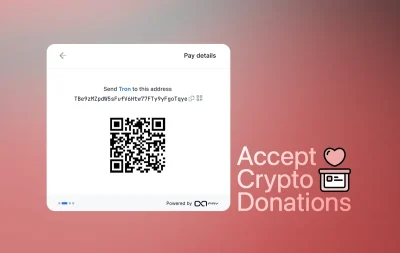
The output shown to the customer usually includes:
- A payment address or payment link
- QR-код
- The exact amount to send in crypto units
- Clear network instructions
- A live payment status indicator
If pricing is based on fiat values, the gateway also records the exchange rate used at this moment for later reconciliation.
Step 2: Address Generation Models
Crypto payment gateways generally use one of two address models.
Dynamic or per-invoice addresses
Размещенная у провайдера unique address is generated for each payment. This makes transaction matching straightforward because any incoming transfer to that address belongs to that specific invoice.
Static or per-user addresses
Each user or account is assigned a fixed address per currency. This is useful for recurring deposits, account top-ups, or membership systems. Matching payments requires more logic because multiple transactions arrive at the same address.
Many gateways support both models and apply them based on the use case.
Step 3: Customer Sends the Transaction
When the customer sends the payment, the transaction is first broadcast to the network. At this point, two concepts matter:
- Broadcast or detection, the network has seen the transaction.
- Confirmation or finality, the transaction has been included in blocks and is becoming irreversible.
These are not the same thing. Seeing a transaction does not mean it is final.
Step 4: Blockchain Monitoring
мониторинг блокчейна is the core of a crypto payment gateway.
The gateway continuously watches the blockchain using node connections, indexing logic, or multiple data sources. The goal is to detect transactions that match known payment requests.
At this stage, the gateway must answer:
- Is this transaction on the correct network?
- Does it target the expected address?
- Is the token contract correct?
- Is the amount sufficient?
- Did it arrive before expiration?
This is where weak implementations fail by assuming that any incoming transaction equals a valid payment.
Step 5: Matching Transactions to Payment Requests
Once a transaction is detected, it is evaluated against the payment rules.
Common scenarios include:
- Exact payment
- Недоплата
- Переплата
- Multiple transactions for one invoice
- Late payment after expiration
- Wrong network or wrong token
A professional gateway has explicit policies for each case. These policies remove ambiguity and reduce manual intervention.
Step 6: Confirmations and Finality
Most blockchains are probabilistic. A transaction becomes more secure as more blocks are added after it.
Gateways define confirmation thresholds based on network behavior, transaction value, and business risk tolerance. A payment may be visible quickly but only considered final after a certain number of confirmations.
This distinction allows businesses to balance speed and security.
Step 7: Payment State Management
Payments are not binary. They move through states.
Typical payment states include:
- Создан
- ожидание платежа
- обнаружено
- подтверждается
- paid
- завершено
- expired
- underpaid
- refunded
- Cancelled
This state machine is critical to how a crypto payment gateway operates. Without it, systems cannot scale safely and errors become unavoidable.
Step 8: Notifications and Webhooks
When a payment state changes, the business system needs to know.
Gateways usually notify systems through dashboards, APIs, and Webhooks. Webhooks are often delivered more than once to ensure reliability, which means receiving systems must be idempotent and able to handle duplicates safely.
Security measures such as signatures and event identifiers are essential here.
Step 9: Settlement and Funds Handling
What happens to the funds depends on the gateway architecture.
Direct-to-merchant models send funds directly to the merchant’s wallet. The gateway observes and reports, but does not custody funds.
Managed models credit funds to an internal balance within the gateway, enabling features such as automated conversions, withdrawals, refunds, and unified reporting.
Both models are valid, as long as the business understands the trade-offs.
Важные детали, которые дополняют картину
A complete explanation must include these realities:
- Exchange rates must be recorded for accurate accounting.
- Wrong network transfers are common and must be clearly prevented.
- Detection speed and finality are different stages and should be shown clearly to users.
- Partial and late payments must follow defined rules.
- Duplicate notifications are normal and must be handled safely.
Ignoring these details leads to broken payment systems.
Итоговая сводка
A crypto payment gateway does not change how blockchains work. It adds meaning and structure on top of them.
It transforms raw blockchain transactions into reliable business payments by creating traceable payment requests, monitoring networks, validating transactions, managing payment states, and communicating outcomes to business systems in a predictable way, forming the foundation of a complete Архитектура криптоплатёжной системы.
If the goal is only to receive funds, a wallet may seem sufficient. If the goal is to run a real payment flow with automation, accuracy, and scale, a crypto payment gateway becomes essential.
This article intentionally focuses only on what a crypto payment gateway is and how it works. The questions of why businesses use them and how to choose the right one belong to separate discussions with their own intent and depth.
FAQ
Начните принимать криптовалюту с OxaPay
If you plan to implement crypto payments in your business in a professional, structured, and automated way, starting with a reliable payment gateway is essential. The Криптоплатежный шлюз OxaPay provides a ready and dependable infrastructure for managing crypto payments at real business scale.