Клиент отправляет криптоплатёж. Сумма верна, адрес верен, и транзакция появляется в сети именно так, как ожидалось. Но результат отличается от другого платежа, который всего несколько часов назад выглядел почти идентично.
Комиссия выше обычной. Подтверждение занимает больше времени. Или тот же актив ведёт себя иначе, когда отправляется через другую сеть.
Сначала это кажется непоследовательным. Во многих случаях никакой случайности нет. Разница часто скрыта под интерфейсом: не все криптоактивы устроены и работают одинаково.
Понимание разницы между монетой и токеном — это не заучивание определений. Важно понять, почему криптоплатежей ведут себя по-разному на уровне инфраструктуры, даже когда пользователи считают, что отправляют один и тот же тип актива.
Всё начинается с инфраструктуры, а не с названий
С точки зрения пользователя криптоактивы часто сводятся к названиям: Bitcoin, Ethereum, USDT, Solana. Интерфейсы кошельков усиливают такое упрощение, потому что каждый актив выглядит как переводимый баланс в одном приложении.
Технически эти активы существуют по-разному. Некоторые являются нативными для самого блокчейна. Другие существуют только потому, что блокчейн позволяет смарт-контрактам создавать их и управлять ими. Это архитектурное различие меняет проверку транзакций, расчёт комиссий, поведение подтверждений и то, как платёжные системы интерпретируют состояния транзакций.
Именно здесь начинается реальное различие между монетами и токенами: не в бренде или популярности, а в том, как актив взаимодействует с базовой блокчейн-инфраструктурой.
Монеты работают на уровне протокола
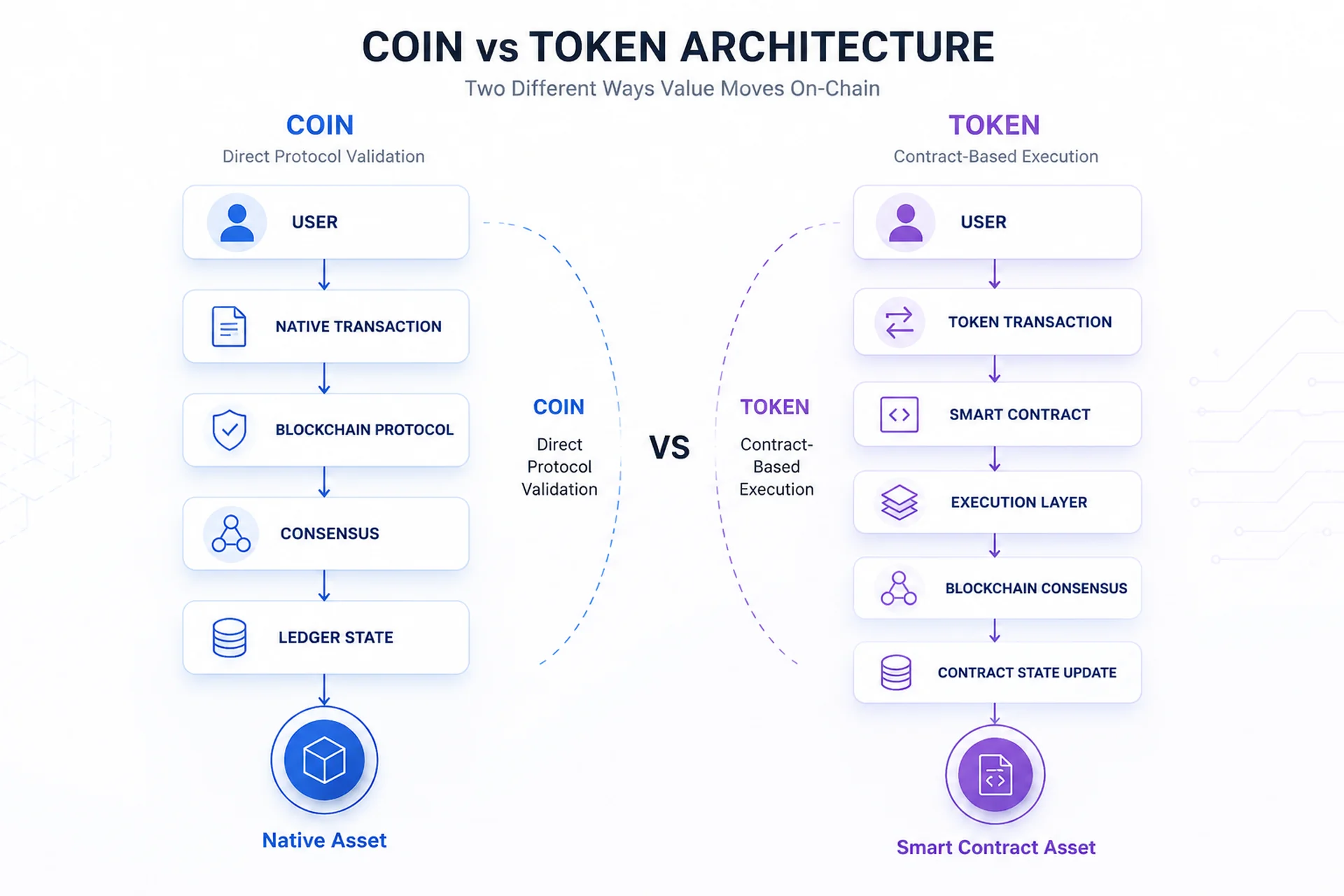
Монета является нативным активом своего блокчейна. Bitcoin относится к сети Bitcoin, Ether — к Ethereum, SOL — к Solana. Эти активы встроены в базовый протокол блокчейна и напрямую участвуют в нативной системе учёта сети.
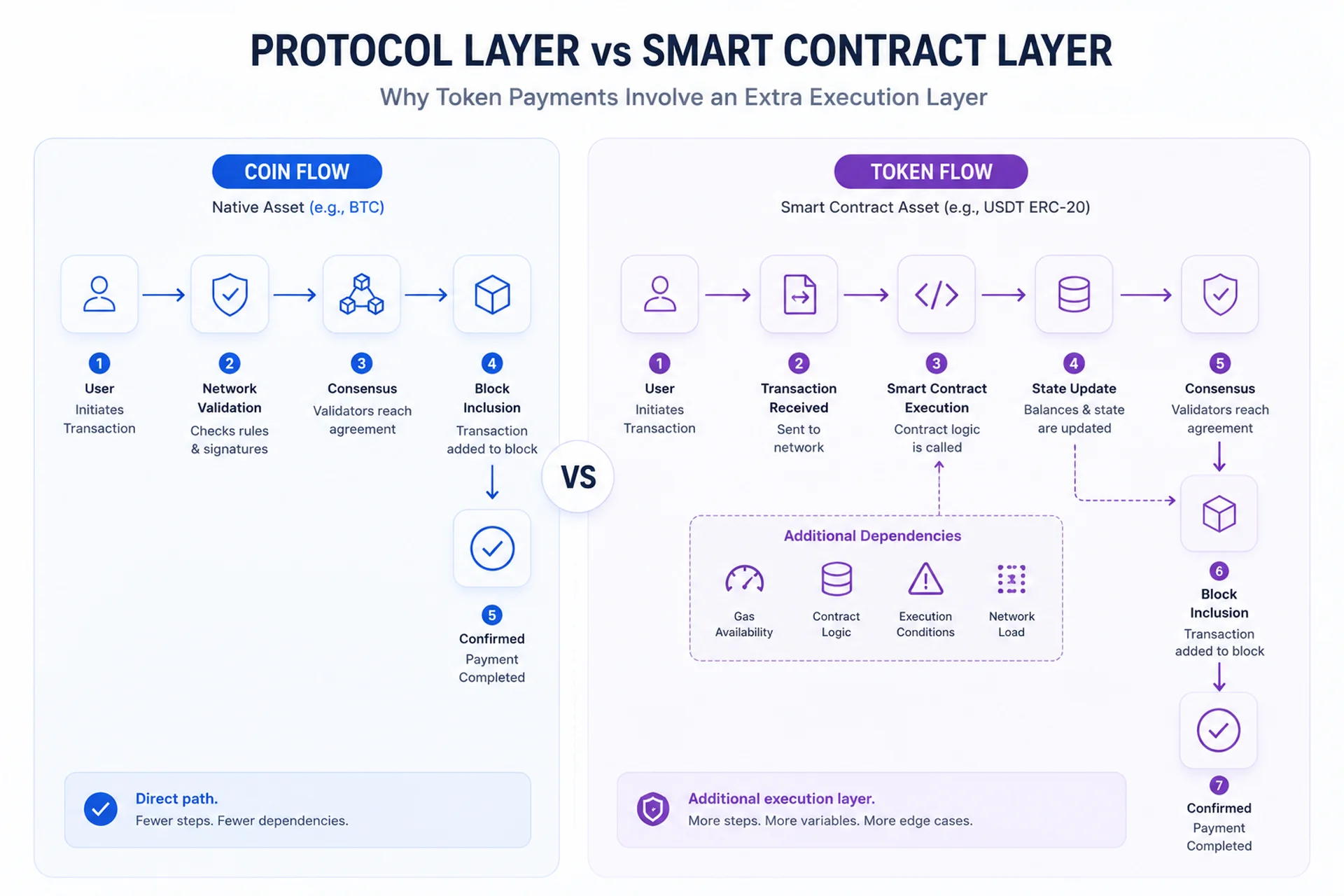
Когда транзакция с монетой распространяется по сети, блокчейн проверяет её по собственному реестру и правилам консенсуса. Сеть проверяет подписи и балансы, валидирует структуру транзакции и определяет, соответствует ли она требованиям протокола для включения в блок.
Между транзакцией и самим блокчейном нет дополнительной среды исполнения. Поэтому переводы монет структурно проще. Наблюдаемое поведение обычно напрямую определяется правилами протокола — валидацией, доступным пространством блока, конкуренцией в мемпуле и временем подтверждения.
Эта простота не обязательно делает монеты лучше, но в обычных сетевых условиях упрощает моделирование и прогнозирование их операционного поведения. Если рассматривать более широкий контекст блокчейн-платежи, структура на уровне протокола — одна из причин, по которой нативные переводы монет обычно легче интерпретировать, чем операции токенов через смарт-контракты.
Токены существуют благодаря исполнению смарт-контрактов
Токены устроены иначе, потому что не являются частью базового протокола блокчейна. Они существуют внутри смарт-контрактов, развёрнутых поверх блокчейн-среды. Когда пользователь переводит, например, USDT в Ethereum, сеть не просто перемещает стоимость между двумя нативными записями реестра. Транзакция вызывает функцию контракта, которая обновляет балансы во внутреннем состоянии контракта.
Это добавляет ещё один операционный слой между пользователем и блокчейном. Блокчейн по-прежнему валидирует транзакцию, но перевод успешен только при корректном исполнении контракта. Сети нужно выделить вычислительные ресурсы, исполнить логику контракта, обновить состояние хранилища и зафиксировать результат исполнения, прежде чем платёж будет действительно завершён.
На этом этапе транзакция уже не просто перенос стоимости — она становится исполняемым вычислением. Как только исполнение входит в платёжный процесс, поведение транзакции начинает зависеть от гораздо большего числа факторов, чем простой перевод баланса.
Почему один и тот же актив ведёт себя по-разному в разных сетях
Именно здесь начинаются многие реальные недопонимания. Пользователи думают названиями активов: «Я отправляю USDT», будто одно название полностью определяет поведение платежа. Но с точки зрения инфраструктуры сеть не менее важна, чем сам токен.
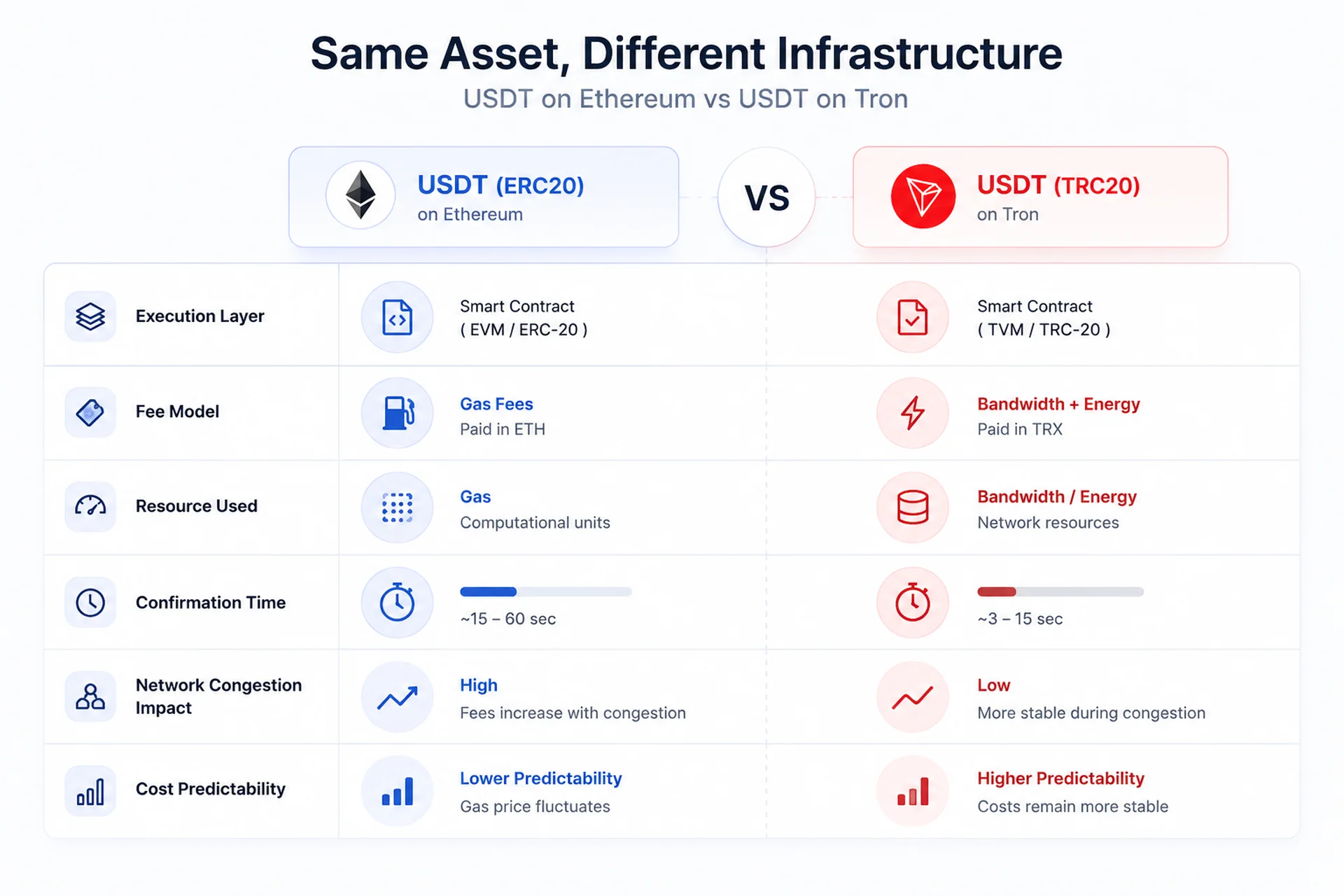
USDT в Ethereum ведёт себя иначе, чем USDT в Tron, потому что базовые среды исполнения различаются. В Ethereum переводы ERC-20 зависят от исполнения смарт-контрактов и динамики цены газа. При перегрузке транзакции конкурируют за вычислительные ресурсы, а комиссии меняются вместе со спросом на сеть.
В Tron тот же перевод USDT опирается на модель пропускной способности и энергии Tron вместо рынка газа Ethereum. Подтверждения, распределение ресурсов и операционные затраты следуют совершенно иной инфраструктурной модели.
Название актива остаётся тем же, а среда исполнения — нет. Снаружи оба случая выглядят как простой платёж USDT. Внутри это разные транзакционные системы с собственной логикой ресурсов, подтверждений и операционных ограничений.
Комиссии различаются по самой конструкции
Одно из главных заблуждений в криптоплатежах — считать, что все комиссии за транзакции подчиняются одной логике. Это не так.
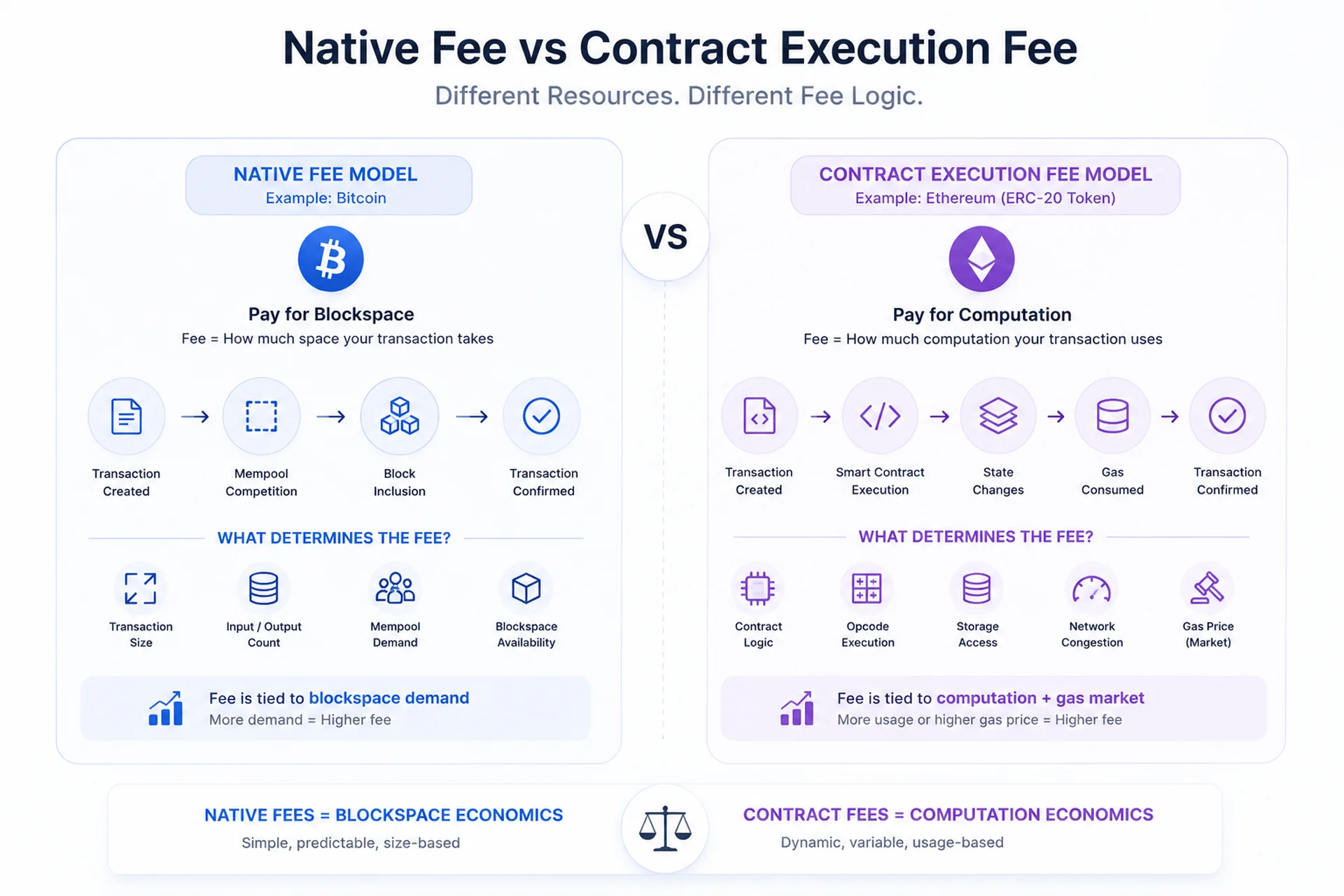
Для нативных монет, таких как Bitcoin, комиссия прежде всего связана со структурой транзакции и потреблением пространства блока. Сеть оценивает, сколько места транзакция занимает в блоке; это зависит от размера транзакции, количества входов и выходов и конкуренции в мемпуле.
Переводы токенов в сетях со смарт-контрактами устроены иначе: комиссия связана с вычислительным исполнением, а не только с включением записи в реестр. Например, в Ethereum перевод токена расходует газ , потому что сети необходимо выполнить логику контракта, обновить состояние хранилища и обработать вычислительные операции.
Поэтому два перевода токена на одинаковую сумму могут иметь совершенно разные затраты в зависимости от перегрузки, сложности исполнения и времени. Разница не сводится к тому, что одна сеть дешевле другой. Сама базовая логика комиссий изначально устроена по-разному.
Для продавцов это важно, потому что комиссии влияют на ценообразование, ожидания на этапе оплаты, поддержку клиентов и интерпретацию расчётов. Платёжный процесс, который не различает нативные комиссии и комиссии исполнения, может казаться непредсказуемым даже тогда, когда сеть работает точно по правилам.
У токенов есть режимы отказа, которых обычно нет у монет
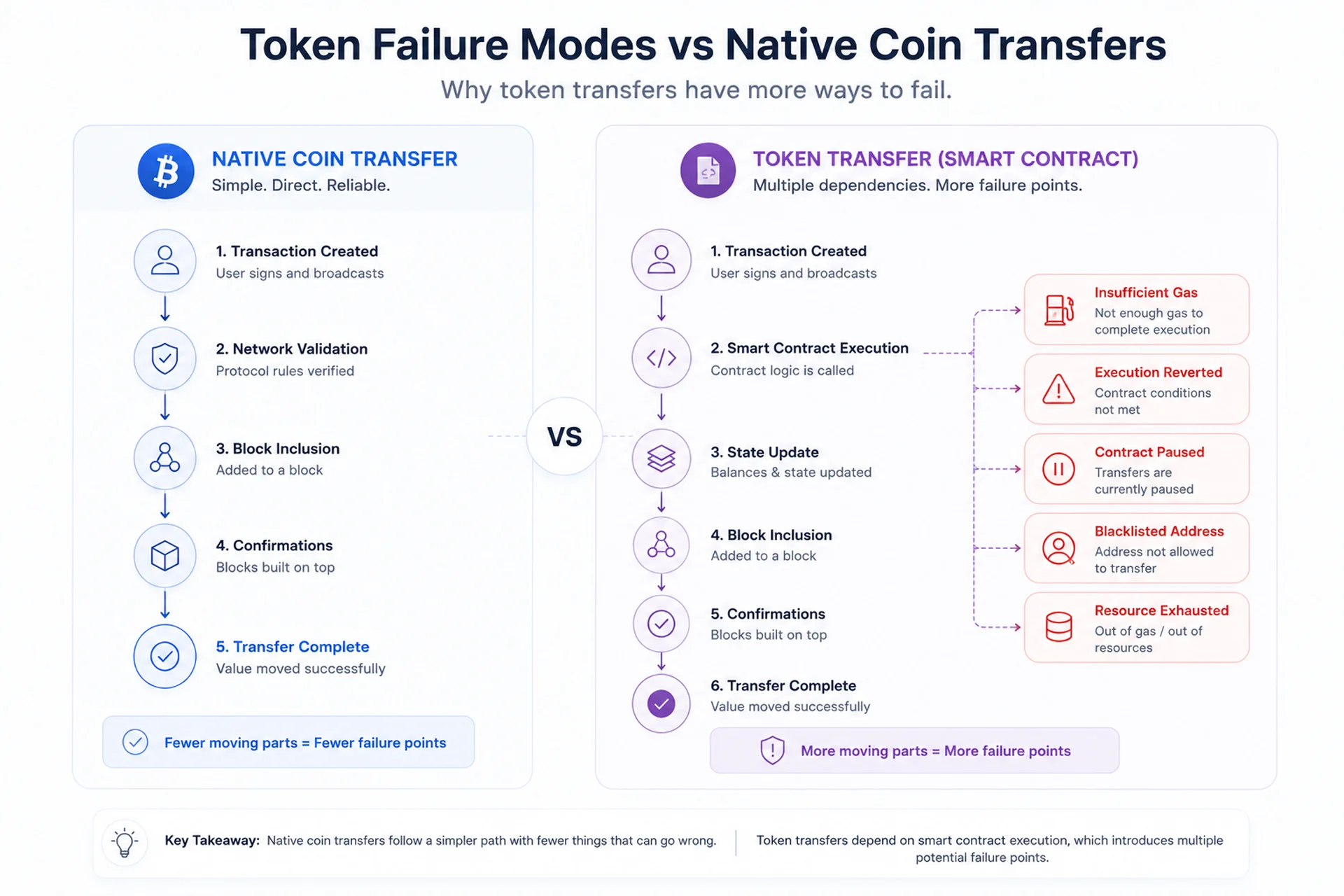
Нативные переводы монет операционно относительно прямолинейны. Если сеть валидирует транзакцию и включает её в блок, стоимость обычно успешно перемещается.
Токены добавляют дополнительные условия отказа, потому что логика контракта может завершиться ошибкой независимо от блокчейн-транзакция. Перевод токена может не пройти из-за недостаточного газа, исчерпания ресурсов исполнения, отклонения операции условиями контракта или административных ограничений внутри контракта.
Некоторые токен-контракты содержат ограничения адресов, приостановку переводов, обновляемую логику или контроль разрешений — возможности, которых обычно нет на нативном уровне протокола. Для пользователя транзакция отправлена правильно, а для системы исполнение так и не завершилось успешно.
Это создаёт совершенно отдельную категорию операционных пограничных случаев, особенно для платёжных систем, которые масштабно автоматизируют расчёты, сверку и мониторинг транзакций.
Зависимость меняет всё
Главное структурное различие между монетами и токенами можно свести к одной идее: монета определяет свою среду, а токен от неё зависит.
Нативная монета напрямую подчиняется правилам протокола блокчейна. Токен наследует операционное поведение базовой цепочки. Если сеть перегружена, конкуренция за исполнение токенов растёт, цена газа повышается, время подтверждения меняется, а надёжность исполнения становится более вариативной.
Эти зависимости — не побочные эффекты, а часть самого устройства токенов. Поэтому токены в разных блокчейнах могут вести себя очень по-разному, даже если бренд актива одинаков. По этой же причине такие темы, как консенсус блокчейна, включение в блок и перегрузка сети важны при оценке надёжности платежей.
Откуда на самом деле возникает путаница с платежами
Большинство пользователей думают активами. Платёжные системы должны думать инфраструктурой.
Клиент говорит: «Я отправил USDT». Но платёжная инфраструктура должна определить, какая сеть использована, какая модель исполнения применяется, как в этой цепочке работают подтверждения, как интерпретируются комиссии и как внутри системы обрабатывать пограничные ситуации.
Разрыв между ожиданиями пользователя и поведением инфраструктуры создаёт многие практические проблемы: переводы по неверной сети, задержки подтверждений, неожиданные комиссии, неверная интерпретация оплаты на checkout, расхождения при сверке и маршрутизация неподдерживаемого токена.
Это не случайные ошибки, а структурное непонимание связи между идентичностью актива и средой исполнения. Поэтому бизнесу недостаточно адреса кошелька и хеша транзакции. Нужна платёжная логика, которая одновременно понимает сети, подтверждения, активы и исполнение.
Почему это важно для бизнеса
На этапе оплаты криптоплатёж выглядит просто: клиент отправляет актив, блокчейн подтверждает транзакцию, бизнес получает платёж. В операционной реальности всё сложнее.
Поведение платежа сильно зависит от того, является актив нативной монетой или токеном, работающим через смарт-контракт. Это влияет на предсказуемость комиссий, время подтверждения, процессы сверки, системы мониторинга и пограничные случаи, которые инфраструктура должна надёжно обрабатывать.
Поэтому бизнес не может оценивать криптоплатёж только по названию актива. Надёжный checkout или процесс выставления счёта должен понимать сеть, состояние транзакции, результат исполнения и бизнес-смысл блокчейн-события. На практике это часть построения зрелой системы криптоплатежей, а не просто добавление адреса кошелька на страницу оплаты.
Платёжная система, одинаково относящаяся ко всем активам, будет постоянно реагировать на проблемы уже после их появления. Система, понимающая структурные различия между монетами и токенами, способна предвидеть поведение до того, как оно вызовет сбои, задержки или расхождения в учёте.
От сигналов блокчейна к платёжной логике
Блокчейн-сети дают сырые транзакционные сигналы: транзакция существует, попала в сеть, получила подтверждения, а исполнение завершилось успешно или с ошибкой. Но блокчейн не интерпретирует бизнес-смысл.
Блокчейн не решает, когда платёж операционно безопасно выполнять. Разные активы могут требовать разных предположений о подтверждениях в зависимости от условий сети и риска транзакции. Повторные попытки, сверка несовпадающих переводов и интерпретация ошибок исполнения по-прежнему должны управляться платёжной инфраструктурой.
Именно платёжная инфраструктура выполняет эту интерпретацию. Зрелая система не просто обнаруживает транзакции: она понимает структуру актива, среду исполнения под ним, операционные риски этой среды и то, как блокчейн-поведение должно превращаться во внутренние состояния платежа.
Именно здесь Мониторинг в реальном времени в системах блокчейн-платежей становится важен. Один хеш транзакции не отвечает на все бизнес-вопросы. Система всё ещё должна решить, как это блокчейн-событие влияет на заказ, счёт, баланс или процесс выполнения.
Без этого слоя интерпретации каждый платёж требует ручного операционного решения.
Заключение
Монета и токен — это не просто разные названия внутри криптосистем. Это структурное различие в том, как существует стоимость, исполняются транзакции и формируется поведение платежей.
Монеты работают непосредственно на уровне протокола блокчейна. Токены работают через среды исполнения смарт-контрактов и наследуют операционные свойства базовой сети. Это влияет на комиссии, подтверждения, надёжность исполнения, зависимости, условия отказа и операционную предсказуемость.
Когда эти структурные закономерности становятся понятны, криптоплатежи перестают казаться непоследовательными или непредсказуемыми. Бизнес может проектировать платёжные системы вокруг поведения инфраструктуры, а не вслепую реагировать на результаты транзакций постфактум.
Готовы принимать монеты и токены?
Хотите ли вы принимать Bitcoin, стейблкоины вроде USDT или специализированные токены для своей отрасли, OxaPay упрощает эту задачу. Это мощная и легко интегрируемая платформа для эффективных и гибких криптоплатежей.
👉 Начните принимать криптовалюту сегодня
📘 Полная документацию