Accepting online payments is where trust meets revenue. If checkout fails, whether due to hidden fees, friction, or weak security, the impact is immediate: lost customers and stalled growth. That’s why building a system that is not only functional but also secure and scalable has become a core priority for online businesses.
This guide is written for business owners, managers, and developers who want more than generic advice. We focus on actionable principles, including security, efficiency, transparency, scalability, and integration, and show how they apply across major payment methods. Later, we’ll demonstrate how modern solutions, including crypto payments with OxaPay, can put these principles into practice.
Core Principles for Accepting Online Payments
Every successful payment system rests on six pillars. Each principle includes a checklist, measurable KPIs, and common mistakes.
Payment Security (SSL/TLS, PCI DSS, MFA, HMAC)
Why it matters:
A single breach, whether it involves stolen data, tampered webhooks, or unauthorized access, can damage trust and expose your business to serious operational and financial risks.
Action Checklist:
- Enforce TLS 1.2+ with HSTS and disable weak ciphers
- Stay within PCI DSS scope using tokenization or hosted pages
- Require MFA for admin accounts; use IP allowlists
- Use HMAC-signed webhooks with validation and idempotency
- Apply rate limiting and WAF rules
- Implement centralized logging and monitoring
KPIs:
- Fraud/chargeback rates decrease over time
- Invalid webhook rejections remain near zero
- Critical patch time stays under 72 hours
Common Mistakes:
- Partial MFA enforcement
- Accepting unsigned webhooks
- Storing sensitive data in raw format
Efficiency & User Experience
Why it matters:
Every extra step increases drop-off. Users expect fast, simple checkout, especially on mobile.
Action Checklist:
- Enable guest checkout
- Minimize form fields
- Optimize for mobile UX
- Support express payments (Apple Pay, Google Pay)
- Provide real-time feedback
- Preserve sessions
KPIs:
- Conversion rate improves
- Payment time stays under 10 seconds
- Drop-off per step decreases
Common Mistakes:
- Unclear error messages
- Long forms
- Slow pages
Cost Management & Transparent Fees
Why it matters:
Hidden costs reduce trust and margins.
Action Checklist:
- Map all fees (transaction, FX, refunds)
- Show full cost upfront
- Track fees as % of revenue
- Negotiate provider terms
KPIs:
- Fee % stays controlled
- Complaint rates remain low
- Billing variance is minimized
Common Mistakes:
- Ignoring FX costs
- Showing fees too late
Regulatory Compliance and Data Protection
Why it matters:
Customers expect their data and transactions to be handled responsibly. Businesses must align with applicable regulations and data protection standards.
Action Checklist:
- Follow privacy standards by collecting minimal data and enabling access/deletion requests
- Stay within relevant security frameworks
- Align processes with applicable compliance requirements
- Automate data retention and deletion
KPIs:
- Data requests are processed within SLA
- Fewer audit findings appear over time
- Monitoring accuracy remains balanced
Common Mistakes:
- Collecting unnecessary data
- Poor consent management
- Treating compliance as one-time
Scalability for High Transaction Volume
Why it matters:
Payment systems must remain stable under peak load.
Action Checklist:
- Use idempotent operations
- Implement queues and retries
- Add circuit breakers
- Enable horizontal scaling
- Monitor performance metrics
Easy Integration
Why it matters:
A payment system is only useful if it integrates smoothly with existing workflows.
Action Checklist:
- Start with low-code options
- Use SDKs and sandbox environments
- Implement reliable webhooks
- Decouple payment logic
- Test integrations in CI/CD
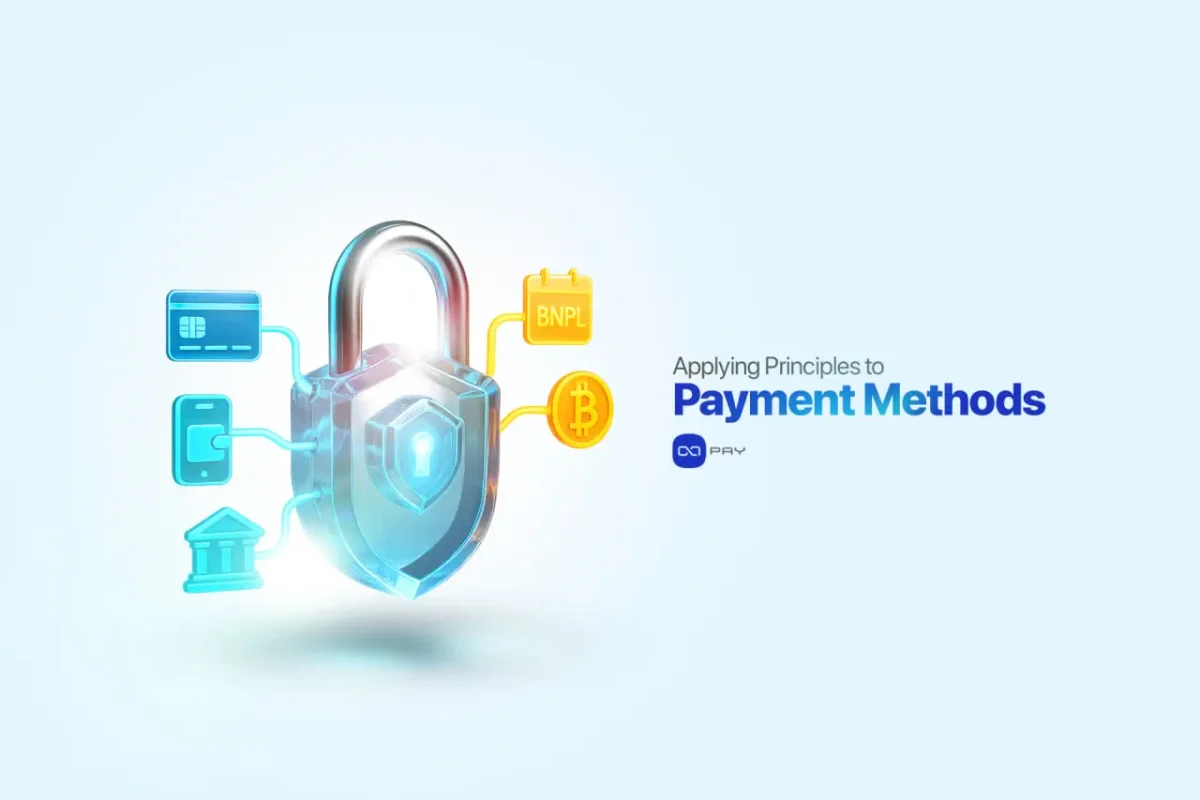
Applying These Principles to Payment Methods
Credit & Debit Card Payments
Credit and debit cards remain the backbone of e-commerce worldwide, and businesses that accept online payments almost always need to support Visa, Mastercard, or local card schemes to ensure conversion.
Security:
- Implement PCI DSS-compliant gateways and tokenize sensitive cardholder data.
- Use 3D Secure 2.0 (3DS2) for authentication, balancing fraud prevention with UX.
Efficiency & UX:
- Enable one-click payments by storing tokens safely.
- Offer retry flows if payments fail due to insufficient funds or authentication issues.
Cost Management:
- Expect 2–5% fees depending on the provider. Monitor blended fees vs. interchange+ models.
- Negotiate rates at higher transaction volumes.
Compliance:
- PSD2 in Europe requires Strong Customer Authentication (SCA).
- Maintain audit trails for disputes and chargebacks.
Scalability:
- Use gateways that support high transaction volumes during sales or promotions.
- Ensure redundant acquiring relationships to reduce downtime risk.
Integration:
- Most gateways offer plugins for Shopify, WooCommerce, and Magento.
- Developers should validate all API responses and error codes to avoid silent failures.
Digital Wallets (PayPal, Apple Pay, Google Pay)
Digital wallets have grown rapidly as a preferred way to accept online payments, driven by mobile-first behavior and the trust consumers already place in these brands.
Security:
- Wallet providers use tokenization and biometric authentication, reducing fraud risks.
- Still, validate transactions with server-to-server calls to prevent spoofing.
Efficiency & UX:
- Checkout is reduced to one or two taps on mobile devices.
- Ideal for impulse purchases and subscription renewals.
Cost Management:
- PayPal often charges ~2.9% + fixed fees. Apple Pay and Google Pay fees are lower but depend on acquirer agreements.
- For global operations, weigh costs against increased conversion rates.
Compliance:
- Providers handle many operational requirements, but merchants must still follow data privacy laws.
Scalability:
- Wallet adoption scales with mobile penetration.
- Support fallback methods if a wallet is unavailable.
Integration:
- SDKs for iOS/Android make wallet acceptance relatively easy.
- Ensure wallet buttons are displayed contextually, such as Apple Pay only on Safari/iOS.
Bank Transfers (ACH, SEPA, Local Schemes)
For B2B transactions or large-value purchases, bank transfers remain a common way to accept online payments through direct settlement via established banking networks.
Security:
- Multi-factor authentication via banks provides strong baseline security.
- Merchants must secure their systems against fake transfer confirmations.
Efficiency & UX:
- Slower than cards or wallets, but suitable for recurring invoices and bulk payments.
- Real-time payment schemes (RTP, SEPA Instant) are improving speed.
Cost Management:
- Typically lower than card fees, often flat or free domestically.
- FX costs can add up in cross-border payments.
Compliance:
- Bank transfers are subject to strict financial oversight. Businesses should maintain clear reconciliation processes.
Scalability:
- Can struggle with high volumes in consumer markets but remain useful for large-value transfers.
Integration:
- APIs from open banking providers (Plaid, TrueLayer) simplify integration.
- Require reconciliation logic to match payments to orders.
Buy Now, Pay Later (BNPL)
BNPL has become a powerful conversion driver, especially in retail and fashion sectors.
Security:
- BNPL providers handle credit risk, but merchants should integrate with fraud checks.
Efficiency & UX:
- Offers instant approvals at checkout, boosting average order value.
- Easy repayment terms improve customer loyalty.
Cost Management:
- Merchants pay higher fees (4–7%), but conversion lift may offset costs.
- Track whether BNPL increases returns or cancellations.
Compliance:
- Subject to consumer credit regulations (varies by country). Merchants must disclose terms clearly.
Scalability:
- BNPL adoption is growing globally but concentrated in certain industries.
Integration:
- Plugins exist for major e-commerce platforms.
- Place BNPL messaging early, including product pages and cart pages, to maximize uptake.
Cryptocurrency Payments
Cryptocurrency has moved from niche to mainstream as an alternative way for businesses to accept online payments, with Bitcoin and Litecoin leading adoption. They offer global payment flexibility, lower fees, and irreversible transactions, but require the right infrastructure.
Security:
- Blockchain ensures transaction immutability.
- Merchants must protect private keys or use custodial gateways.
- Verify transactions via multiple confirmations when necessary.
Efficiency & UX:
- Crypto can simplify cross-border payment workflows when supported by reliable infrastructure.
- OxaPay, for example, provides instant payment confirmation, helping merchants manage transaction status more efficiently.
Cost Management:
- Bitcoin network fees vary by congestion, while Litecoin and stablecoins often remain cheaper.
- OxaPay adds predictable merchant fees starting at 0.4%, with no hidden costs.
Compliance:
- Compliance requirements depend on the business model, customer location, and applicable regional standards.
- Merchants can set internal limits or choose stablecoins for reduced volatility.
Scalability:
- Native blockchain scalability is limited, but gateways like OxaPay use load balancing and microservices to handle high merchant volumes.
Integration:
- Options range from no-code payment links to e-commerce plugins (WooCommerce, WHMCS, PrestaShop) to custom merchant APIs.
- Features like static addresses, auto withdrawal, and auto swap to USDT help businesses manage risk and recurring payments.
With these five methods reviewed through the same six principles, businesses can see not just what payment types exist, but how to implement them securely, efficiently, and at scale.
Practical Tools and Checklists
Understanding principles and payment methods is important, but to successfully accept online payments, implementation requires clear, actionable steps. Below are concise, practical checklists and tools for businesses to ensure their online payment systems are secure, efficient, compliant, and scalable.
Security Checklist
- Enable TLS 1.2+ with HSTS to secure all payment traffic.
- Use tokenization instead of storing raw card or wallet data.
- Enable MFA for all admin accounts; restrict login via IP allowlists.
- Validate webhooks with HMAC signatures and timestamps.
- Monitor fraud KPIs such as chargeback rate and failed login attempts.
- Run regular penetration testing every 6–12 months.
Efficiency & UX Checklist
- Offer guest checkout; do not force account creation upfront.
- Optimize checkout for mobile-first users with responsive design.
- Reduce checkout steps to under 3 screens.
- Add express pay methods such as Apple Pay, Google Pay, and PayPal.
- Provide real-time feedback: success/failure messages, loading indicators.
- Preserve cart contents across sessions.
Cost & Transparency Checklist
- Map all fees, including transaction, FX, refunds, and network fees for blockchain.
- Display total costs upfront, including taxes and shipping.
- Track monthly effective fee %, calculated as total fees divided by total volume.
- Negotiate rates as volume increases.
- Share clear refund/return policies on checkout pages.
Compliance Checklist
- GDPR/Privacy: only collect necessary data, and maintain consent logs.
- Define internal review processes for higher-value or unusual transactions where required.
- Define and enforce data retention/deletion policies.
- Train staff on phishing and fraud prevention basics.
- Maintain audit trails for all financial data flows.
Scalability Checklist
- Design all transactions to be idempotent, meaning safe to retry.
- Use queues for payment events with retry logic.
- Implement circuit breakers and fallback payment routes.
- Add real-time monitoring & alerting for latency, error rate, and TPS.
- Test systems under peak traffic scenarios, such as Black Friday load testing.
Integration Checklist
- Start with low-code/no-code options such as payment links and hosted pages.
- For custom flows, use SDKs and API sandbox first.
- Validate all API responses and error codes.
- Implement webhook retries with HMAC validation.
- Automate integration tests in CI/CD pipelines.
Tools for Analytics & Risk Management
- Google Analytics + Enhanced e-commerce → Track checkout funnel drop-offs.
- Payment provider dashboards → Monitor real-time status and disputes.
- Postman / Insomnia → Test API integrations.
- Fraud detection APIs such as MaxMind and Sift → Reduce chargeback risk.
- Load testing tools such as JMeter and k6 → Stress-test transaction volumes.
With these checklists and tools, businesses don’t just learn concepts, they gain a practical playbook to accept online payments securely, efficiently, and at scale.

OxaPay: Applying Best Practices to Modern Payments
So far, we’ve outlined the principles of what it takes to accept online payments securely and efficiently, and examined how they apply across major methods like cards, wallets, bank transfers, BNPL, and cryptocurrency. The final step is to see how a modern crypto payment gateway can bring all of these best practices together into one solution.
This is where OxaPay stands out. It isn’t just another crypto payment processor; it’s a platform designed around the very principles we’ve discussed: security, efficiency, cost transparency, scalability, and integration flexibility.
Security by Design
- HMAC-signed webhooks prevent tampering with payment status updates.
- IP allowlists restrict access to sensitive merchant APIs.
- Two-factor authentication (2FA) and activity logs secure accounts against unauthorized use.
- Advanced encryption safeguards sensitive transaction data.
These measures reflect strong security and data protection practices adapted for crypto-native payments.
Efficiency & User Experience
- Instant Payment Confirmation reduces the waiting time of blockchain confirmations, giving both merchants and customers real-time trust in transactions.
- Payment Links and Donation Buttons provide no-code options for freelancers, creators, and charities.
- Merchant POS (Point of Sale) allows physical retailers to accept online payments in Bitcoin or Litecoin simply by showing a QR code on a browser, no hardware required.
Cost Transparency
- Merchant fees start at 0.4%, far lower than card processors or PayPal’s 2–5%.
- No hidden charges for setup or maintenance.
- Blockchain fees are avoided when using features like internal swaps between coins.
OxaPay helps businesses keep payment costs predictable and sustainable.
Scalability & Advanced Payment Management
- Microservice architecture and smart load balancing support uptime even under heavy demand.
- Static Addresses allow businesses to assign permanent addresses to customers, useful for recurring payments and subscriptions.
- Mixed Payments let customers complete underpaid invoices with another supported coin.
- Auto Withdrawal automatically transfers funds to external wallets.
- Auto Swap to USDT helps merchants stabilize revenue against volatility.
- Manual Swap without blockchain fees enables treasury management flexibility.
Integration Options
OxaPay offers flexible integration paths for every type of business looking to accept online payments, from freelancers to enterprises:
- No-Code: Payment Links, Donation Buttons.
- Plugins: WooCommerce, WHMCS, Blesta, PrestaShop, EDD, VirtueMart, Restrict Content Pro.
- POS: Web-based for in-store crypto acceptance.
- Merchant Services (API): Invoice API, White Label, Payout API, Static Addresses, all with fiat pricing in 40+ currencies.
With just one API key, developers can integrate at a deep level, while non-technical users can get started quickly with links.
Support & Documentation
Payments are mission-critical, which is why OxaPay provides a wide range of support options.
- First, 24/7 live chat support inside the dashboard
- In addition, email support for technical and merchant issues.
- Moreover, a Telegram community for real-time communication.
- Finally, comprehensive API documentation with examples for developers.
In practice, OxaPay demonstrates how the principles of secure, efficient, scalable online payments can be applied in real-world crypto commerce. As a result, it allows businesses to accept Bitcoin and other cryptocurrencies with the confidence and reliability they expect from modern payment infrastructure, while gaining advantages like lower fees, instant confirmations, and global payment flexibility.
Conclusion
Accepting online payments securely and efficiently is no longer optional, it’s essential for growth in today’s digital economy. Therefore, businesses that prioritize security, transparency, scalability, and user experience reduce risks while building customer trust. Moreover, from cards to crypto, the same principles apply: protect data, minimize friction, and prepare for scale. Finally, platforms like OxaPay make this process easier by combining strong security practices, flexible integrations, and real-time analytics to help businesses accept payments with confidence.
Call to Action
Future-proof your payments today, start with OxaPay’s free signup and explore secure, efficient tools built for growth.