For many businesses, the real challenge in accepting payments is not technology. It is friction. Traditional payment systems add layers of forms, approvals, intermediaries, and regional limitations that slow transactions and reduce completion rates. Cryptocurrency removed some of these barriers, but without the right interface, it introduced new ones. Payment Links emerged at the intersection of these two worlds, solving a very specific business problem: how to accept crypto payments without adding operational complexity.
This article takes a strategic view. It explains why Payment Links and cryptocurrency work so well together, and why this model fits the way modern businesses actually sell.
What Payment Links Really Represent
At a surface level, a Payment Link is a URL that leads to a payment page. At a structural level, it is something more important. It is a decoupling of payment collection from storefronts, checkout systems, and platform dependencies.
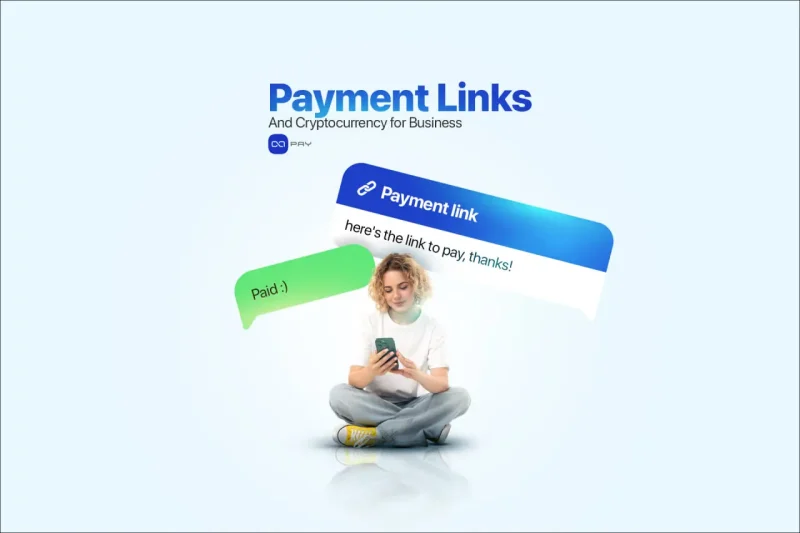
Payment Links turn payments into an endpoint rather than a journey. The sale can happen anywhere, in a conversation, an email, a social post, or a contract. The link simply completes the transaction.
This is why Payment Links are not tied to a specific industry or channel. They follow the sale, not the platform.
Why Cryptocurrency Changes the Equation
ارز دیجیتال removes several constraints that traditional payments impose on businesses.
- There are no card networks defining who can pay and from where.
- There are no chargebacks reversing completed transactions weeks later.
- There is no dependency on local banking infrastructure.
For global, digital, or cross-border businesses, these characteristics are not theoretical advantages. They directly affect margins, reach, and reliability.
However, crypto on its own does not guarantee a good payment experience. Wallet addresses, network selection, and amount precision introduce new points of failure. This is where Payment Links become essential.
The Synergy Between Payment Links and Crypto Payments
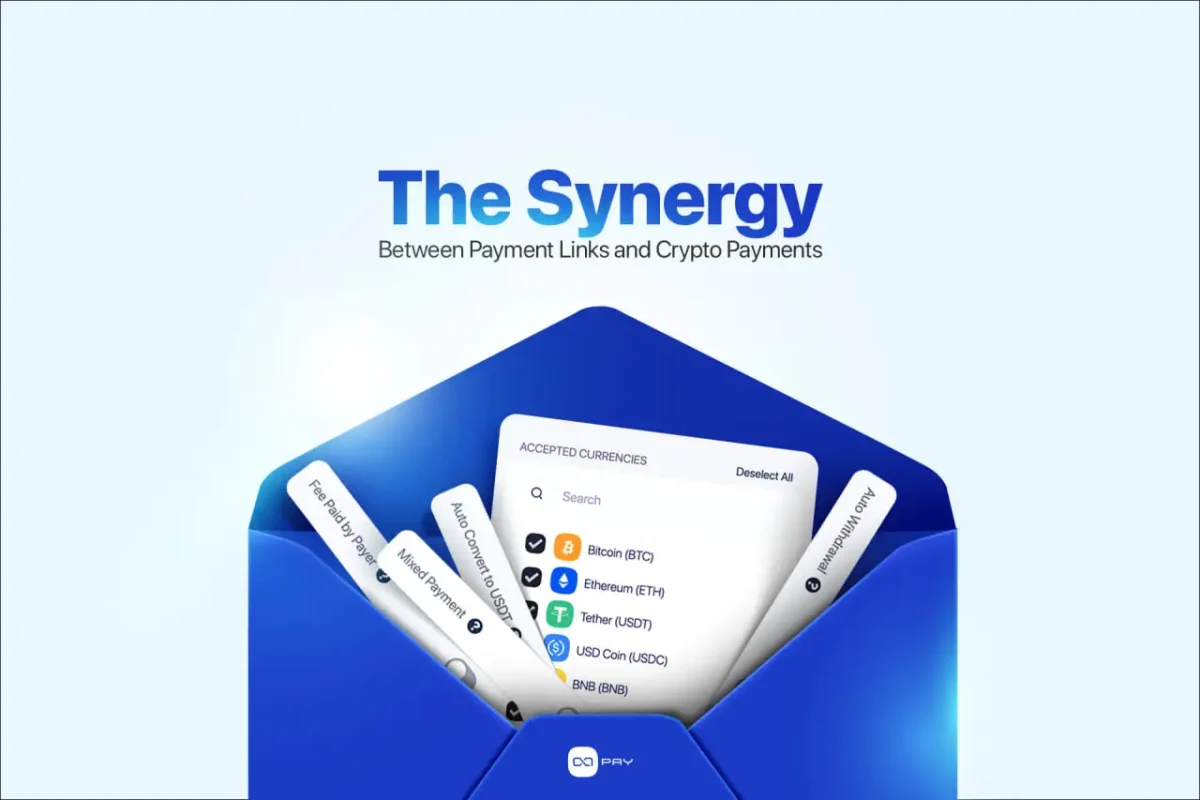
Payment Links act as a control layer on top of cryptocurrency.
Instead of asking customers to interpret instructions, the link defines:
- What asset can be used
- What amount is acceptable
- What happens if the payment is slightly off
- When the payment is considered complete
This structured flow transforms crypto from a technical payment method into a business-ready one. The customer experiences a guided process rather than a set of manual steps.
Why This Model Fits Modern Business Behavior
Many modern businesses do not sell through traditional storefronts.
Sales happen through:
- Direct messages
- Email conversations
- Video calls
- Social media posts
- Communities and newsletters
In these environments, sending someone to a full checkout page feels unnatural. A Payment Link fits the rhythm of the interaction. It closes the loop without forcing the customer into a different context.
Cryptocurrency strengthens this model by enabling instant, borderless settlement once the link is used.
Operational Advantages for Businesses
From an operational perspective, Payment Links combined with crypto simplify several areas.
- Payment collection becomes faster and more predictable.
- Support overhead decreases due to fewer payment errors.
- Reconciliation improves because each link defines its context.
- Global payments become accessible without regional configuration.
These benefits scale with usage. A single link works for a solo freelancer, but the same model supports teams handling hundreds of payments per month.
Risk, Control, and Trust
Trust in payments is not created by branding alone. It is created by consistency.
Customers want to know:
- What they are paying for
- How much they are paying
- When the payment is final
Payment Links provide this clarity. Cryptocurrency ensures final settlement. Together, they reduce uncertainty on both sides of the transaction.
This combination shifts payment discussions away from “Did it go through?” and toward delivery and value.
Where Payment Links Fit in a Broader Payment Strategy
Payment Links are not an all-or-nothing decision.
Many businesses start with Payment Links because they are lightweight and fast to deploy. Over time, they may add invoices, رابطهای برنامهنویسی کاربردی (API), or platform integrations as complexity increases. The key advantage is optionality. Businesses can evolve their payment stack without rebuilding it from scratch.
Payment Links and cryptocurrency form a flexible foundation that supports this progression.
The Role of OxaPay
درگاه رمزنگاری OxaPay plays a crucial role in operationalizing this model by providing the infrastructure that turns Payment Links into a reliable payment solution. It handles confirmation logic, network behavior, and transaction tracking, allowing businesses to focus on selling instead of troubleshooting payments. The value of OxaPay lies not in novelty, but in its ability to reduce friction at scale.
نتیجهگیری
Payment Links and cryptocurrency are not trends. They are responses to how digital business actually works. As sales move away from fixed storefronts and toward direct, conversational channels, payments must follow.
By combining the borderless nature of crypto with the structured simplicity of Payment Links, businesses gain a payment model that is faster, clearer, and better aligned with modern workflows. For many, this combination is not the final architecture, but it is the most practical place to begin.