سالها یک مشکل بزرگ سرعت پذیرش پرداختهای رمزارزی توسط کسبوکارها را کم میکرد: نوسان قیمت.
مشتری ۱۰۰ دلار با رمزارز پرداخت میکند. تا زمانی که تراکنش تسویه شود، ارزش آن ممکن است تغییر کرده باشد. برای بسیاری از کسبوکارها، این عدم قطعیت اصطکاک عملیاتی بیشتری از خود پرداخت ایجاد میکرد.
استیبلکوینها این وضعیت را تغییر دادند.
بهجای اینکه پذیرندگان مجبور شوند میان پرداختهای بلاکچینی و قیمتگذاری قابل پیشبینی یکی را انتخاب کنند، استیبلکوینها مدل کاربردیتری ارائه کردند: پرداخت دیجیتال روی شبکههای بلاکچینی با ارزشی که ارتباط پایدارتری با پول فیات دارد.
به همین دلیل پذیرش پرداخت استیبلکوین در تجارت الکترونیک، SaaS، خدمات دیجیتال، فریلنسری و تجارت فرامرزی رایجتر شده است.
استیبلکوینها دیگر فقط ابزار معامله نیستند؛ بهتدریج به زیرساخت عملیاتی پرداخت تبدیل میشوند.
برای پذیرندگان، ارزش واقعی در هیاهو نیست.
ارزش واقعی، پیشبینیپذیری است.
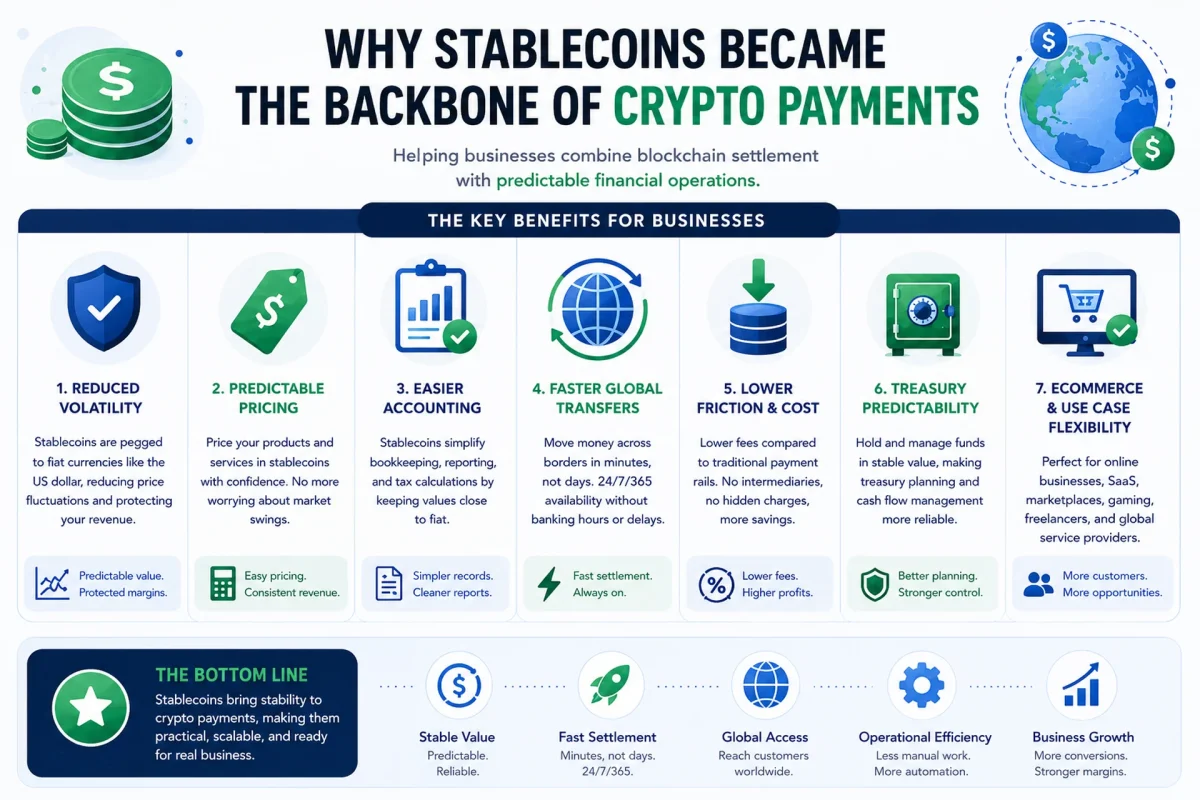
چرا استیبلکوینها برای پرداخت تا این حد مهم شدند
پرداختهای رمزارزی چند مشکل واقعی کسبوکار را حل میکنند:
- دسترسی جهانی
- تسویه مستقیم
- دسترسی ۲۴/۷
- وابستگی کمتر به زیرساخت سنتی کارت
اما داراییهای رمزارزی پرنوسان اصطکاک عملیاتی ایجاد کردند.
کسبوکارها معمولاً نمیخواهند ارزش پرداخت میان checkout، تأیید، تسویه و حسابداری تغییر کند.
با افزایش حجم پرداخت، مدیریت این عدم قطعیت دشوارتر میشود.
استیبلکوینها این عدم قطعیت را کاهش میدهند.
یک کسبوکار میتواند پرداخت بلاکچینی دریافت کند و در عین حال قیمتگذاری و گزارشدهی نسبتاً باثباتی داشته باشد. به همین دلیل بسیاری از شرکتهایی که یک سیستم پرداخت کریپتوی قابلاعتماد گستردهتر را ارزیابی میکنند، پیش از عبور از مرحله آزمایش به عملیات واقعی پرداخت، پشتیبانی از استیبلکوین را جدی بررسی میکنند.
این موضوع جایگاه کریپتو در تجارت واقعی را تغییر میدهد.
یک پلتفرم SaaS میتواند اشتراکها را با استیبلکوین صورتحساب کند. فروشگاه آنلاین میتواند بدون محاسبه مداوم نوسان بازار به مشتریان بینالمللی خدمت دهد. فریلنسر نیز میتواند جهانی پول دریافت کند و سوابق درآمد را نزدیکتر به ارزش فیات آشنا نگه دارد.
به همین دلیل استیبلکوینها به بخش مرکزی سیستمهای مدرن پرداخت رمزارزی تبدیل شدند.
مشکل واقعیای که استیبلکوینها برای پذیرندگان حل میکنند
بیشتر مقالهها استیبلکوین را از نظر فنی تعریف میکنند.
کسبوکارها بیشتر به اثر عملیاتی آن اهمیت میدهند.
نوسان بر این موارد اثر میگذارد:
- قیمتگذاری
- بازپرداخت
- حسابداری
- مدیریت خزانه
- ثبات گزارشدهی
- شفافیت حاشیه سود
در حجم پایین، کسبوکار ممکن است مقداری نوسان قیمت را تحمل کند.
در مقیاس بالا، نوسان به نویز عملیاتی تبدیل میشود.
تیم مالی باید تغییر ارزش را میان فاکتور، تسویه و دورههای گزارشدهی تطبیق دهد. استانداردسازی محاسبه بازپرداخت سختتر میشود و دید نسبت به درآمد قابلیت پیشبینی کمتری پیدا میکند.
استیبلکوینها این نویز را کاهش میدهند.
آنها به کسبوکار اجازه میدهند پرداخت رمزارزی را کمتر شبیه دارایی سفتهبازانه و بیشتر شبیه زیرساخت قابل استفاده برای تسویه مدیریت کند.
این تفاوت، تجارت رمزارزی را بهطور اساسی تغییر داد.
همه استیبلکوینها یکسان نیستند
استیبلکوینها در checkout ممکن است مشابه به نظر برسند، اما کسبوکارها نباید آنها را کاملاً قابل جایگزینی بدانند.
دو استیبلکوین رایج در محیطهای تجاری پرداخت عبارتاند از Tether و USD Coin.
- هر دو استفاده گستردهای دارند.
- هر دو معمولاً به دلار آمریکا متصل هستند.
- هر دو روی چند شبکه بلاکچینی فعالیت میکنند.
اما پذیرندگان اغلب آنها را بر اساس این عوامل متفاوت ارزیابی میکنند:
- نقدشوندگی
- آشنایی مشتری
- پشتیبانی شبکه
- رویههای شفافیت
- ساختار صادرکننده
- ترجیح منطقهای
- اعتماد عملیاتی
USDT بهدلیل نقدشوندگی بسیار بالا و پشتیبانی گسترده صرافیها در بسیاری از محیطهای پرداخت و انتقال بینالمللی همچنان غالب است. کسبوکارهایی که میخواهند اطلاعات مربوط به صادرکننده را بررسی کنند میتوانند به صفحه رسمی شفافیت.
USDC در برخی بازارها اغلب با جایگاه نهادی قویتر و برداشت متمرکزتر بر شفافیت همراه است. Circle نیز اطلاعات ذخایر و شفافیت USDC را در صفحه رسمی شفافیت.
برای بسیاری از کسبوکارها، راهبرد بهتر این نیست که فقط یک استیبلکوین را انتخاب کنند.
بهتر است استیبلکوینهایی را پشتیبانی کنند که مشتریان از قبل استفاده میکنند و تسویه و گزارشدهی را از طریق زیرساخت پرداخت قابلاعتماد مدیریت کنند.

انتخاب شبکه بهاندازه خود استیبلکوین اهمیت دارد
پذیرش USDT یا USDC فقط بخشی از تصمیم است.
شبکه نیز اهمیت دارد.
یک استیبلکوین بسته به اینکه روی کدام شبکه منتقل شود، رفتار متفاوتی دارد:
- Ethereum
- TRON
- Polygon
- Solana
- BNB Chain
یا دیگر شبکههای پشتیبانیشده.
برای پذیرندگان، انتخاب شبکه بر این موارد اثر میگذارد:
- کارمزد تراکنش
- سرعت تأیید
- سازگاری کیف پول
- نرخ موفقیت پرداخت
- اصطکاک در checkout
- عملی بودن بازپرداخت
برای مثال، USDT روی TRON بهدلیل کارمزد پایین و آشنایی گسترده کاربران بسیار محبوب شد.
پرداخت استیبلکوین روی Ethereum ممکن است برای کاربران نهادی آشناتر باشد، اما ازدحام شبکه میتواند هزینهها را بهطور قابل توجهی افزایش دهد. وبسایت رسمی Ethereum نیز برای کاربران و توسعهدهندگانی که زمینه فنی بیشتری میخواهند، استیبلکوینها را بهعنوان بخشی از اکوسیستم گسترده Ethereum توضیح میدهد.
محیطهای کمهزینهتر مانند Polygon یا Solana میتوانند پرداخت استیبلکوین را برای تجارت الکترونیک و تراکنشهای کوچک کاربردیتر کنند. پذیرندگانی که هزینه و سرعت را مقایسه میکنند میتوانند راهنمای OxaPay درباره بهترین بلاکچین برای پذیرش پرداختهای USDT.
پرسش بهتر این نیست:
«کدام استیبلکوین بهترین است؟»
بلکه این است:
«کدام استیبلکوین روی کدام شبکه بهترین تجربه پرداخت را برای این کسبوکار و مشتریانش ایجاد میکند؟»
برای برنامهریزی پیادهسازی، مستندات OxaPay درباره شبکههای پشتیبانیشده میتواند به تیمها کمک کند شبکههای موجود در زیرساخت پرداخت را بشناسند.
پرداخت استیبلکوین و روانشناسی checkout
استیبلکوینها عدم قطعیت قیمت را کاهش میدهند، اما تجربه پرداخت همچنان بر تبدیل اثر دارد.
مشتریان میخواهند جریان پرداخت این ویژگیها را داشته باشد:
- شفاف
- قابل پیشبینی
- قابل اعتماد
- قابل بازیابی
مشکلات معمولاً زمانی ظاهر میشوند که کاربران با این موارد روبهرو شوند:
- انتخاب نامشخص شبکه
- دستورالعمل گیجکننده کیف پول
- نبود وضعیت پرداخت
- زمانبندی نامشخص تأیید
- عدم قطعیت پس از ارسال پرداخت
مشتری پرداخت را ارسال میکند. کیف پول میگوید «تکمیل شد». فاکتور هنوز «در انتظار» نشان میدهد. حتی اگر تراکنش معتبر باشد، ابهام میتواند خیلی سریع ایجاد شود.
این موضوع بهویژه روی موبایل مهم است، جایی که کاربران تحمل بسیار کمتری برای وضعیت مبهم پرداخت یا بازخورد با تأخیر دارند.
حتی یک پرداخت استیبلکوین که از نظر فنی موفق است میتواند اصطکاک ایجاد کند، اگر تجربه آن استرسزا یا مبهم باشد.
بهترین جریانهای checkout استیبلکوین با این موارد اضطراب را کاهش میدهند:
- دستورالعملهای واضح پرداخت
- اطلاعات قابل مشاهده شبکه
- تشخیص بلادرنگ پرداخت
- وضعیتهای قابل فهم پرداخت
- نمایش فوری تأیید
پرداخت استیبلکوین زمانی بهترین عملکرد را دارد که مشتری در تمام فرایند احساس اطمینان کند، نه فقط پس از تسویه. به همین دلیل ابزارهای checkout میزبانیشده مانند فاکتورهای رمزارزی و Payment Links میتوانند برای کسبوکارهایی که نمیخواهند کل تجربه پرداخت را از ابتدا بسازند، مفید باشند.
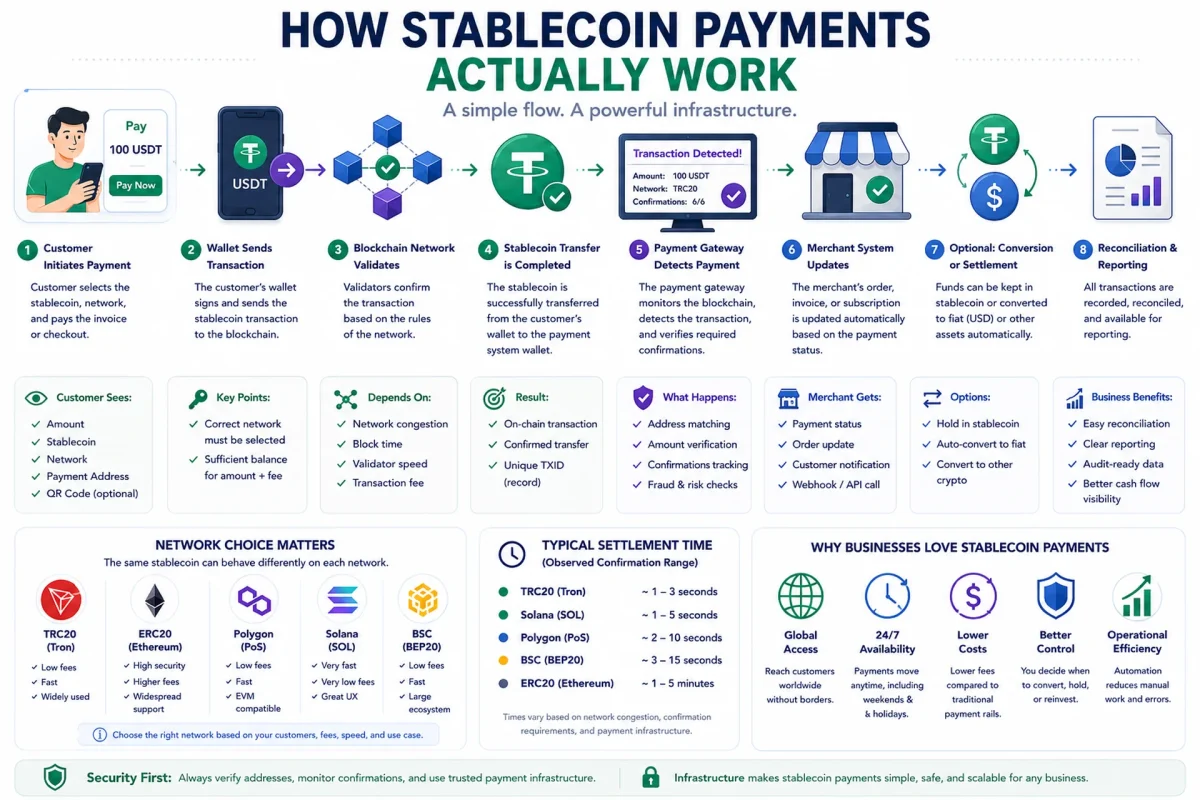
پرداخت استیبلکوین واقعاً چگونه کار میکند
از بیرون، پرداخت استیبلکوین ممکن است ساده به نظر برسد.
اما در پشت صحنه چند مرحله هماهنگ رخ میدهد:
- پذیرنده درخواست پرداخت ایجاد میکند.
- مشتری استیبلکوین و شبکه را انتخاب میکند.
- کیف پول تراکنش را منتشر میکند.
- شبکه بلاکچین پرداخت را اعتبارسنجی میکند.
- سیستم پرداخت تراکنش را شناسایی میکند.
- پذیرنده تأیید پرداخت را دریافت میکند.
- سفارش، فاکتور یا حساب بهطور خودکار بهروزرسانی میشود.
هر لایه بر تجربه پرداخت اثر دارد.
- اگر تشخیص با تأخیر انجام شود، کاربر دچار ابهام میشود.
- اگر شبکه اشتباه استفاده شود، بازیابی دشوارتر خواهد شد.
- اگر وضعیتهای پرداخت روشن نباشند، سربار پشتیبانی افزایش مییابد.
پرداخت استیبلکوین فقط زمانی ساده به نظر میرسد که زیرساخت پیرامون آن بهوضوح سازماندهی شده باشد.
برای جریانهای مبتنی بر API، کسبوکارها میتوانند از Generate Invoice API در OxaPay برای ایجاد درخواست پرداخت ساختاریافته و اتصال آن به checkout، صورتحساب یا سیستم سفارش داخلی استفاده کنند.
جنبه عملیاتی پذیرش پرداخت استیبلکوین
برای کسبوکار، پرداخت استیبلکوین فقط افزودن یک روش پرداخت دیگر نیست.
لایه عملیاتی نیز به همان اندازه اهمیت دارد.
یک سیستم پرداخت کاربردی باید به پرسشهایی مانند این پاسخ دهد:
- پرداختها چگونه به فاکتورها تطبیق داده میشوند؟
- تأییدها چگونه رهگیری میشوند؟
- کمپرداختی چگونه مدیریت میشود؟
- بازپرداخت چگونه مدیریت میشود؟
- شبکههای مختلف چگونه سازماندهی میشوند؟
- سوابق پرداخت چگونه ذخیره میشوند؟
- آیا داراییها میتوانند خودکار تبدیل شوند؟
اینجاست که بسیاری از کسبوکارها متوجه میشوند پذیرش دستی استیبلکوین از طریق کیف پول خیلی سریع قابلیت مقیاسپذیری خود را از دست میدهد.
در حجم پایین، جریان دستی ممکن است قابل مدیریت به نظر برسد. در حجم تراکنش بالاتر، اصطکاک بسیار واضحتر میشود.
تیم مالی شروع به تطبیق پرداختها در چند کیف پول میکند. تیم پشتیبانی تراکنشهای ارسالشده روی شبکه اشتباه را بررسی میکند. تیم عملیات بهجای تمرکز بر انجام سفارش یا جریان مشتری، وقت خود را صرف بررسی دستی وضعیت تأیید میکند.
معمولاً خود پرداخت بخش دشوار نیست.
فرایند عملیاتی پیرامون آن دشوار است.
در حجم بالاتر، جریانهای دستی این مشکلات را ایجاد میکنند:
- تأخیر در تطبیق
- سوابق ناسازگار
- اصطکاک پشتیبانی
- پرداختهای از دسترفته
- ناکارآمدی عملیاتی
پرداخت استیبلکوین زمانی بسیار کاربردیتر میشود که زیرساخت پیرامون آن خودکار و از نظر عملیاتی ساختاریافته باشد، نه اینکه با پایش دستی کیف پول مدیریت شود.
برای تیمهایی که به بهروزرسانی وضعیت پرداخت در سیستم خود نیاز دارند، مستندات webhook OxaPay OxaPay توضیح میدهد callbackهای بلادرنگ چگونه از جریانهای خودکار پرداخت پشتیبانی میکنند.

استیبلکوینها و پرداختهای فرامرزی کسبوکار
پرداخت فرامرزی به یکی از قویترین کاربردهای استیبلکوین تبدیل شده است.
انتقال سنتی بینالمللی میتواند شامل این موارد باشد:
- کارمزد واسطهها
- تسویه با تأخیر
- دید پراکنده
- اصطکاک تبدیل ارز
- وابستگی به ساعات کاری بانک
تفاوت عملیاتی زمانی محسوستر میشود که کسبوکار پرداختهای بینالمللی تکرارشونده را در مقیاس بالا مدیریت کند.
تأخیر پرداخت به تأمینکننده بهدلیل بانکهای واسطه بر عملیات اثر میگذارد. انتظار چندروزه فریلنسر برای تسویه، برنامهریزی کار را مختل میکند. حتی بازپرداخت نیز وقتی چند ارز و سیستم بانکی دخیل باشند دشوارتر میشود.
استیبلکوینها مدل عملیاتی متفاوتی ارائه میکنند.
آنها بهطور پیوسته روی شبکههای بلاکچینی منتقل میشوند، حتی خارج از ساعات سنتی بانکداری.
برای کسبوکار، این موضوع انعطافپذیری را در این حوزهها بهبود میدهد:
- تجارت الکترونیک بینالمللی
- پرداخت به پیمانکاران دورکار
- خدمات دیجیتال جهانی
- اشتراکهای SaaS
- تسویه با تأمینکنندگان
- پرداخت به فریلنسرها
مزیت فقط سرعت نیست.
مزیت، امکان انتقال جهانی ارزش با رفتار تسویه قابل پیشبینیتر و شفافتر از نظر عملیاتی است.
برای زمینه بیشتر، فدرال رزرو درباره استیبلکوینهای پرداخت در ارتباط با پرداختهای فرامرزی، از جمله مزایای بالقوه و پیامدهای گستردهتر سیاست پولی، بحث کرده است.
کسبوکارهایی که این کاربرد را ارزیابی میکنند میتوانند در مقاله OxaPay درباره روشهای پرداخت بینالمللی، استیبلکوینها را با دیگر گزینههای پرداخت جهانی نیز مقایسه کنند.
استیبلکوینها گزارشدهی را سادهتر میکنند
استیبلکوینها در مقایسه با داراییهای رمزارزی بسیار پرنوسان، اصطکاک حسابداری را نیز کاهش میدهند.
وقتی کسبوکار رمزارز پرنوسان دریافت میکند، تیم مالی ممکن است لازم باشد تغییر قیمت را میان این مراحل ثبت کند:
- ایجاد فاکتور
- شروع پرداخت
- تسویه
- تبدیل
استیبلکوینها این فرایند را ساده میکنند.
آنها کمک میکنند سوابق پرداخت به ارز قیمتگذاری کسبوکار نزدیکتر بماند، بهخصوص وقتی محصولات و فاکتورها بر مبنای USD هستند.
این موضوع موارد زیر را بهبود میدهد:
- شفافیت تطبیق
- ثبات بازپرداخت
- سادگی گزارشدهی
- دید خزانهداری
- هماهنگی مالی
برای کسبوکار در حال رشد، سادگی عملیاتی تقریباً بهاندازه خود پذیرش پرداخت اهمیت دارد.
تاریخچه پرداخت، سوابق فاکتور و پایش وضعیت بهویژه زمانی مهم میشوند که تیم بعداً نیاز به ممیزی تراکنش داشته باشد. Payment History API و Payment Information API OxaPay برای این نوع دید عملیاتی طراحی شدهاند.
جایگاه OxaPay در پرداختهای استیبلکوین
پرداخت استیبلکوین زمانی بسیار کاربردیتر میشود که کسبوکار مجبور نباشد عملیات بلاکچینی را دستی مدیریت کند.
اینجاست که ارائهدهندگان زیرساخت پرداخت اهمیت پیدا میکنند.
OxaPay از طریق موارد زیر به کسبوکارها کمک میکند جریان پرداخت استیبلکوین را عملیاتی کنند:
- خدمات پرداخت پذیرندگان
- APIهای پرداخت خروجی
- فاکتورهای میزبانیشده
- plugin
- Payment Links
- ابزارهای پذیرندگان
- پایش خودکار پرداخت
- پشتیبانی چندشبکهای
بهجای پایش دستی کیف پول و هش تراکنش، کسبوکار میتواند پرداخت استیبلکوین را با جریانهای عملیاتی ساختاریافته مدیریت کند.
برای مثال، پذیرندهای که USDT روی Tron دریافت میکند میتواند:
- فاکتور را خودکار ایجاد کند
- وضعیت پرداخت را در لحظه پایش کند
- callback پرداخت دریافت کند
- تأییدها را دنبال کند
- سوابق پرداخت را سازماندهی کند
- در صورت نیاز داراییها را خودکار تبدیل کند
همه این کارها را در یک محیط پرداخت یکپارچه انجام دهد.
ارزش اصلی فقط پذیرش استیبلکوین نیست.
ارزش اصلی، سادهتر کردن عملیات پرداخت استیبلکوین در مقیاس بالا است.
این تفاوت مهم است، زیرا بیشتر کسبوکارها نمیخواهند به تیم عملیات بلاکچین تبدیل شوند؛ آنها سیستم پرداختی میخواهند که طبیعی با جریانهای موجود یکپارچه شود.
چرا پشتیبانی از چند استیبلکوین اهمیت دارد
برخی کسبوکارها میپرسند:
«USDT بپذیریم یا USDC؟»
در عمل، رفتار مشتری پراکندهتر است.
کاربران مختلف ترجیحات متفاوتی دارند:
- استیبلکوینها
- کیف پولها
- شبکههای بلاکچین
برخی مشتریان USDT روی Tron را ترجیح میدهند.
برخی دیگر از کیف پولهای مبتنی بر Ethereum استفاده میکنند.
بعضی کارمزد کمتر را در اولویت میگذارند و برخی آشنایی با اکوسیستم را.
محدود کردن بیش از حد گزینههای checkout میتواند اصطکاک غیرضروری ایجاد کند.
کسبوکارهایی که بهتر سازگار میشوند معمولاً چند ترجیح پرداخت را پشتیبانی میکنند، اما عملیات داخلی را متمرکز و منظم نگه میدارند.
پیش از فعال کردن گزینههای checkout، پذیرندگان میتوانند کوینها و شبکههای پشتیبانیشده OxaPay را بررسی کنند تا بدانند کدام استیبلکوینها و شبکههای بلاکچینی برای پذیرش پرداخت در دسترس هستند.
اشتباهات رایج کسبوکارها در پرداخت استیبلکوین
پرداخت استیبلکوین کاربردی است، اما کسبوکارها همچنان اشتباهات قابل پیشگیری دارند.
یک مشکل رایج، نادیده گرفتن انتخاب شبکه است.
اگر مشتری استیبلکوین درست را روی شبکه اشتباه ارسال کند، پیچیدگی پشتیبانی قابل توجهی ایجاد میشود.
اشتباه دیگر این است که تصور شود استیبلکوین همه چالشهای پرداخت را حذف میکند.
آنها نوسان را کاهش میدهند، اما کسبوکار همچنان به این موارد نیاز دارد:
- پایش پرداخت
- وضعیتهای ساختاریافته تأیید
- جریان بازپرداخت
- گزارشدهی عملیاتی
- دید مشتری نسبت به پرداخت
اشتباه سوم، اتکا کامل به مدیریت دستی کیف پول است.
این روش ممکن است موقتاً جواب بدهد، اما با افزایش حجم پرداخت اصطکاک عملیاتی ایجاد میکند.
بهترین سیستمهای پرداخت استیبلکوین این موارد را ترکیب میکنند:
- انعطاف مشتری
- زیرساخت خودکار
- دید روشن نسبت به پرداخت
- جریانهای عملیاتی منظم
کسبوکارهایی که میخواهند از این مشکلات دور بمانند میتوانند راهنمای گستردهتر یکپارچهسازی OxaPay در چکلیست یکپارچهسازی پرداخت رمزارزی را نیز بررسی کنند.
جمعبندی
پرداخت استیبلکوین زمانی ارزشمند میشود که دیگر شبیه تراکنشهای جداافتاده کریپتو نباشد و مانند زیرساخت قابلاعتماد کسبوکار عمل کند. برای پذیرندگان، تغییر اصلی خود بلاکچین نیست؛ توانایی کاهش عدم قطعیت عملیاتی و پشتیبانی از تجارت جهانی از طریق جریانهای پرداخت قابل پیشبینی و قابل مدیریت است.
با رشد پذیرش، کسبوکارها سیستمهای پرداخت استیبلکوین را بیشتر بر اساس قابلیت اطمینان، دید عملیاتی و تجربه مشتری ارزیابی خواهند کرد تا صرفاً تازگی فنی. احتمالاً شرکتهایی بیشترین منفعت را میبرند که تجربه پرداخت ساده، مقیاسپذیر و از نظر عملیاتی قابلاعتماد بسازند.
کسبوکارهایی که میخواهند عملیات پرداخت استیبلکوین را ساده کنند میتوانند درگاه کریپتوی OxaPayرا بررسی کنند؛ شامل APIهای پرداخت، فاکتورهای میزبانیشده، لینکهای پرداخت، پشتیبانی چندشبکهای و زیرساخت خودکار پذیرندگان برای پرداخت استیبلکوین در مقیاس بالا.