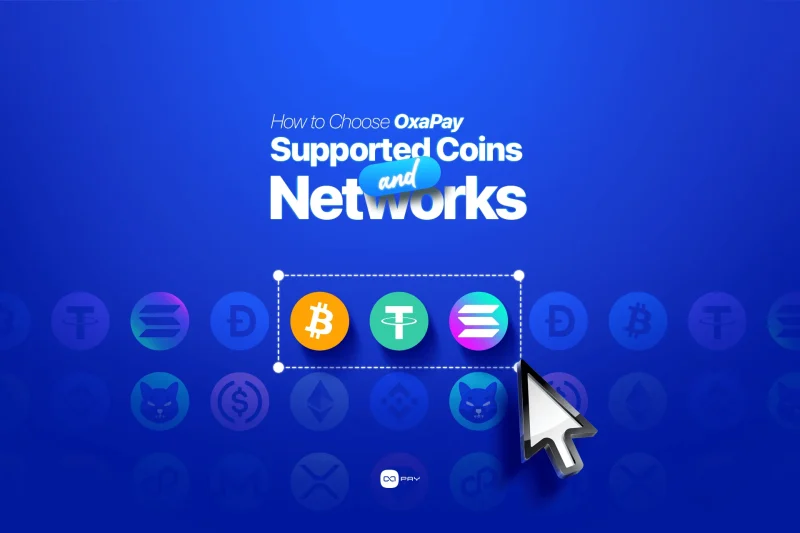
If you only need the current list of OxaPay supported coins and networks, use the live Supported Coins page. It is the right source for what OxaPay supports today because the available assets and networks can change over time.
This article answers a different question: which of those options should your business actually put in front of customers?
For a merchant, accepting more cryptocurrencies is not automatically better. Every extra coin or network changes the checkout experience, creates another set of payment instructions, and can add more questions for support and finance teams. A useful payment mix gives customers enough choice without turning the checkout into a catalog.
The goal is to match payment options to real customer behavior. That means looking beyond the number of supported assets and considering demand, network access, transaction costs, order size, support workload, and what your business wants to do with funds after payment.
The Real Decision: Supported, Accepted, and Shown at Checkout
OxaPay can support a broader catalog than your business needs to expose. Keeping these layers separate makes the decision much easier.
| الطبقة | What it means | Who controls it |
|---|---|---|
| Supported currencies | Coins and networks available through OxaPay infrastructure | OxaPay |
| Accepted currencies | The subset your business decides to accept | التاجر |
| Checkout options | The choices a customer actually sees in a payment flow | Your payment setup |
The common mistake is to treat the supported catalog as a checklist. But availability only shows that an option exists. It does not tell you whether customers use it, can send it on the right network, or benefit from seeing it at checkout.
A better approach is to use customer evidence. Review sales conversations, support questions, payment requests, and transaction data, then add options when repeated demand appears. This keeps the OxaPay supported coins catalog as a source of availability while making your payment mix a business decision.
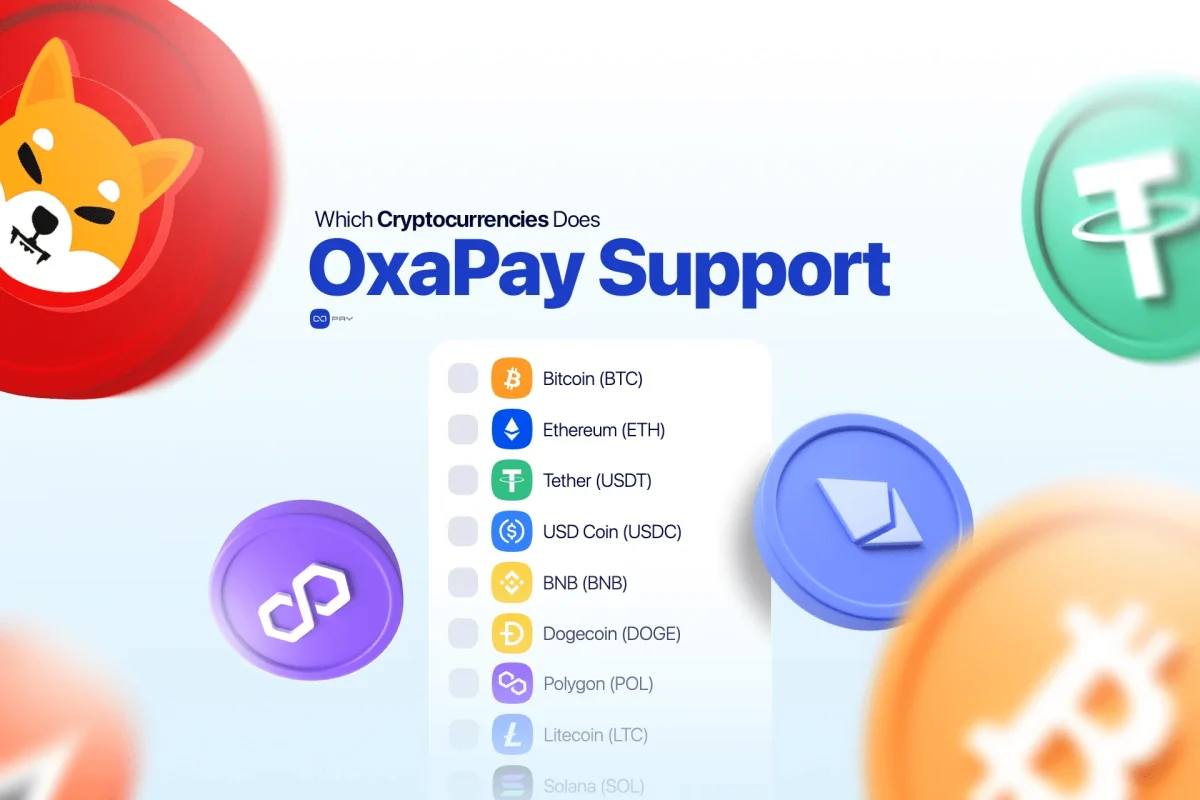
Which Cryptocurrencies Does OxaPay Support?
OxaPay supports cryptocurrencies, stablecoins, native blockchain assets, and tokens across multiple networks. Because supported assets and networks can change over time, the OxaPay Supported Coins page should remain the source of truth for current availability. For merchants, the catalog is more useful as a capability map than as a simple list: native assets, stablecoins, and multi-network tokens can serve different customer needs and payment preferences.
The important question is not only whether an option is supported, but whether it is useful in practice. Merchants should consider actual customer demand, access to the correct network, wallet or exchange compatibility, payment costs, and how clearly the option can be presented at checkout. One supported asset may fit a large share of customers, while another may be technically available but rarely used. OxaPay shows what is possible; customer behavior and payment conditions determine what should actually be offered.
Build the Payment Mix Around Customer Behavior
A useful payment option should solve a real customer need. Some customers want to spend a native cryptocurrency they already hold, while others prefer a stable-value asset. The right mix depends on who pays you, how they normally hold or transfer crypto, and what payment friction they are trying to avoid.
Order size also matters. A network fee that feels minor on a large invoice can be significant on a small purchase, but the cheapest network is not automatically the best option if customers rarely use it or cannot easily withdraw to it from their preferred wallet or exchange. Payment convenience depends on both cost and access.
Build the mix in layers. Core options should cover the strongest recurring demand, while network alternatives can help when customers commonly hold the same asset on different chains. Expansion options should be added only when repeated requests, meaningful payment volume, or a clear use case justify them. The goal is not to maximize the number of coins you accept, but to choose coin-and-network combinations that reduce friction for the customers you actually serve.
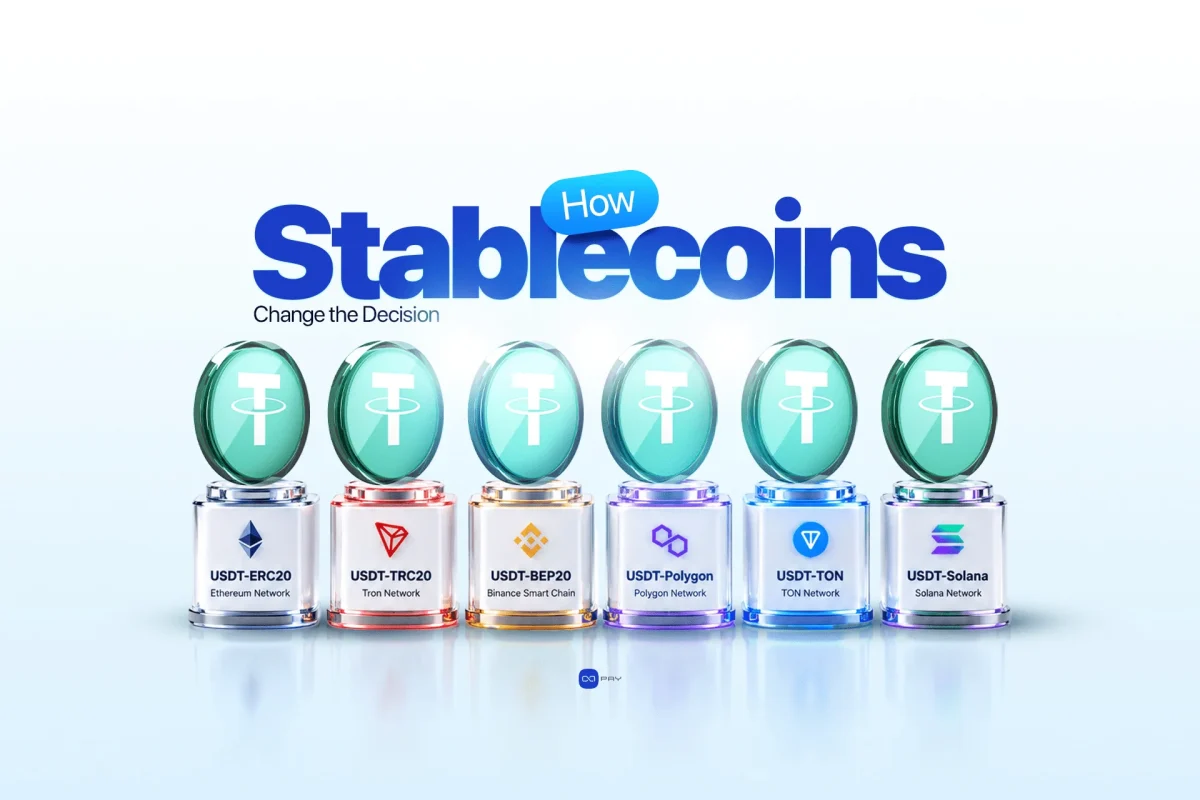
How Stablecoins Change the Decision
العملات المستقرة often solve a different customer need from volatile cryptocurrencies. They can make payment amounts easier to understand in fiat terms and reduce concern about short-term price movement during checkout, which is useful for customers who want to pay in crypto without tracking a changing asset value.
But choosing a stablecoin does not complete the payment decision. Stablecoin support is still network-specific. For example, Tether documents that USDT exists across multiple blockchain protocols, so merchants still need to decide which supported network versions fit their customers.
The best network is not necessarily the one with the lowest fee. Customers may already hold USDT or USDC on a particular network, while moving funds to another can require an exchange withdrawal, bridge, or additional transaction. That extra step may create more friction than a modest fee difference, so accessibility and familiarity can matter as much as cost.
Stablecoins also affect merchant operations. A stable-value asset can make received value easier to interpret, but businesses still need clear processes for network labeling, payment matching, settlement, and treasury handling. If other cryptocurrencies are accepted as well, Auto-Convert to USDT can separate what customers are allowed to pay with from what the business prefers to hold. The practical approach is to offer the stablecoin-and-network combinations customers can use reliably and expand only when demand or payment data justifies it.
Treat the Coin and Network as One Payment Choice
For multi-network assets, the coin name alone is incomplete payment information. A customer can hold the right asset and still choose a network that does not match the payment request. For that reason, the coin and network should be treated as one payment choice wherever the network matters.
Networks can differ in transaction cost, confirmation behavior, wallet compatibility, minimum transfer rules, and payment instructions. On Ethereum, for example, the base fee changes with network demand, so periods of heavier activity can increase gas costs. The official Ethereum gas documentation explains how this mechanism works. For a broader explanation of network costs, see Understanding Blockchain Fees.
The practical importance of these differences depends on the payment. For smaller transactions, network costs may determine whether a payment method feels practical. For larger payments, customers may care more about wallet access, familiarity, or the network on which they already hold funds.
The same coin-and-network pairing should also appear in order records and support information. A message such as “my USDT payment is missing” is difficult to investigate until the network is known. Clear network labeling reduces ambiguity for both customers and support teams, which is another reason a smaller, well-labeled set of payment options can work better than a long list of similar-looking choices.
Design Checkout and Payment Operations Together
Checkout design and payment operations should be planned together. The options customers see affect the questions your team receives, while your operational setup determines how much work each accepted asset creates after payment. Keep the most relevant choices easy to find, make the network explicit for multi-network assets, and avoid giving prominent space to options that create confusion but little real payment volume.
The exact customer flow depends on how you accept payments. A business can use a hosted فاتورة, a branded White Label checkout, an e-commerce إضافة برمجية, or shareable Payment Links. The interface may change, but the principle stays the same: show useful payment options, label networks clearly, and avoid unnecessary choice.
After checkout, OxaPay merchant payment controls can reduce common operational friction:
- Underpayment tolerance: defines how small payment shortfalls are handled instead of turning every difference into a support case.
- Mixed Payment: can let a customer complete the remaining invoice amount with another supported cryptocurrency when enabled.
- Auto-Convert to USDT: can convert received crypto to USDT where supported, separating what customers can pay with from what the business prefers to hold.
- Auto-Withdraw: can route received funds according to the merchant’s withdrawal settings.
- اختبار Sandbox: lets a business test its payment flow and selected options before using them in live transactions.
This distinction matters because a merchant may want to accept several payment options without keeping long-term exposure to every asset received. Auto-Convert can reduce one operational reason to limit checkout only to stablecoins, while options that create frequent support work and little customer value may still not be worth offering.
Review the Payment Mix with Real Data
Your first payment mix should not be permanent. Customer behavior changes, new networks become more common, order values shift, and the live OxaPay supported coins list can change. The strongest setup is one that is reviewed and adjusted over time.
Use real payment and support data to judge whether an option is useful. Relevant signals include completed payment share by coin and network, repeated requests for unavailable options, network-related support cases, underpayment frequency, manual intervention, and options that remain visible but are rarely used. The interpretation matters more than the raw count: a low-volume option may still serve an important customer segment, while a popular asset may need clearer network labeling if it creates avoidable support work.
When considering a new asset or network, first confirm that it is currently available on the OxaPay Supported Coins page. Then evaluate whether customer demand, wallet access, and operational value justify adding it to your checkout. The goal is not to remove every low-usage option, but to understand what each choice contributes to the customer experience and operational workload.
ما الخطوة التالية؟
OxaPay supported coins should be treated as a menu of available payment infrastructure, not as a target number your business needs to maximize.
Start with the customers you already serve. Choose coin-and-network combinations they can use reliably. Keep the checkout clear. Make the network part of the payment choice. Then use payment and support data to decide what should be added, moved, or removed.
That gives customers meaningful flexibility while keeping multi-crypto payments manageable for the business behind the checkout.