What happens when a customer is ready to pay with crypto, but your system does not support it?
It is not just a lost transaction. It is friction introduced at the exact moment conversion should happen.
This is where most businesses misjudge crypto: not in accepting it, but in how it is handled. The benefits of using a crypto payment gateway become clear when a structured system removes uncertainty, mismatched amounts, unclear confirmations, and reduces time spent resolving payment issues.
A crypto payment gateway exists to remove that uncertainty. It turns an unpredictable payment method into a controlled, observable, and scalable payment system.
Here is how the benefits of using a crypto payment gateway translate into real business operations.
1. Turning Crypto into a Predictable Revenue Stream
The biggest hesitation businesses have around crypto is volatility.
If a payment arrives in a fluctuating asset, its value can change before it is even recorded. This makes pricing, reporting, and forecasting difficult.
A payment gateway solves this at the moment of transaction. Instead of receiving an open-ended asset, the business receives a defined value through structured payment tracking and, when needed, conversion into stable assets.
The practical result is simple: crypto stops behaving like a risk and starts behaving like a payment method.
2. Reducing Drop-Off at the Point of Payment
Most conversion problems do not happen on the product page. They happen at checkout.
If a customer cannot pay in the way they expect, the transaction does not complete. This is especially visible with international buyers and crypto-native customers who already hold digital assets and expect flexible payment options.
A crypto gateway reduces this friction by giving customers a structured way to pay with supported coins and networks, without forcing the business to manage wallets, addresses, or manual confirmations.
The benefit is not theoretical. It shows up as fewer abandoned checkouts and more completed payments.
3. Replacing Manual Processes with Structured Payment Flows
Without a gateway, crypto payments are not a system. They are a series of manual steps.
Someone has to:
- generate or share a wallet address
- wait for the payment
- check the blockchain
- match the transaction to the order
- confirm the order manually
This does not scale.This is one of the core benefits of using a crypto payment gateway: replacing fragmented manual steps with a structured, trackable system.
A gateway replaces that entire flow with a structured system where every payment has a clear status: created, pending, confirmed, expired, or failed.
This is the difference between receiving crypto and operating a real merchant payment infrastructure.
4. Eliminating an Entire Class of Payment Risk
In traditional card-based payment systems, disputes and chargebacks are a built-in part of the process. A customer can question a transaction through their card issuer, and the funds may be reversed, sometimes weeks after the original payment.
For businesses, this creates ongoing uncertainty. Revenue is not fully secure at the moment of payment and remains exposed to disputes, operational overhead, and potential losses.
Crypto payments operate on a different model.
Once a blockchain transaction reaches the required level of confirmation, it becomes final. There is no mechanism for the customer to reverse the payment through a third-party dispute process.
This changes the nature of payment risk.
Instead of dealing with reversals, businesses rely on confirmed, irreversible transactions. This is especially valuable for digital products and SaaS. Refunds still exist, but they are handled internally, not forced externally. The result is a more predictable payment flow, with more secure revenue and fewer operational disruptions overall.
5. Making Cross-Border Payments Operationally Simpler
Cross-border payments are not just slow. They can be unpredictable.
Different settlement times, intermediary costs, currency conversion differences, and failed transactions all create friction for businesses serving global customers.
Crypto payments offer a more direct payment path. When processed through a gateway, the business does not need to manually track blockchain transactions or manage every network separately.
The benefit is not only speed. It is consistency. Payments can follow the same internal process regardless of where the customer is located.
6. Introducing Controlled Security Instead of Hidden Risk
Handling crypto directly often means taking on responsibilities that are not immediately visible.
Key management, transaction verification, incorrect amounts, delayed payments, and unclear confirmation rules all introduce risk at different stages of the payment flow.
A crypto payment gateway does not simply secure transactions. It defines how they behave.
- Which payments are accepted
- How incorrect or underpaid amounts are handled
- When a transaction is considered complete
- How late or expired payments are processed
In this context, security is not only about protection. It is about clarity and consistency.
Because blockchain transactions rely on network confirmations, understanding how confirmations work is essential. A transaction becomes more reliable as it is included in a block and gains additional confirmations over time.
In real payment systems, however, confirmation is not just a technical detail. It determines when a payment can be safely recognized and acted upon. The difference between detecting a transaction and treating it as final is critical in practice, as explained in our guide to the payment confirmation process, while a broader view of how blockchain transactions are structured and processed is covered in our blockchain payments guide.
7. Scaling Payment Operations Without Rebuilding Systems
Growth does not break payment systems immediately. It exposes where they were never designed to scale.
At low volume, manual checks and ad hoc processes seem manageable. At higher volume, they become bottlenecks.
What a crypto payment gateway introduces is not just automation, but event-driven behavior.
Instead of polling for transactions or manually updating statuses, systems can react to events:
- payment created
- payment detected
- payment confirmed
- payment expired
This shift matters. It allows payment logic to connect with order systems, CRMs, dashboards, and internal workflows without constant human intervention.
Scalability here is not about handling more transactions. It is about handling them without increasing operational complexity.
8. Integrating Crypto Without Disrupting Existing Infrastructure
One of the hidden costs of adopting new payment methods is integration friction.
If a system requires rebuilding checkout flows, changing backend logic, or maintaining parallel processes, adoption slows down.
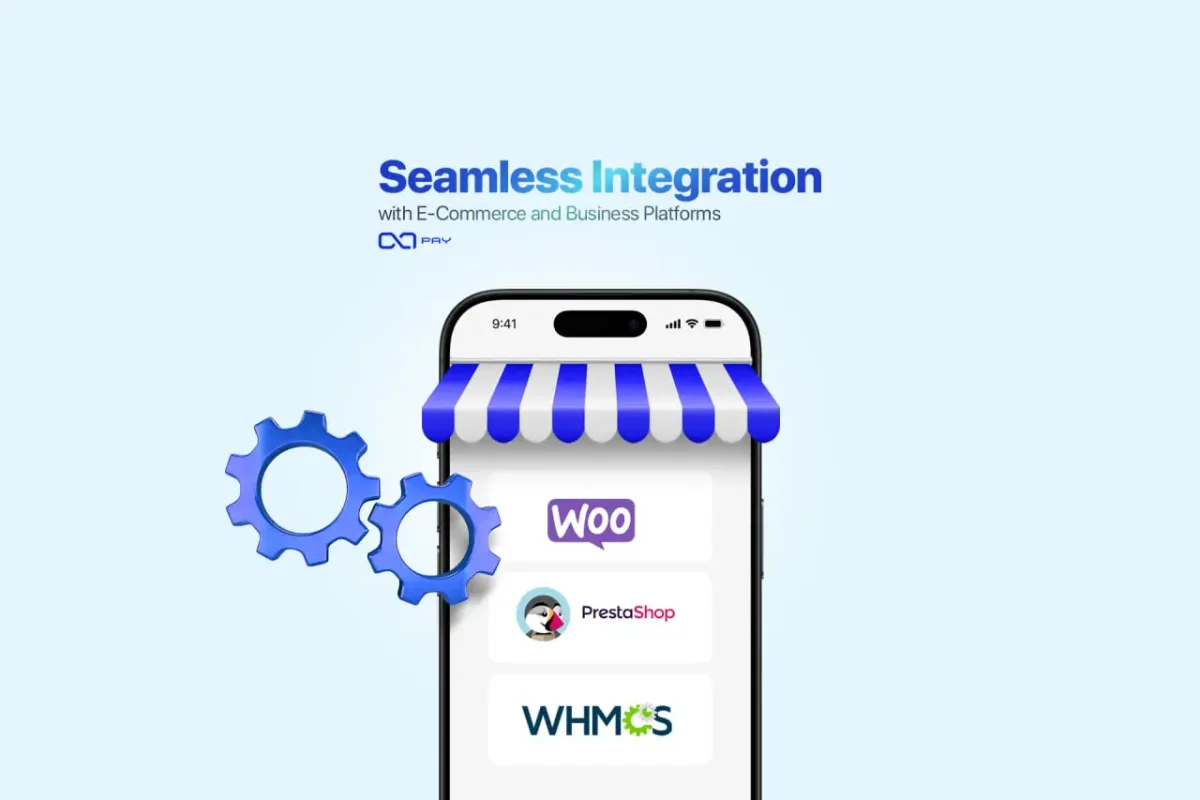
A well-designed gateway avoids this by fitting into existing architecture.
Plugins handle standard platforms. APIs handle custom systems. Both operate within the same basic logic: create a payment, track its status, and react to its outcome.
For e-commerce stores, a ready-made integration such as a WooCommerce crypto payment plugin can reduce setup time. For custom platforms, APIs and webhooks make it possible to build payment flows around existing business logic.
The benefit is not just faster implementation. It is lower long-term maintenance.
9. Reducing Operational Complexity Across Multiple Assets
Managing crypto manually often leads to fragmentation.
Different wallets for different assets. Different processes for different networks. No unified view of what has been received, confirmed, expired, or pending.
A gateway replaces that fragmentation with a single payment layer.
All assets, transactions, and payment states become visible in one system. This reduces errors, simplifies reconciliation, and makes reporting possible without stitching together multiple data sources.
The value here is not convenience. It is control.
10. Making Financial Data Usable, Not Just Available
Receiving payments is one part of the system. Understanding them is another.
Without structured data, crypto payments become difficult to audit, report, or analyze.
A gateway turns raw transactions into usable business data:
- clear transaction history
- defined payment states
- exportable records
- order-level payment tracking
- real-time payment notifications
This is what allows finance and operations teams to treat crypto like any other payment channel.
Not as an exception, but as part of the system.
Conclusion
A crypto payment gateway is not just a way to accept digital assets, it turns an unpredictable process into a structured system. It defines how payments are created, confirmed, and integrated into operations. The benefits of using a crypto payment gateway appear when real operational problems are solved, not when added as an extra option.
For businesses seeking a structured approach, OxaPay crypto gateway provides a unified environment to manage payments, confirmations, and operational workflows without added complexity.