Прежде чем платёж сможет существовать в блокчейне, что-то должно его создать.
Это «что-то» — не сам блокчейн. Это кошелёк.
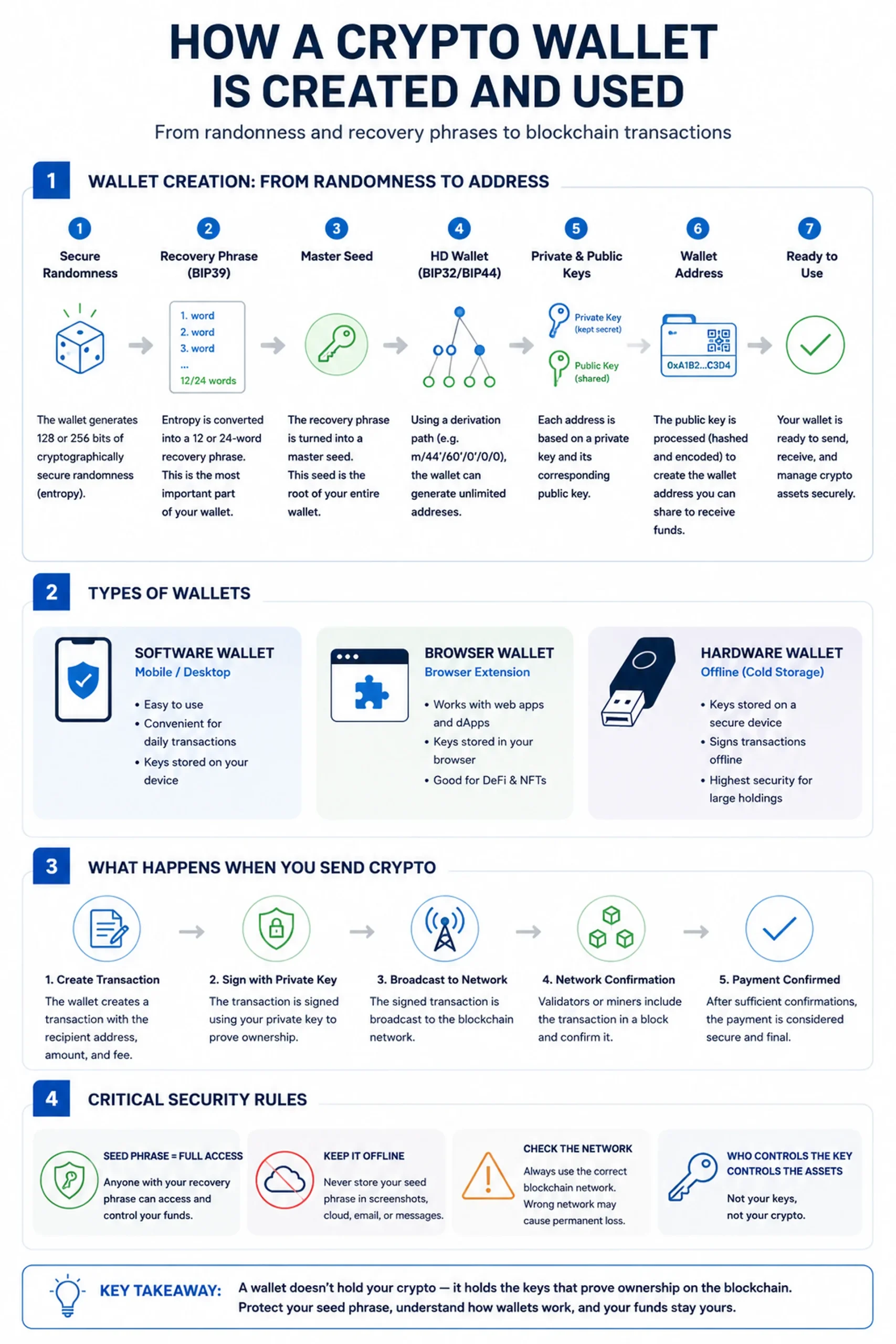
Клиент открывает приложение, вводит адрес, выбирает сумму и нажимает «Отправить». Снаружи процесс выглядит простым и мгновенным. Однако внутри кошелёк выполняет гораздо более важную работу, чем простое хранение или управление аккаунтом. Он формирует транзакцию, криптографически подписывает её и запускает последовательность событий, которые блокчейн-сеть затем проверит и рассчётно завершит.
Понимание того, как создать криптокошелёк, связано не только с настройкой. Важно понимать, как владение, авторизация, безопасность, генерация ключей и выполнение транзакций реально работают внутри систем блокчейн-платежей.
Кошелёк не хранит криптовалюту — он управляет ею
Одно из самых распространённых заблуждений в криптовалютах — представление о том, что активы находятся внутри кошелька, как деньги на банковском счёте. На самом деле криптовалюта остаётся в самом блокчейне. Кошелёк хранит ключи, которые позволяют пользователю получать доступ к средствам и авторизовать транзакции в сети.
Обычно эти ключи включают два компонента: закрытый ключ, который подтверждает владение и подписывает транзакции, и публичный адрес, который другие используют для отправки средств. Когда человек говорит, что «владеет криптовалютой», он на самом деле контролирует возможность авторизовать блокчейн-транзакции, связанные с этими адресами. Для более подробного объяснения этой связи руководство OxaPay о публичных и закрытых ключах в криптовалютах объясняет, почему контроль над ключами находится в центре блокчейн-владения.
Это различие важно, потому что кошельки — не пассивные инструменты хранения. Это системы авторизации, которые напрямую взаимодействуют с блокчейн-инфраструктурой.
Создание кошелька начинается со случайности
Прежде чем кошелёк сможет генерировать адреса или подписывать транзакции, ему нужна энтропия — источник случайности, достаточно сильный для создания непредсказуемых криптографических данных.
Большинство современных кошельков генерируют 128- или 256-битную энтропию с помощью защищённых генераторов случайных чисел, встроенных в операционную систему или аппаратную среду. Эта случайность становится основой всего кошелька. Если источник энтропии слаб, предсказуем или скомпрометирован, получившийся кошелёк может быть уязвим, даже если всё остальное кажется безопасным.
Именно поэтому важно использовать надёжное программное обеспечение кошелька. Безопасность кошелька начинается не после получения средств, а в тот момент, когда при создании генерируется случайность.
Как кошельки создают фразы восстановления
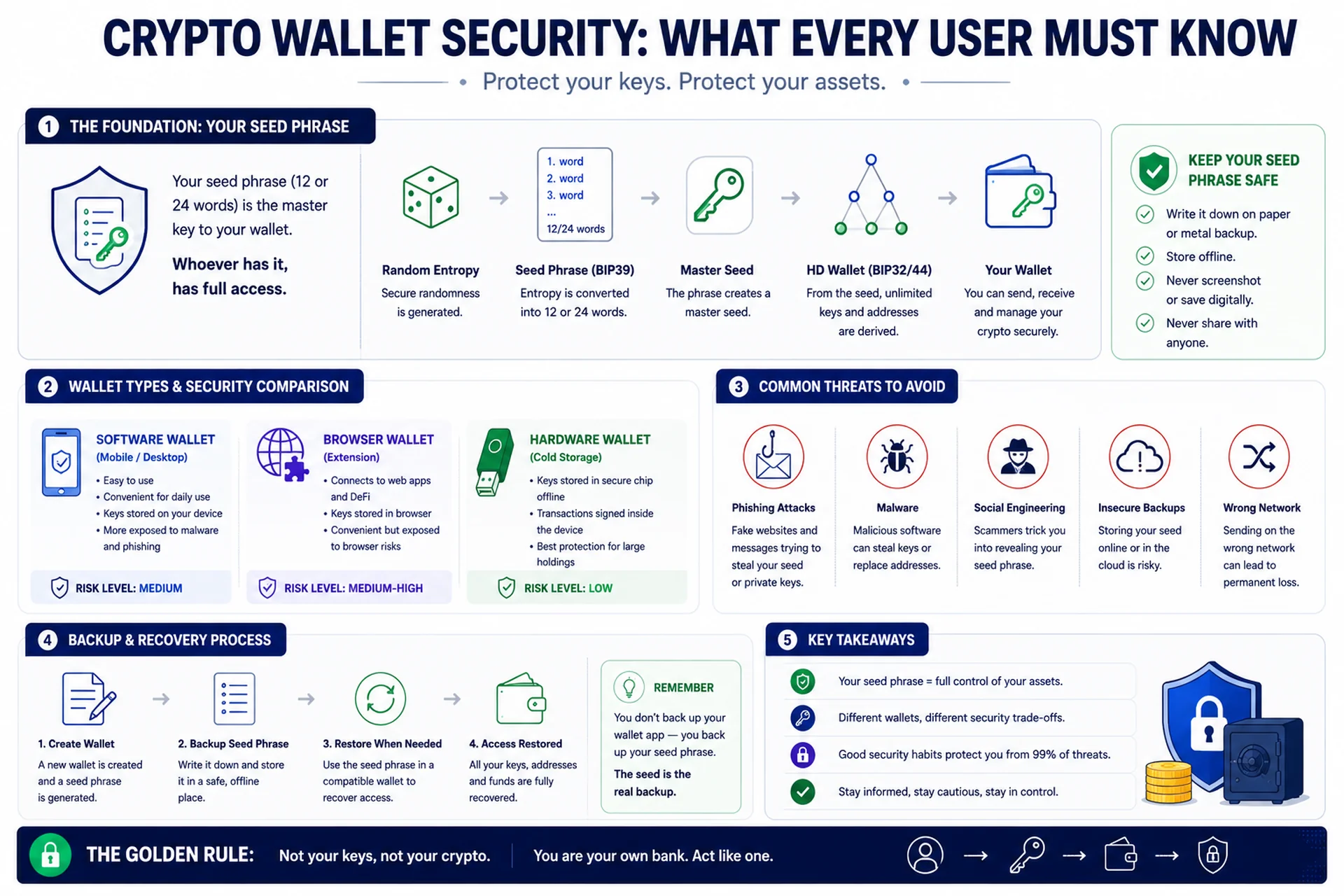
После генерации энтропии кошелёк преобразует эту случайность в понятную человеку фразу восстановления с помощью стандарта BIP39 . При настройке пользователи обычно видят последовательность из 12 или 24 слов. BIP39 определяет, как кошельки преобразуют энтропию в мнемонические фразы, а затем используют их для создания seed кошелька.
Эта фраза — не просто пароль или резервный код. Это корневой криптографический материал, из которого кошелёк позднее может восстановить ключи, адреса и способность подписывать транзакции. На практике фраза восстановления становится реальной основой владения.
Поэтому фраза восстановления обычно важнее самого приложения кошелька. Приложения можно переустановить или заменить, устройства могут выйти из строя, а оборудование — сломаться. Но если фраза восстановления хранится безопасно, кошелёк обычно можно восстановить в другой совместимой системе. Руководство OxaPay о seed-фразах и резервном копировании кошельков подробнее объясняет этот процесс восстановления на практике.
Однако если seed-фраза раскрыта, контроль над активами может быть мгновенно передан другому человеку без какого-либо отката самого блокчейна. Поэтому защита seed-фразы остаётся одной из самых критичных частей безопасности кошелька.
Создание кошелька — это создание доступа
Создание криптокошелька принципиально отличается от открытия аккаунта на традиционной финансовой платформе. По сути процесс заключается в создании криптографической структуры, которая устанавливает контроль над блокчейн-адресами и связанными с ними активами.
Генерация может происходить через мобильное приложение, расширение браузера, аппаратный кошелёк или даже офлайн-среду. Сам интерфейс вторичен. В конечном счёте важно, кто контролирует материал закрытого ключа и насколько безопасно он хранится, потому что именно эти ключи являются единственным доказательством владения, которое признаёт сеть.
В отличие от традиционных систем, централизованного механизма восстановления обычно нет. Если закрытый ключ или фраза восстановления безвозвратно потеряны, доступ к связанным средствам также теряется.
Как один seed может создать множество адресов
Большинство современных кошельков используют иерархически детерминированную структуру — так называемый HD-кошелёк. Стандарты BIP32 и BIP44 ввели эту модель, чтобы кошельки могли создавать множество адресов и пар ключей из одной фразы восстановления.
HD-кошелёк позволяет одной seed-фразе детерминированно создавать целое дерево закрытых ключей и адресов. Вместо отдельного резервного копирования каждого адреса пользователю достаточно сохранить исходную фразу восстановления.
Такая архитектура также делает управление кошельком более масштабируемым. Кошелёк может генерировать новые адреса получения для разных транзакций и при этом восстанавливаться из того же seed. Например, в системах на базе Ethereum пути деривации часто имеют структуру, похожую на m/44'/60'/0'/0/0.
Большинство пользователей никогда не видят эти пути напрямую, но именно они незаметно определяют, как адреса генерируются в фоновом режиме. Эта архитектура решила одну из ранних проблем удобства криптовалют: управление множеством адресов без бесконечного ручного резервного копирования.
Как кошельки генерируют ключи и адреса
Внутри кошельки используют асимметричную криптографию для создания пар ключей. Сначала кошелёк генерирует закрытый ключ из данных, полученных из seed, затем математически выводит соответствующий публичный ключ с помощью криптографии на эллиптических кривых, чаще всего кривой secp256k1, используемой в Bitcoin и многих других блокчейн-сетях.
Затем публичный ключ проходит дополнительные этапы кодирования или хеширования, чтобы сформировать конечный адрес кошелька, который пользователи видят и публично передают другим. Статья OxaPay о криптоадресах объясняет, как эти адреса служат видимым уровнем назначения для блокчейн-переводов.
Хотя большинство пользователей напрямую не взаимодействуют с этими криптографическими операциями, они лежат в основе принципа владения в блокчейне. Сеть не проверяет личность по имени, электронной почте или аккаунту. Она проверяет математическое доказательство, сформированное из закрытого ключа.
Поэтому владение закрытым ключом фактически означает владение связанными с ним активами.
Кастодиальный и некастодиальный кошелёк: где на самом деле находится контроль
В какой-то момент каждый пользователь криптовалют сталкивается с вопросом, более важным, чем внешний вид или удобство интерфейса: кто на самом деле контролирует ключи?
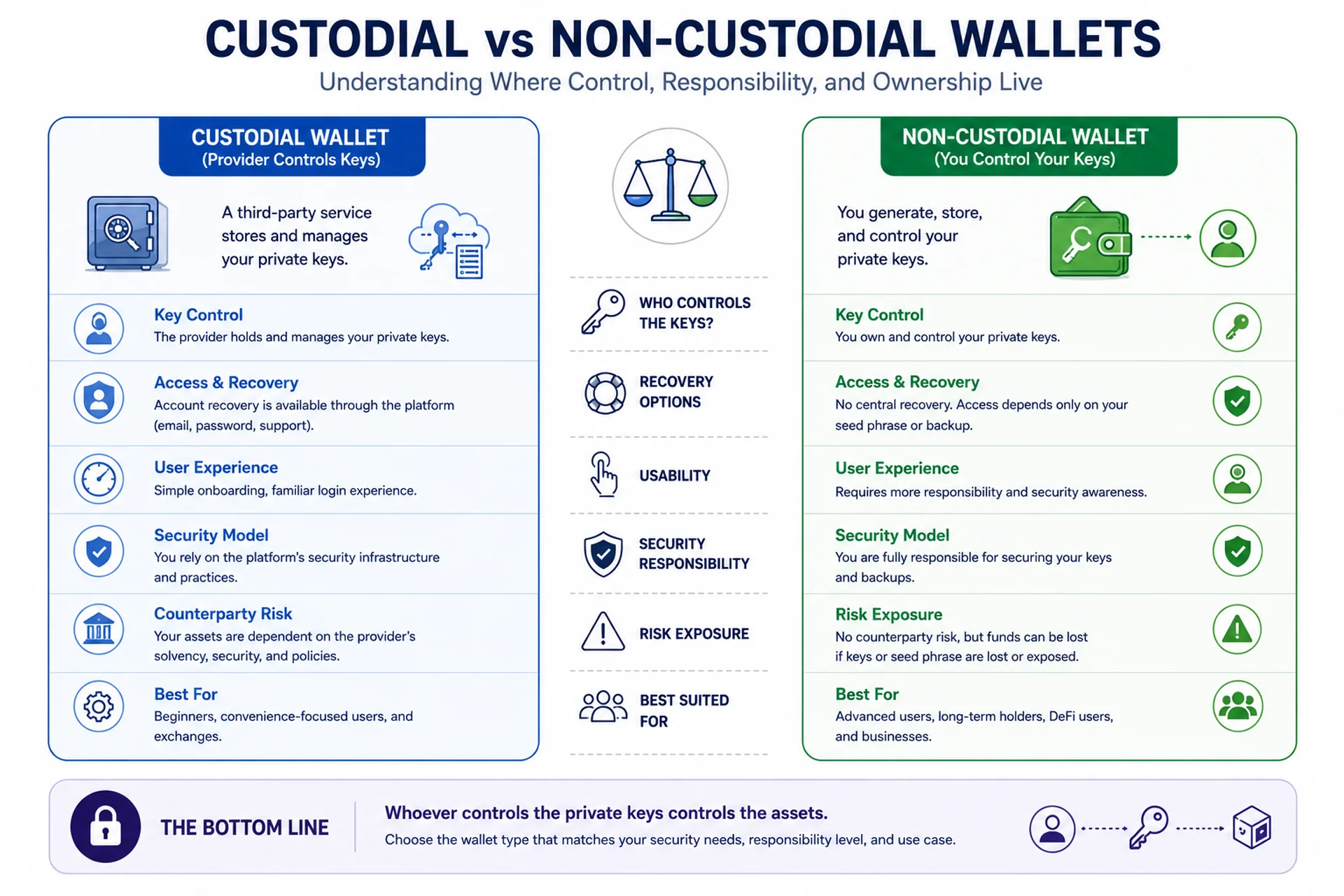
В кастодиальном кошельке поставщик услуг управляет закрытыми ключами от имени пользователя. Доступ обычно осуществляется через стандартную систему входа, а восстановление аккаунта зависит от самой платформы. Такая модель снижает ответственность пользователя, но также означает, что владение частично зависит от операционной безопасности и внутренних средств контроля провайдера.
Некастодиальный кошелёк работает иначе. Пользователь напрямую контролирует ключи и полностью отвечает за хранение, восстановление и авторизацию транзакций. Провайдер не может сбросить пароль, восстановить seed-фразу или вернуть доступ при утрате учётных данных.
Это различие влияет гораздо больше, чем только на удобство. Оно меняет принципы владения, доверия, восстановления и ответственности за транзакции во всём платёжном процессе. Для продавцов эти различия позже проявляются в запросах поддержки, неудачных переводах, неправильном понимании восстановления и проблемах проверки транзакций.
Разные способы создания кошелька
Кошельки могут иметь несколько форм, и каждый тип по-разному хранит ключи, выполняет подписание транзакций и создаёт разные компромиссы между безопасностью и удобством.
Программные кошельки на мобильных устройствах и компьютерах ориентированы на доступность и быстрое повседневное использование. Кошельки-расширения браузера напрямую подключаются к веб-приложениям и децентрализованным платформам, позволяя подписывать транзакции прямо в браузере.
Аппаратные кошельки отделяют операции подписания от подключённых к интернету систем, храня ключевой материал в специализированных защищённых устройствах. Во многих случаях подписание происходит в изолированной среде, где закрытый ключ никогда не покидает аппаратное устройство. Некоторые продвинутые модели поддерживают даже air-gapped процессы подписания, которые снижают прямое воздействие онлайн-атак.
Все эти подходы создают блокчейн-кошельки, но существенно различаются по операционной безопасности, удобству использования, процедурам восстановления и подверженности атакам.
Что на самом деле происходит при отправке криптовалюты
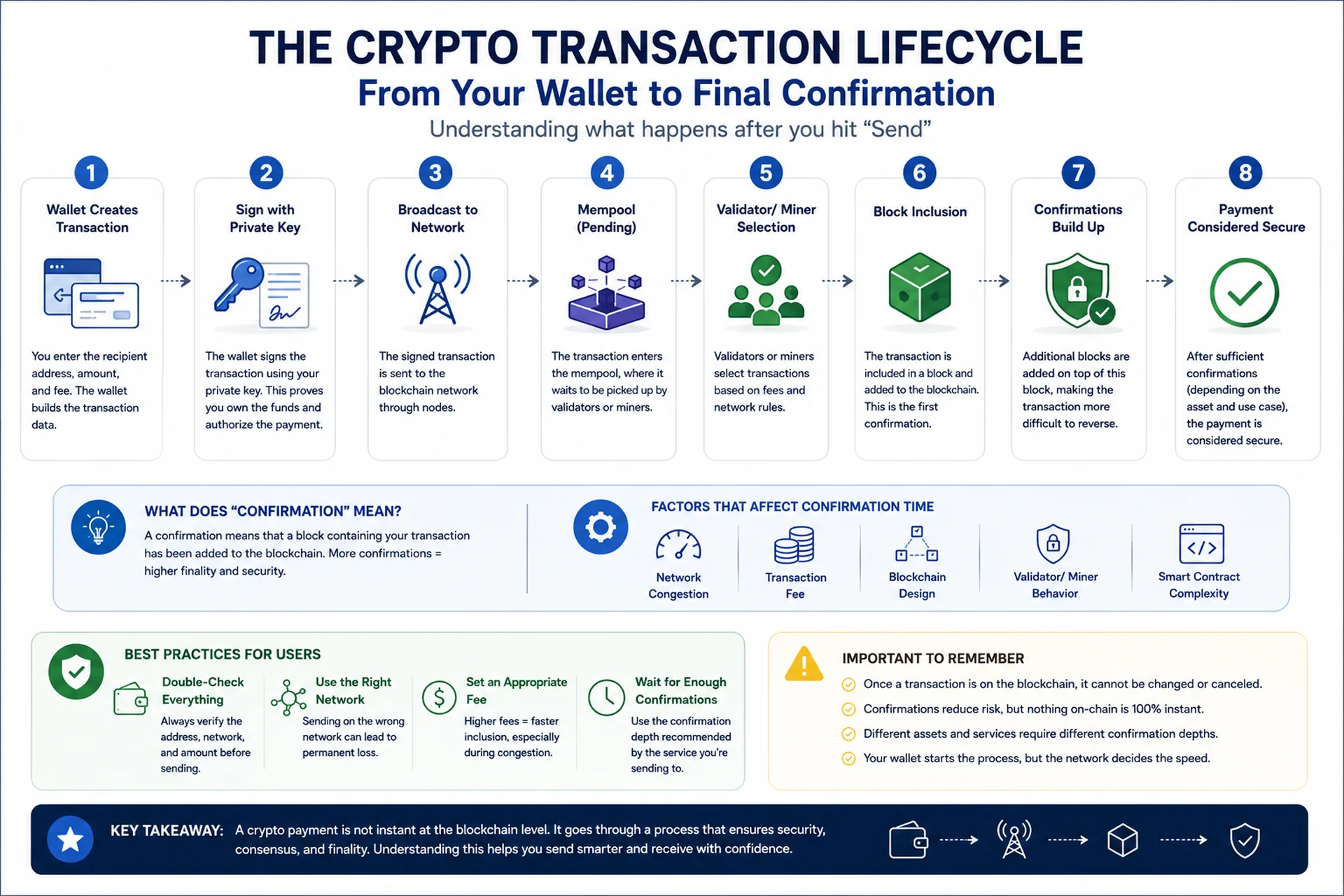
Отправка криптовалюты — это не просто «перемещение денег» из одного места в другое. На самом деле кошелёк формирует блокчейн-транзакцию, которую сеть затем должна проверить и включить в блок. Документация Bitcoin для разработчиков более подробно объясняет эту модель транзакций, включая то, как транзакции создаются и распространяются по сети.
Для этого кошелёк задаёт адрес получателя, рассчитывает сумму транзакции, оценивает необходимую комиссию и подписывает транзакцию закрытым ключом отправителя. Подпись критически важна, потому что доказывает авторизацию. Без действительной подписи сеть полностью отклоняет транзакцию.
После подписания кошелёк транслирует транзакцию в блокчейн-сеть. Затем сеть распространяет её через mempool, ждёт включения в блок майнером или валидатором и повышает её надёжность по мере накопления дополнительных подтверждений. Комиссии также влияют на скорость обработки переводов, поэтому компаниям важно понимать поведение комиссий блокчейна до того, как устанавливать ожидания по времени платежа.
Кошелёк запускает процесс. Сеть его завершает.
Получать криптовалюту проще, но это не лишено рисков
Получение криптовалюты кажется проще, поскольку обычно достаточно создать адрес и передать его отправителю. Однако на практике под поверхностью остаётся несколько важных ограничений.
Пользователь должен выбрать правильную блокчейн-сеть, сопоставить формат адреса с поддерживаемым типом актива и задать достаточную комиссию, чтобы перевод успешно распространился по сети.
Ошибки здесь не всегда приводят к немедленному сбою. В некоторых случаях возникает более сложная ситуация: транзакция технически успешно выполняется on-chain, но никогда не достигает предполагаемого операционного назначения.
Поэтому подход «просто отправь» часто даёт неполное понимание того, как на самом деле работают криптоплатежи.
Большинство пользователей думают об активах, а не о сетях. Они говорят, что отправляют «USDT», но кошелёк всё равно должен определить, пойдёт ли транзакция через Ethereum, Tron, BNB Chain или другую поддерживаемую сеть. Этот выбор влияет на комиссии, скорость, поведение подтверждений и способность принимающей платформы правильно распознать платёж.
Типичный пример — отправка USDT через TRC20 в систему, поддерживающую только депозиты ERC20. Сама блокчейн-транзакция может успешно завершиться, но принимающий сервис может не обнаружить или не зачислить платёж, поскольку ожидаемый сетевой контекст не соответствует фактическому пути перевода.
Именно здесь начинаются многие платёжные проблемы. Не потому, что кошелёк технически дал сбой, а потому, что сетевой уровень актива был неправильно понят.
Безопасность кошелька — не функция, а сама система
Криптобезопасность не работает как простая функция, которую пользователь включает в приложении. Архитектура кошелька, хранение ключей, подписание транзакций и защита закрытого ключа вместе определяют реальную безопасность кошелька.
Кошелёк остаётся безопасным только тогда, когда пользователь правильно защищает окружающую среду. Раскрытие фразы восстановления, небезопасное хранение резервных копий или компрометация устройства вредоносным ПО или фишингом могут мгновенно передать контроль над средствами другому человеку.
Большинство потерь в криптовалютах происходит не из-за отказа блокчейн-сетей, а из-за раскрытия, неправильного обращения или социальной инженерии учётных данных доступа.
Фраза восстановления обычно является последним уровнем резервного копирования всего кошелька. Безопасное офлайн-хранение вдали от облака и скриншотов часто важнее защиты самого приложения.
Кошелёк создаёт контроль. Безопасность определяет, сохранит ли этот контроль смысл.
Почему поведение кошелька влияет на платежи
Для продавцов и платёжных систем кошельки — не просто пользовательские приложения. Они являются точкой происхождения каждой транзакции, входящей в платёжный поток.
Разные кошельки ведут себя по-разному. Некоторые точнее оценивают комиссии. Некоторые автоматически выбирают поддерживаемые блокчейн-сети. Другие предоставляют пользователю больше технических настроек или упрощают сложность через уровни абстракции. Документация Ethereum о gas и комиссиях наглядно показывает, почему оценка комиссии кошельком и состояние сети могут напрямую влиять на пользовательский опыт.
Эти различия влияют на то, как пользователи формируют платежи, насколько надёжно транзакции распространяются, как часто происходят ошибки и насколько предсказуемым становится расчётное поведение для принимающих компаний.
Поэтому понимать кошельки — значит понимать, где на самом деле начинаются многие платёжные несоответствия и операционные крайние случаи.
От действия в кошельке к платёжному потоку
Кошелёк создаёт и подписывает блокчейн-транзакцию, но не управляет её операционным значением с точки зрения бизнеса.
Кошелёк не может определить, когда платёж становится достаточно безопасным для выполнения заказа. Он не может применять разные политики подтверждения для активов, сверять недоплаченные переводы, интерпретировать задержанные транзакции или обрабатывать неудачные статусы платежа в бизнес-системах.
Эта ответственность лежит на уровне платёжной инфраструктуры.
Потому что для бизнеса реальный вопрос обычно не в том, была ли транзакция технически передана в сеть. Вопрос в том, является ли платёж действительным, подтверждённым, надёжным и операционно безопасным для действия. Именно здесь криптоплатёжный шлюз отличается от кошелька, поскольку интерпретирует блокчейн-активность в контексте бизнес-платежа.
Реальная роль кошельков в криптоплатежах
Кошелёк — это место, где начинается намерение совершить платёж. Он превращает решение пользователя в подписанную блокчейн-транзакцию и запускает более широкий жизненный цикл, продолжающийся по сети.
Сам кошелёк не может определить, когда платёж становится операционно безопасным для выполнения, сколько подтверждений должна требовать компания, должен ли перевод запускать логику выполнения или как внутренние системы должны интерпретировать статусы транзакции с течением времени.
Вот почему понимание кошельков важно далеко за пределами личного использования или хранения.
Они являются точкой входа в более широкую архитектуру систем криптоплатежей.
Реальный пример бизнес-ориентированной системы криптокошелька
Для многих продавцов и компаний управление криптоплатежами связано не только с хранением цифровых активов. Им также нужна безопасная, надёжная и операционно простая среда кошелька без прямой работы с закрытыми ключами, seed-фразами, ручными резервными копиями или сложными процессами управления.
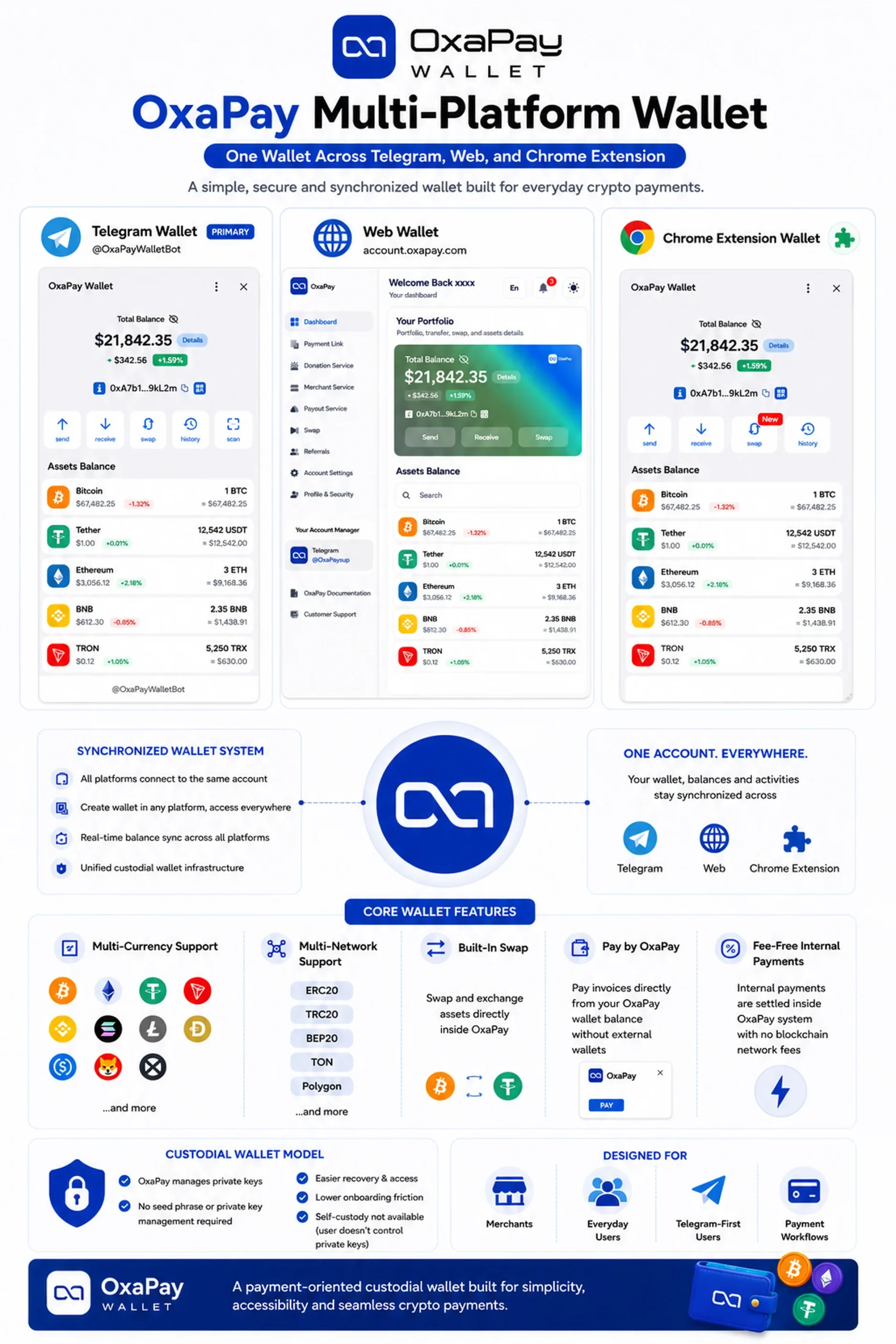
OxaPay Wallet — один из примеров такой бизнес-ориентированной системы. Его кастодиальная инфраструктура позволяет продавцам и командам получать доступ к одному синхронизированному аккаунту кошелька через Telegram, веб-панель и расширение Chrome в рамках единой системы, ориентированной на доступность, удобство платежей и повседневные операции.
Такой подход может упростить управление балансами, внутренними платежами, мультивалютными активами и криптоплатёжной активностью в разных средах без необходимости сложного self-custody управления.
Инфографика ниже показывает, как эта мультиплатформенная система кошелька работает на практике: синхронизированный доступ, кастодиальная архитектура, доступность на нескольких платформах, поддержка нескольких валют и платёжно-ориентированные функции для бизнеса.
Заключение
Большинство людей считают создание криптокошелька в основном процедурой настройки: установить приложение, сохранить фразу восстановления и начать отправлять транзакции. На практике кошелёк становится точкой пересечения владения, авторизации и ответственности. С момента попадания транзакции в сеть она становится частью гораздо более крупной системы, которую формируют правила подтверждения, рынки комиссий, операционный риск, поведение сети и решения платёжной инфраструктуры, выходящие далеко за пределы самого кошелька.
Такое изменение перспективы меняет то, какпонимаются криптоплатежи. Кошелёк — не просто место, где активы отображаются или хранятся. Это механизм, который превращает намерение пользователя в исполняемую блокчейн-транзакцию, и каждый платёжный процесс начинается именно в этот момент. Поняв это, криптоплатежи перестают выглядеть как изолированные переводы между адресами и начинают восприниматься как координированная инфраструктура, работающая между сетями, системами подтверждения и уровнями бизнес-логики.