Payment systems aim to transfer value efficiently, yet transaction delays remain a constant reality. A credit card authorization may appear in seconds but takes days to settle, while a kripto ödeme shows instantly yet requires minutes, or hours, for finality. These delays are structural: banking relies on clearing, settlement, and compliance, while blockchains depend on block intervals, fee markets, and consensus rules. For merchants, delays mean tied-up liquidity, higher risk exposure, and customer friction. Understanding their causes is essential for resilient payment operations.
Transaction Delays in Banking Systems
Banking systems were built for security and control, not for instant global settlement. As a result, delays are deeply embedded in their design. These delays arise from several structural factors that every merchant dealing with cross-border or high-volume payments encounters.
Batch Processing
Most retail and cross-border transfers are not processed in real time.
- ACH (U.S.): Runs on batch cycles several times a day. Transactions submitted late may settle overnight or even the next day.
- SWIFT transfers: Often routed through multiple correspondent banks. Each intermediary adds latency, commonly extending processing to 24–48 hours.
Clearing and Settlement Cycles
Payments must pass through two separate phases:
- Clearing: Verifies transaction details, account balances, and authorization.
- Yerleşim: Final movement of funds, often facilitated by central banks or clearing houses.
Large-value transactions, particularly international ones, may require multiple hops, each introducing additional delay.
Ödemelerde Hesaplaşma: Para Hesabınıza Ne Zaman ve Nasıl Ulaşır?
Compliance and Fraud Checks
Financial institutions are required to enforce strict compliance measures.
- AML (Kara Para Aklamayı Önleme): Screening against global sanctions and watchlists.
- Fraud detection: Automated algorithms and sometimes manual reviews can delay transfers, especially if patterns deviate from historical behavior. These checks protect the system but create friction for merchants.
Cut-Off Times and Business Hours
Banking infrastructure is not designed for 24/7 operations. Transactions initiated after cut-off times or during weekends/holidays are queued until the next available business day.
📊 The Bank for International Settlements (2024) reports that average cross-border transaction times range from 1–3 business days, with longer delays in high-risk corridors.
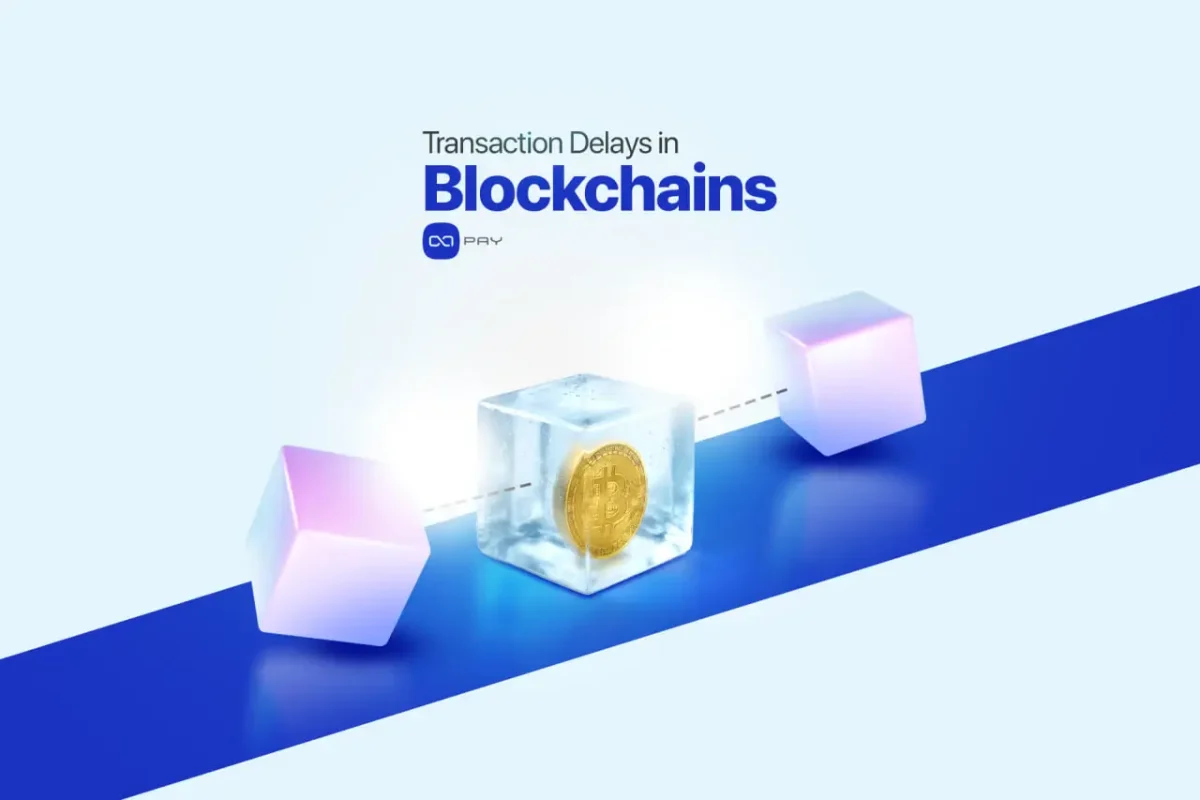
Transaction Delays in Blockchains
Unlike banking systems, blockchains operate continuously, 24/7, across a decentralized network of nodes. Yet they are not immune to delays. These delays emerge from protocol design, consensus rules, and market dynamics. For merchants, especially those handling retail payments, the implications are critical: a transaction may appear instantly in a wallet but cannot be considered final until the network achieves consensus.
Block Confirmation Times
Each blockchain sets its own latency through block production intervals:
- Bitcoin: ~10 minutes per block. Industry practice requires 6 confirmations (~60 minutes) for finality, especially in high-value transactions.
- Ethereum (PoS, 2025): Blocks are proposed every 12 seconds. True economic finality occurs after 2 epochs (~12.8 minutes). There is ongoing discussion about reducing slot times to 6 seconds, which could halve confirmation delays.
- Solana: Achieves ~400 ms block times, targeting sub-second confirmations for retail-grade speed.
- Avalanche: Uses a unique consensus mechanism to provide deterministic finality in 1–2 seconds.
- TON: In 2025, adoption surged due to its ability to process millions of transactions daily with near-instant settlement.
Ağ Tıkanıklığı
Every blockchain has finite block space. When transaction demand exceeds capacity, congestion occurs:
- Ethereum (2021–22): Gas fees spiked above $50, and users waited hours for inclusion.
- Bitcoin: Large mempool backlogs can leave low-fee transactions unconfirmed for days.
- Solana & TON: Their high throughput reduces congestion risks, but during stress tests or spam attacks, users still experience instability or forced delays.
Fee Markets and Priority
Blockchains prioritize transactions based on fees.
- Ethereum (EIP-1559):
- Formula: Fee = Gas Limit × (Base Fee + Priority Fee).
- Base Fee adjusts dynamically per block.
- Priority Fee acts as a tip to incentivize validators.
- Example: 21,000 gas × (30 gwei + 5 gwei) = 0.000735 ETH.
- Solana priority fees: Since 2023, apps can add extra fees to jump queues during congestion.
Merchants relying on predictable settlement risk delays when customers underpay fees, as low-fee transactions may be ignored indefinitely.
Consensus Latency: Probabilistic vs Deterministic Finality
- Probabilistic finality (Bitcoin, Ethereum):
- Each block reduces the chance of a chain reorganization (reorg).
- Bitcoin: 1 confirmation ≈ 10% risk of reorg; 6 confirmations <0.1%.
- Ethereum: Inclusion may occur in 30–60s, but full finality requires ~13 minutes.
- Deterministic finality (Avalanche, Solana, TON):
- Once validators agree, transactions cannot be reverted.
- Avalanche finality in ~1–2s, Solana in sub-seconds, TON in near-instant times.
📊 The Ethereum Foundation (2025) notes validators finalize blocks in ~13 minutes under current PoS rules, with sharding scheduled for late 2025 to massively expand throughput and reduce confirmation uncertainty.
Comparative Analysis: Banks vs Blockchains
| Faktör | Banking Systems | Blockchain Systems |
| Hız | Seconds for card auth; 1–3 days for settlement | Seconds for inclusion; minutes for finality |
| Operating Hours | Limited to business hours & cut-off times | 24/7, global |
| Risk Factor | Fraud, chargebacks, compliance reviews | Double-spend, reorgs (probabilistic finality) |
| Finality | Conditional, reversible (up to 120 days) | Irreversible after finality |
| Cost of Delays | Liquidity lock, dispute fees, lost sales | Higher fees in congestion, stuck transactions |
| Control Entity | Central banks, clearing houses, regulators | Decentralized consensus |
Business Implications for Merchants
For merchants, transaction delays are not just a technical detail, they directly impact cash flow, customer trust, and overall profitability.
Cash Flow Impact
Liquidity tied up in pending transactions creates measurable financial cost.
- Card payments: A merchant processing $500k monthly may face two-day settlement delays, leaving ~$33k frozen at any time.
- Crypto payments (Bitcoin): Waiting one hour for confirmations may be acceptable for large invoices, but in retail checkouts, even minutes of delay can lead to abandoned carts.
Formül:
Cost of Delay = (Daily Revenue × Settlement Delay in Days) × Cost of Capital (%)
Example: $50k daily × 2 days × 8% ≈ $219 liquidity cost per cycle.
Müşteri Deneyimi
- Banking: Customers often see “pending” charges without clarity on settlement. This creates confusion and support inquiries.
- Blockchain: When transactions get stuck in the mempool, customers may assume payment failed, generating extra support costs and refund requests.
Risk of Reversals vs Irreversibility
- Traditional: Chargebacks are possible up to 120 days, costing merchants merchandise plus $20–100 dispute fees.
- Crypto: Once confirmed, payments are irreversible. However, accepting zero-confirmation transactions exposes merchants to double-spend risks, especially for higher-value sales.
Cost Comparison
- Credit cards: ~2.5% + fixed fees → $25k+ annually on $1M revenue.
- OxaPay Crypto gateway: 0.4–1% → $4k–10k for the same volume.
- Delays: Banking delays are predictable but slow; blockchain delays are cheaper but vary with network congestion.

Solutions & Mitigation
While transaction delays cannot be eliminated, they can be managed and minimized with the right infrastructure. Both banking and blockchain ecosystems are evolving to address latency, offering merchants practical pathways to improve cash flow and customer experience.
Banking Innovations
- RTGS: High-value transfers settled the same day, reducing liquidity lock.
- FedNow (U.S.): Expanded in 2025, enabling real-time payments up to $500k, available 24/7/365.
- SEPA Instant (EU): Provides cross-border euro transfers in under 10 seconds, already widely adopted by European banks.
Blockchain Innovations
- Layer-2 Scaling:
- Lightning (Bitcoin): Uses off-chain payment channels to achieve near-instant microtransactions with negligible fees.
- zk-Rollups (Ethereum): Aggregate thousands of transactions, raising TPS above 3,000.
- İyimser Toplamalar: Relieve congestion but introduce ~1-week fraud-proof windows.
- Ethereum Sharding (expected 2025): Will split processing into parallel shards, potentially pushing throughput above 100,000 TPS when combined with rollups.
- Fast Chains (TON, Solana): Sub-second finality networks gaining adoption among merchants for retail-scale payments.
Costs of Implementation
- Layer-2 deployment: $20k–50k for enterprise-level integration.
- POS hardware: $200–500 per terminal.
- Operational costs: Staff training, new policy frameworks, and increased support readiness.
Role of Payment Gateways
OxaPay Kripto Ağ Geçidi like act as an abstraction layer: detecting delayed/unpaid transactions, offering real-time APIs, supporting hybrid fiat + crypto, and enabling advanced features like mixed-payment completion.
Kullanım Örnekleri
E-commerce merchants selling digital goods can accept stablecoins on Tron or Polygon with just one confirmation. Retailers and hospitality businesses rely on fast-finality blockchains like TON or Solana for sub-second settlement. High-value B2B suppliers use Bitcoin with six confirmations for security. Hybrid merchants combine fiat card settlements with crypto confirmations via gateways to unify liquidity and streamline operations.
Çözüm
Transaction delays reflect the balance between speed, trust, and resilience built into financial infrastructure. Banks prioritize compliance and systemic safety, while blockchains emphasize decentralized security and consensus-driven integrity. Both models inevitably trade immediacy for reliability, reminding businesses that efficiency must always coexist with risk management.
For merchants, mastering delay dynamics means protecting liquidity, ensuring smooth customer experience, and reducing operational costs. Gateways like OxaPay abstract these complexities, turning unpredictable settlement into predictable business operations.