Lorsque les entreprises commencent à explorer les les paiements en cryptomonnaies, l’attention porte généralement sur l’acceptation : quelles cryptomonnaies prendre en charge, quels réseaux activer et combien d’options proposer.
Ces questions sont importantes, mais elles ne constituent pas le véritable défi opérationnel.
La vraie complexité apparaît après la réception du paiement.
Les clients peuvent payer en Bitcoin, en USDT sur TRON ou en Solana. Davantage d’options améliorent l’expérience de paiement et réduisent les frictions. Mais pour l’entreprise, chaque option peut produire un résultat de trésorerie différent.
Cela mène à une question centrale :
Comment offrir une flexibilité de paiement maximale sans transformer la gestion de trésorerie en complexité opérationnelle lorsqu’il s’agit de crypto, de paiements et de règlement ?
Que se passe-t-il si vous n’acceptez qu’une seule cryptomonnaie ?
Une approche consiste à rester simple et à n’accepter qu’une seule cryptomonnaie.
Par exemple, une entreprise peut décider de n’accepter que Bitcoin ou uniquement USDT.
Sur le plan opérationnel, c’est simple. La gestion de trésorerie reste facile, car chaque paiement arrive dans le même actif.
Le problème est que tous les clients ne détiennent pas la même cryptomonnaie.
Certains clients utilisent principalement Bitcoin. D’autres utilisent Ethereum, Solana, USDC ou différents réseaux de stablecoins. Limiter les options de paiement peut réduire la complexité pour l’entreprise, mais aussi diminuer la commodité pour les clients.
Plus les clients rencontrent de frictions au moment du paiement, plus le risque que certaines ventes n’aboutissent pas augmente.
C’est pourquoi de nombreuses entreprises finissent par aller au-delà d’une seule cryptomonnaie.
Que se passe-t-il lorsque vous acceptez tout ?
L’approche opposée est également courante.
Au lieu de limiter les options de paiement, l’entreprise active un large éventail de cryptomonnaies et de réseaux.
Cela améliore la flexibilité lors du paiement, mais introduit un autre défi dans le règlement des paiements crypto.
Imaginez une entreprise SaaS recevant, au cours d’une même semaine, des paiements en :
- Bitcoin
- Ethereum
- Solana
- USDT sur TRON
- USDC sur Ethereum
Chaque paiement est réussi.
Les clients sont satisfaits.
Mais l’entreprise détient désormais plusieurs actifs sur plusieurs réseaux.
La question devient alors :
Que doit-il se passer ensuite ?
Chaque actif doit-il être conservé séparément ?
Chaque solde doit-il être géré indépendamment ?
Les équipes de trésorerie doivent-elles décider manuellement quoi convertir, quand le convertir et où déplacer les fonds ?
Pour un petit nombre de paiements, cela peut sembler peu important.
Mais à mesure que le volume de paiements augmente, la complexité augmente elle aussi.

Le problème de tarification que la plupart des entreprises négligent
Un autre défi apparaît souvent avant même que le client n’arrive au paiement.
Comment les produits doivent-ils être tarifés ?
La plupart des entreprises raisonnent en devises fiduciaires lorsqu’elles pensent à leurs revenus.
Elles fixent leurs prix en USD, EUR, GBP, CAD ou dans d’autres devises locales, car celles-ci servent à la budgétisation, à la comptabilité, au reporting et à la planification financière.
Les cryptomonnaies, en revanche, évoluent constamment en valeur.
Fixer directement le prix d’un produit dans un actif volatil peut créer une complexité inutile.
Pour de nombreuses entreprises, la solution pratique est simple :
Fixer les prix en devises fiduciaires et permettre aux clients de payer en cryptomonnaie.
Cela préserve la cohérence des prix tout en offrant une flexibilité de paiement.
Le défi consiste à faire fonctionner ces deux systèmes ensemble de manière fluide.
Le véritable objectif n’est pas d’avoir plus de cryptomonnaies
À première vue, l’adoption des paiements crypto semble consister à prendre en charge davantage d’actifs.
En réalité, la plupart des entreprises cherchent à résoudre un autre problème.
Elles veulent permettre aux clients de payer comme ils le souhaitent tout en maintenant un processus financier interne prévisible.
L’objectif n’est pas nécessairement de conserver chaque cryptomonnaie utilisée par les clients.
L’objectif est d’obtenir un résultat de règlement stable quel que soit le moyen de paiement choisi par les clients.
This is where the concept behind “accept any crypto, settle in one asset” becomes important.
Un exemple pratique
Prenons une entreprise qui fixe le prix d’un produit à 100 $.
Le client A paie en Bitcoin.
Le client B paie en Ethereum.
Le client C paie en Solana.
Le client D paie en USDT.
From the customer’s perspective, each person used the asset they preferred.
Du point de vue de l’entreprise, rien n’impose que le résultat final de trésorerie reflète ces choix de paiement.
L’entreprise peut préférer effectuer l’ensemble de ses règlements en USDT.
Ou elle peut préférer un autre actif pris en charge.
L’essentiel est que la diversité des paiements clients n’impose pas automatiquement une diversité de trésorerie.
Une infrastructure de paiement moderne peut dissocier ces deux sujets.
Comment OxaPay aborde ce problème
C’est là que l’infrastructure de paiement devient plus importante que la simple acceptation des paiements.
OxaPay permet aux marchands de fixer les prix de leurs produits dans plus de 40 devises fiduciaires tout en donnant aux clients accès à un large éventail de Les cryptomonnaies et réseaux pris en charge.
Le client voit un montant familier et choisit la cryptomonnaie qu’il souhaite utiliser.
Le marchand peut, lui, décider de ce qui se passe après la réception du paiement.
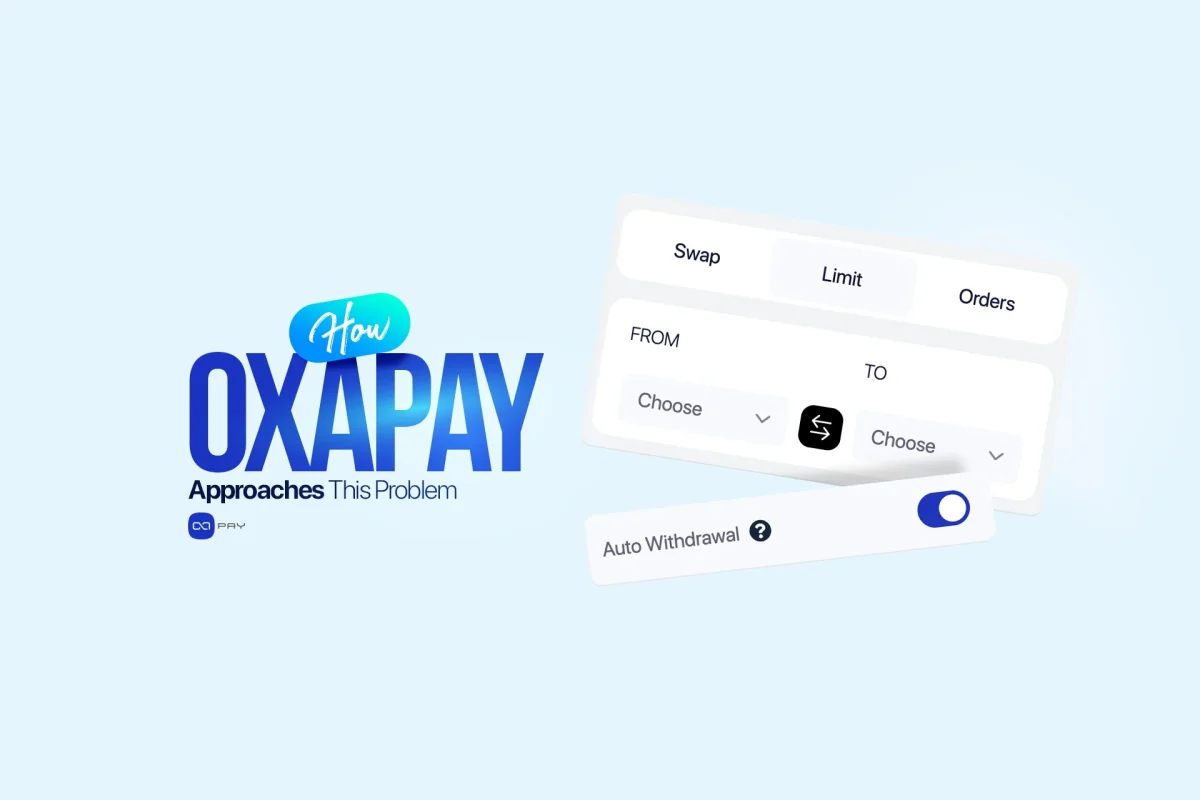
Si l’objectif est la cohérence de trésorerie, Auto Convert peut convertir automatiquement les fonds reçus dans un actif privilégié tel que USDT.
Si l’objectif est l’automatisation des opérations de trésorerie, Auto Withdraw can automatically send funds to the merchant’s preferred wallet.
Le résultat est un flux de paiement où flexibilité client et cohérence de trésorerie peuvent coexister.
Il est important de noter que ce n’est pas la seule approche disponible.
Certains marchands préfèrent conserver les actifs reçus tels quels.
Dans ce cas, la conversion automatique peut ne pas être nécessaire.
Les fonds peuvent alors rester sur le compte et être gérés plus tard selon les besoins de l’entreprise.
Quand la conversion automatique n’est pas le bon choix
Toutes les entreprises ne souhaitent pas obtenir des résultats de règlement identiques.
Certaines entreprises choisissent délibérément de conserver du Bitcoin.
D’autres maintiennent une exposition à plusieurs actifs dans le cadre de leur stratégie de trésorerie.
C’est pourquoi la flexibilité est importante.
Un marchand peut décider de ne pas utiliser du tout la conversion automatique.
Il peut plutôt conserver les soldes reçus et utiliser ensuite OxaPay’s Swap pour convertir manuellement les actifs lorsque nécessaire.
Après conversion, les fonds peuvent être retirés dans l’actif et sur le réseau choisis.
Le principal avantage est la liberté de choix.
L’infrastructure prend en charge à la fois un règlement standardisé et une gestion de trésorerie contrôlée par le marchand.
L’entreprise choisit le modèle qui correspond à ses besoins opérationnels.
Une meilleure façon de penser les paiements crypto
De nombreuses discussions sur les paiements crypto se concentrent sur le nombre de cryptomonnaies prises en charge.
Cette mesure est facile à quantifier, mais ce n’est souvent pas la plus importante.
Une question plus utile est :
Les clients peuvent-ils payer avec les actifs qu’ils préfèrent tandis que l’entreprise reçoit les fonds sous la forme qu’elle préfère grâce à une couche de règlement des paiements crypto ?
Cette question est bien plus proche de la réalité opérationnelle que les marchands rencontrent au quotidien.
Les entreprises ont besoin de flexibilité pour leurs clients.
Elles ont aussi besoin de cohérence financière.
Les meilleurs systèmes de paiement ne sont pas nécessairement ceux qui prennent en charge la plus longue liste de cryptomonnaies.
Ce sont les systèmes qui relient le choix de paiement du client à un processus de trésorerie qui reste prévisible, gérable et aligné sur le fonctionnement réel de l’entreprise.
Conclusion
Accepter plusieurs cryptomonnaies n’est qu’une partie d’une stratégie de paiement crypto.
Le véritable défi est la manière dont ces paiements s’intègrent aux opérations de trésorerie, au reporting et aux processus financiers.
Trop de restrictions créent des frictions pour les clients, tandis qu’une acceptation illimitée sans structure claire augmente la complexité opérationnelle.
L’objectif n’est pas de choisir entre flexibilité et simplicité, mais de réunir les deux dans un même système.
C’est ici que règlementdespaiements crypto devient important, en permettant aux entreprises d’accepter n’importe quel actif tout en maintenant un résultat financier cohérent.