Global commerce is increasingly digital, yet international transactions still involve challenges such as currency differences, settlement delays, and fragmented infrastructure. As businesses expand across borders, they need payment methods that offer greater efficiency and consistency. Global crypto payments provide a modern approach by enabling transactions across regions through decentralized networks. They help streamline cross-border payments, improve transparency, and offer a flexible option alongside traditional systems, allowing businesses to manage international payments more effectively in a fast-moving digital economy.This article explores how crypto payments solve these challenges and how OxaPay provides a reliable solution.
Why Some Businesses Don’t Use Banks?
Businesses in various parts of the world struggle with limited access to banking due to several reasons. In such cases, global crypto payments provide a practical solution by enabling businesses to transact without relying on traditional banking infrastructure.
1. Limited Banking Access
- Many businesses in Africa, Latin America, and Southeast Asia operate in cash-based economies where traditional banking infrastructure is weak or nonexistent.
- According to a World Economic Forum report, over 70% of small businesses in developing countries lack access to proper financial services, making it difficult for them to expand or conduct global transactions.
- Without access to digital banking, these businesses are forced to rely on inefficient, expensive, or informal financial solutions, limiting their growth potential.
2. High Fees and Bureaucratic Barriers
- Bank account maintenance fees can be prohibitively expensive for small businesses, especially in developing economies.
- Wire transfers and international payments involve high costs and long delays, making them inefficient for businesses dealing with global customers.
- Strict identity verification and documentation requirements can create barriers for entrepreneurs in some regions, limiting their ability to open bank accounts or access essential financial services.
3. Freelancers and Digital Entrepreneurs
- Freelancers on global platforms like Upwork, Fiverr, and Freelancer.com often face high withdrawal fees and payment delays.
- In addition, bank restrictions in some countries block direct deposits from foreign clients, forcing freelancers to use costly remittance services or informal channels.
- Similarly, digital entrepreneurs without bank accounts struggle to receive online payments, which limits their business growth.
4. Lack of Trust in Banks
- In certain countries, political instability and economic mismanagement have led people and businesses to lose trust in banks.
- For example, during the Lebanese banking crisis, frozen accounts prevented businesses from accessing their own funds. In such cases, businesses turn to global crypto payments as a secure and independent alternative to traditional banking.
5. Currency Controls and Withdrawal Restrictions
- Many governments impose strict currency controls, limiting how much money businesses can send or receive internationally.
- For instance, businesses in Argentina, Nigeria, and Turkey often face challenges with currency exchanges and large international transactions.
6. Currency Controls and Withdrawal Restrictions
- Many governments impose strict currency controls, limiting how much money businesses can send or receive internationally.
- For instance, businesses in Argentina, Nigeria, and Turkey often face challenges with currency exchanges and large international transactions.
7. Banks Rejecting Certain Industries
- Banks often refuse to work with businesses in high-risk industries, even if they operate legally.
- For example, banks often freeze or deny accounts for online businesses in industries like crypto, gaming, digital content, and freelancing.
8. Limited Access to Online Banking
For example, in regions like Africa and South Asia, many businesses face challenges with outdated banking systems that lack support for online transactions.
Many regions still lack advanced digital banking services, forcing businesses to conduct transactions in person.
How Crypto Empowers Bankless Businesses
Cryptocurrencies like Bitcoin (BTC), Ethereum (ETH), and stablecoins (USDT, USDC) offer businesses an alternative financial system that operates independently of banks. By cutting out intermediaries, lowering costs, and enabling global crypto payments, businesses benefit from seamless, borderless transactions. Moreover, for businesses facing banking restrictions, crypto provides a fast, secure, and cost-effective solution, allowing for global expansion.
1. Fast and Efficient Global Transactions
Traditional international payments often take several business days due to multiple processing steps and intermediaries. Global crypto payments offer a faster alternative, enabling businesses to receive funds within minutes or even seconds, depending on the network. For example, a freelancer in Nigeria can receive payment from a U.S. client in USDT via the Tron network with significantly reduced processing time.
2. Lower Transaction Costs and Better Cost Efficiency
Cross-border bank transfers typically include fixed fees and currency conversion costs that reduce overall profit. Crypto transactions, especially on networks like Solana and Tron, usually involve minimal fees. This allows businesses to manage international payments more efficiently and retain more of their revenue.
3. Direct Access to Funds
Managing international payments through traditional systems can sometimes involve delays or additional processing steps. Crypto payments provide a more direct way for businesses to access received funds through digital wallets, improving operational flexibility and reducing reliance on complex payment workflows.
4. Stablecoins for Value Stability
In regions with high currency volatility, businesses often seek more stable ways to manage earnings. Stablecoins such as USDT, USDC, and DAI are designed to maintain a value close to the U.S. dollar, helping businesses preserve purchasing power. For example, businesses in Argentina use stablecoins to reduce the impact of local currency fluctuations.
5. Microtransactions and Digital Business Models
Traditional payment methods can make small-value transactions impractical due to fees. Crypto enables low-cost payments that support use cases like digital content, subscriptions, and pay-per-use services. For example, a blog in India can charge small amounts per article using crypto-based payment solutions.
6. Flexible Payment Options for Digital Industries
Digital businesses often require payment systems that can support global users and diverse transaction types. Crypto payments offer a flexible option that can be adapted to different business models, including online services, gaming platforms, and digital marketplaces.
Crypto Challenges and Solutions
While global crypto payments offer businesses financial freedom, they also come with challenges that need to be addressed for secure and efficient adoption.
1. Price Volatility
- Cryptocurrencies like Bitcoin and Ethereum often experience price fluctuations, which can affect business revenue.
- Solution: To avoid volatility and maintain price stability, businesses should accept stablecoins such as USDT, USDC, or DAI.
2. Security Concerns
- Since crypto transactions are irreversible, they can become targets for hacks and fraud.
- Solution: Therefore, using secure wallets, enabling two-factor authentication (2FA), implementing multi-signature wallets, and storing large funds in cold storage are essential security measures.
3.Regulatory Uncertainty
- Many countries still have unclear or constantly changing crypto regulations.
- Solution: As a result, businesses should stay informed about local laws, choose compliant crypto payment gateways, and ensure proper tax and reporting compliance.
4. Customer Adoption and Education
- Some customers may not be familiar with crypto payments.
- Solution: Consequently, businesses should provide clear payment instructions, support a variety of crypto options, and educate customers on how to make secure transactions with crypto.
By addressing these challenges, businesses can safely integrate crypto payments and maximize their benefits.
How to Start Accepting Crypto
1. Choosing a Crypto Payment Gateway
To accept global crypto payments, businesses need to choose a crypto payment gateway such as OxaPay, BitPay, or CoinGate. For businesses facing banking restrictions, selecting a gateway with a simple onboarding process and flexible integration options is often crucial.
OxaPay provides merchant tools, invoicing, API integration, and easy payment options for websites and e-commerce stores, making crypto transactions seamless.
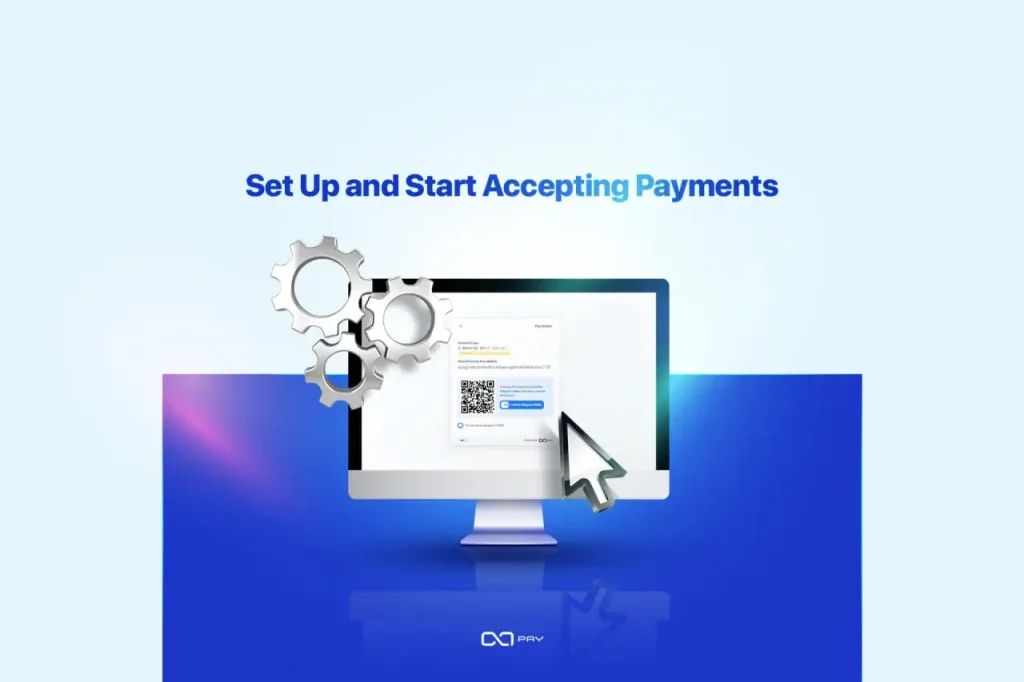
2. Set Up and Start Accepting Payments
After choosing a crypto payment service and integrating it into their business, they can start accepting global crypto payments through methods such as:
- Payment Links generated by the service
- QR codes for quick transactions
- On-site crypto checkout options
- المدفوعات القائمة على الفواتير for business clients
These solutions allow businesses without access to banks or traditional payment systems to operate globally and securely.
OxaPay: The Global Crypto Payment Gateway
OxaPay is a بوابة دفع بالعملات الرقمية that enables businesses to accept global crypto payments easily, even in regions with financial restrictions. It offers a user-friendly experience, fast transaction processing, and advanced payment tools. Moreover, by eliminating the need for traditional banking systems, OxaPay provides a secure and independent solution for businesses looking to expand their payment options and operate globally.
Why Choose OxaPay?
- Low transaction fees – Cost-effective compared to traditional payment systems
- Easy integration – Supports payment links, QR codes, invoices, and API
- Borderless transactions – Accept global crypto payments without intermediaries
- دعم عملات متعددة – Enables payments in Bitcoin, Ethereum, USDT, and more
الخلاصة
Cryptocurrency is creating new financial opportunities for businesses, particularly those without traditional banking access. By adopting global crypto payments, businesses can not only bypass banking restrictions but also handle cross-border transactions, gaining financial independence. Furthermore, OxaPay offers a fast, secure, and user-friendly gateway, making it an excellent choice. Ultimately, as the world moves toward bankless finance, crypto is revolutionizing global transactions.