حاسبة رسوم البيتكوين
Estimate a Bitcoin transaction fee using live network rates and the transaction’s size. Choose a common transaction type, combine different input and output formats, or enter the exact vsize from your wallet. Compare the fee in satoshis, BTC, and USD without sending wallet or transaction details. For a broader explanation of network costs, read OxaPay’s crypto transaction fees guide.
Estimated Fee
Common transaction · Priority fee
What this result means
Choose a fee rate and describe the transaction to see an estimate.
Compare Live Fee Options
See how the same transaction would cost at each current fee target.
| Target | Rate | Fee, sats | Fee, BTC | Fee, USD | Use |
|---|
The 30- and 60-minute options are estimates. Actual confirmation time can change with network demand and miner selection.
Compare Common Bitcoin Input Types
See how different input types can change the estimated fee for the same number of inputs and outputs.
| Format | Estimated vsize | Fee, sats | Fee, USD | Practical note |
|---|
How to Use the Bitcoin Fee Calculator
Choose a fee target
Choose a live target or enter your own sat/vB rate.
Model the transaction
Use a common transaction, mix input types, or enter the exact vsize.
Read the fee
Review the fee in sats, then check the BTC and USD values.
Compare alternatives
Compare fee targets and transaction types before choosing a wallet fee.
How the Bitcoin Fee Is Calculated
Bitcoin fees are measured in satoshis per virtual byte. The calculator estimates the transaction’s virtual size, multiplies it by the selected fee rate, and rounds the result up to a whole satoshi. Under BIP 141, witness data receives a lower weight than non-witness data, which can reduce the virtual size of SegWit transactions.
Common and mixed-format modes use standard single-signature estimates for P2PKH, P2SH-P2WPKH, P2WPKH, and Taproot key-path inputs. Multisig, Taproot script paths, CoinJoin, inscriptions, unusual scripts, signature size, and wallet coin selection can change the final size. Use Exact vsize when your wallet provides it.
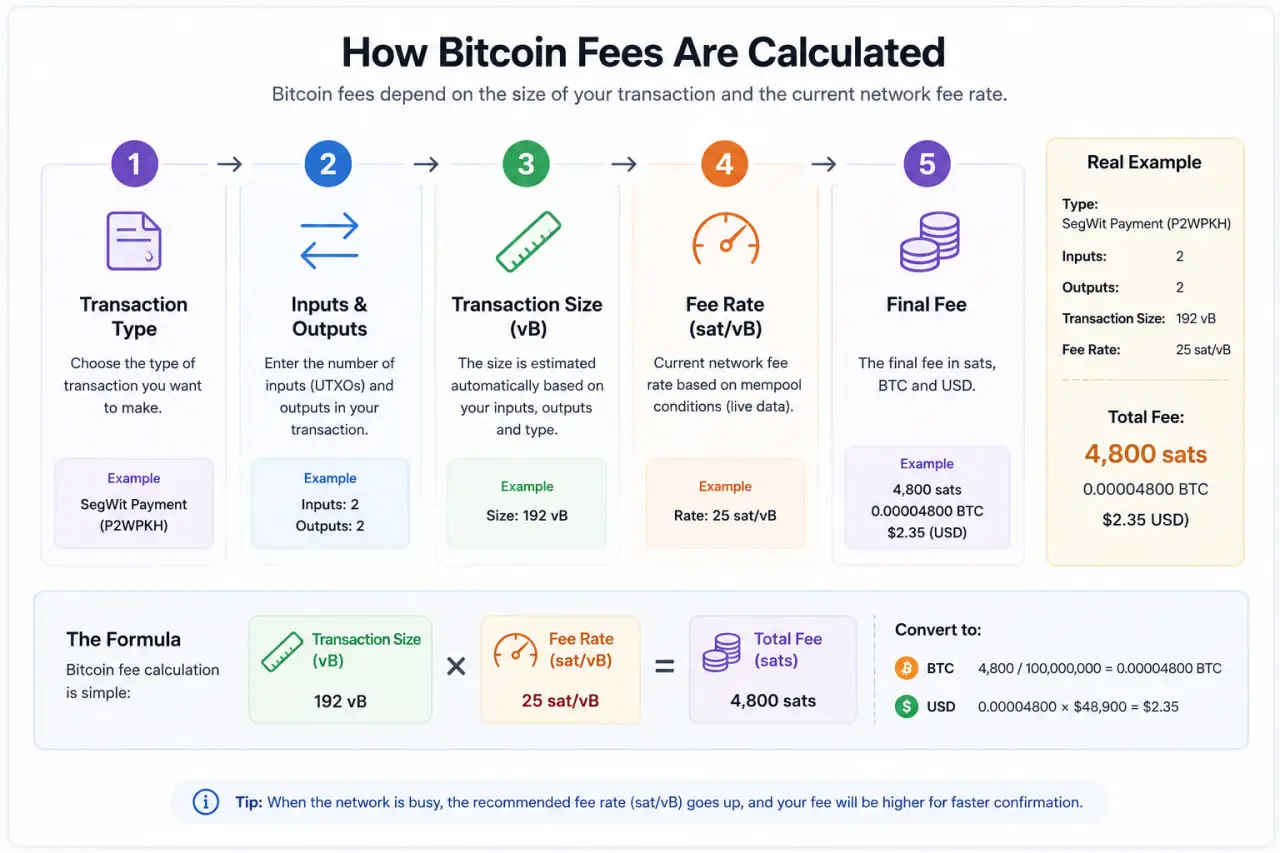
Why the Same BTC Amount Can Have Different Fees
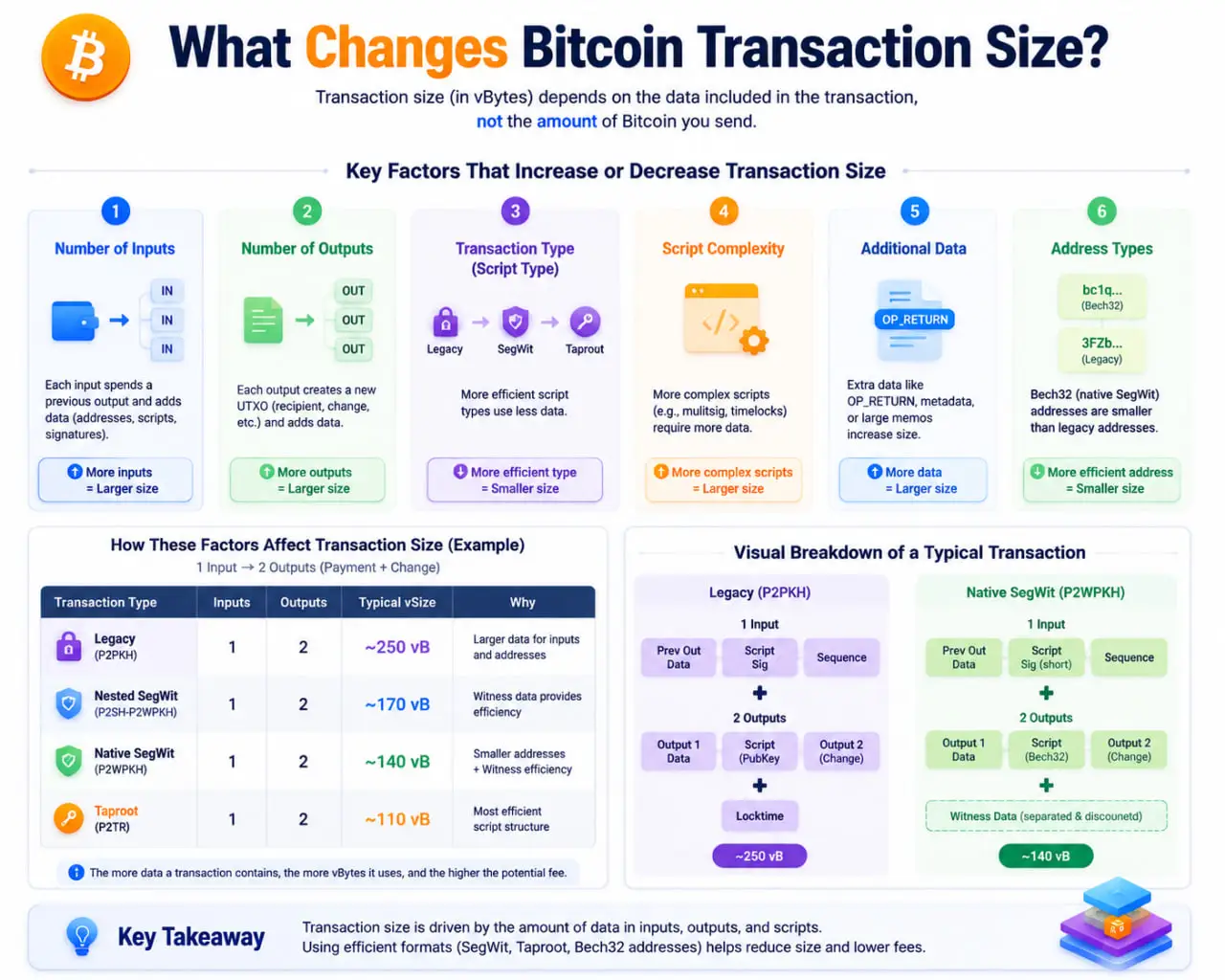
A Bitcoin wallet spends previous transaction outputs, called UTXOs. Using more UTXOs creates more inputs and a larger transaction. The recipient address type, change output, and input type also affect virtual size. As a result, a small BTC payment can cost more than a larger one when it uses more block space.
Inputs
Each UTXO adds an input and authorization data, which often makes up most of the transaction size.
Outputs
Recipient and change outputs add data based on their address or script type.
Witness discount
SegWit and Taproot place authorization data in the witness area, which lowers its virtual-size cost.
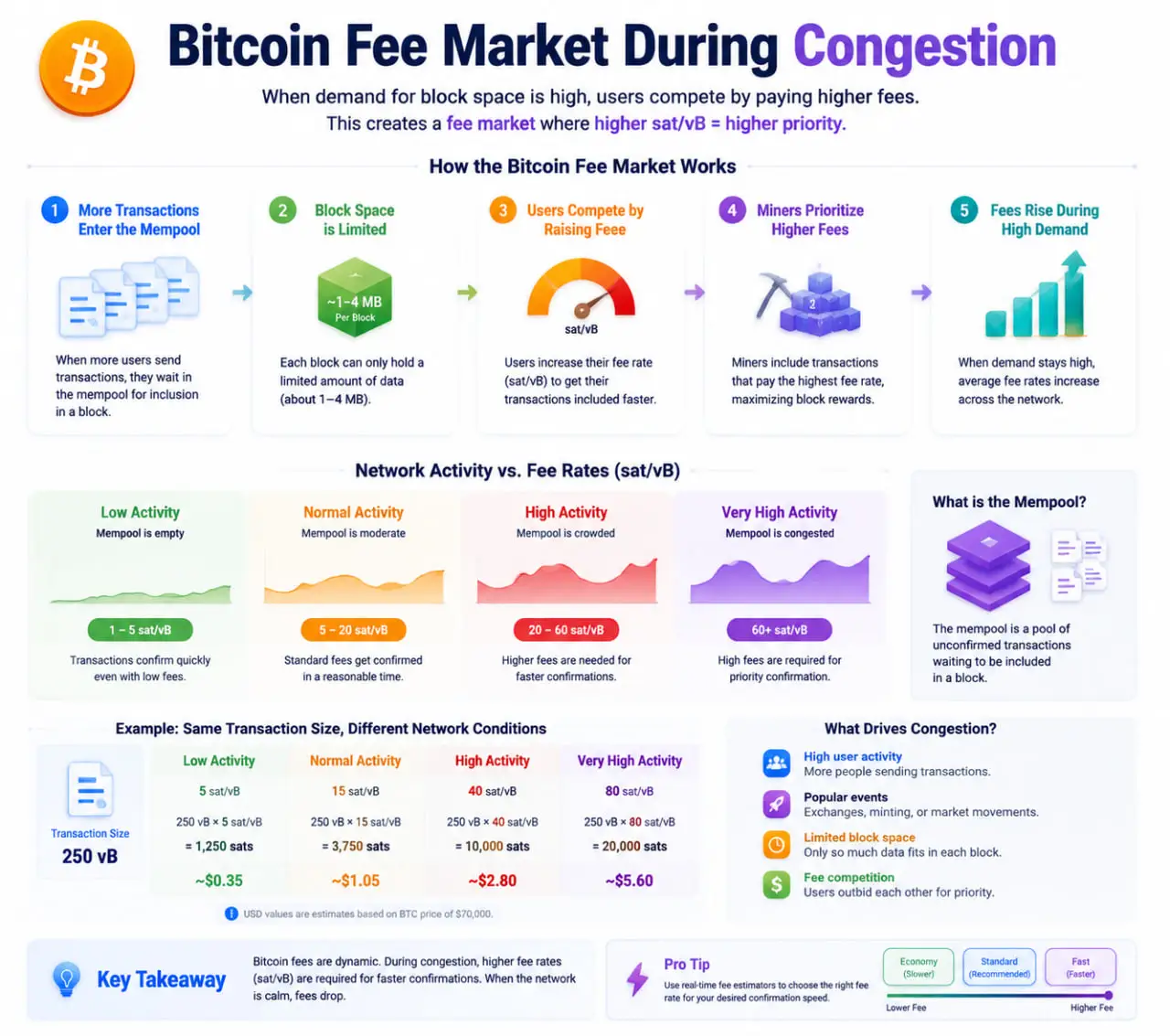
How to Use Fee Targets During Network Congestion
A fee target is a current estimate, not a reserved place in a block. Transactions compete mainly by fee rate. Network demand can change after the estimate, miners may use different selection rules, and your wallet may build a transaction with a different size. OxaPay’s mempool guide explains how pending transactions compete before confirmation. For urgent payments, refresh the fee data just before sending.
Economy rates may suit non-urgent transfers, but confirmation can take longer when demand rises. Merchant systems should treat payment detection and order fulfillment as separate steps. A fee estimate is not proof that a transaction is confirmed.
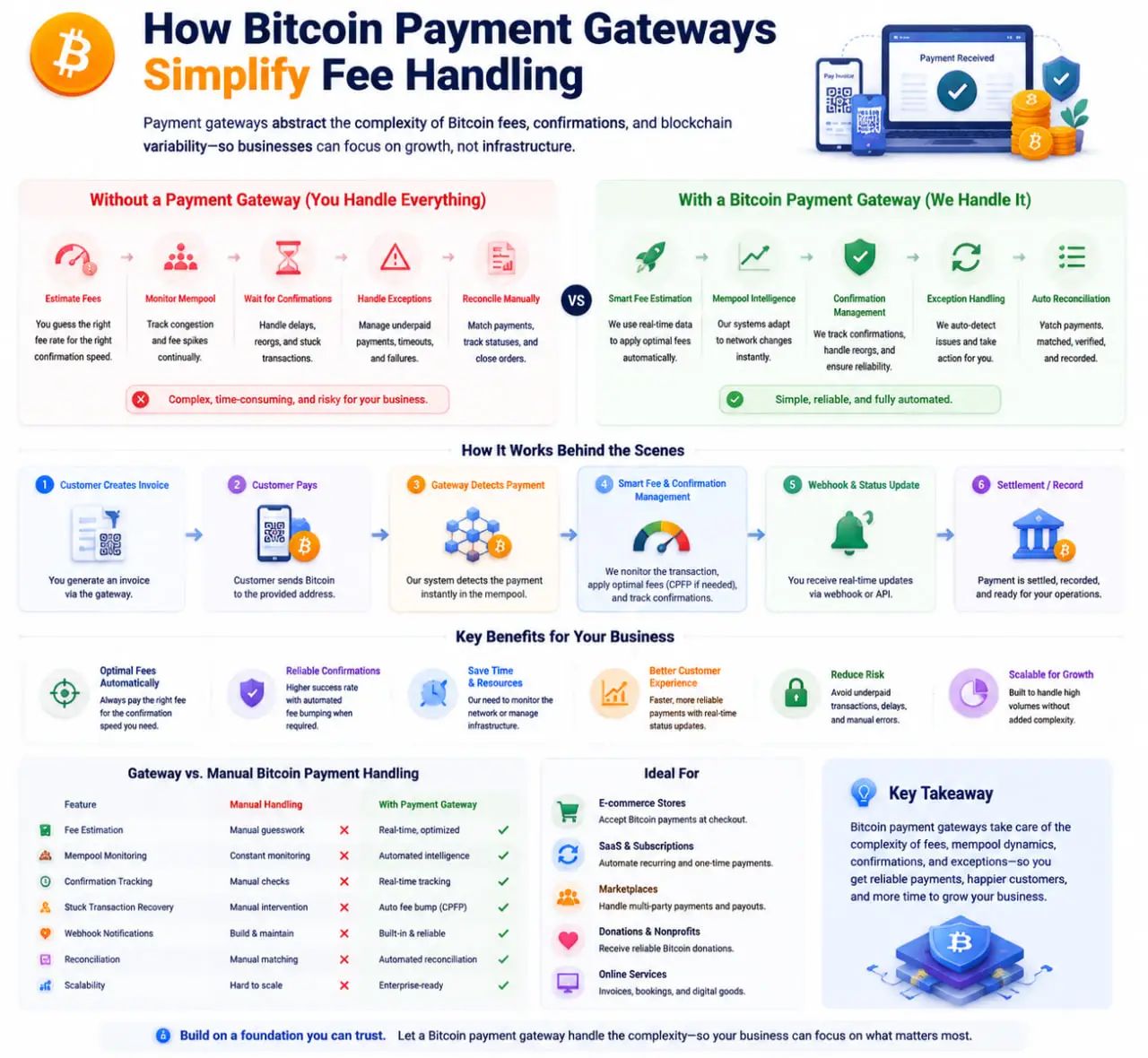
A Fee Estimate Is Only One Part of a Bitcoin Payment
For a business, detecting a transaction, including it in a block, confirming it, handling invoice expiry, managing late payments, and fulfilling the order are separate steps. The payment confirmation systems guide explains how network status should guide fulfillment decisions. A low sender fee can delay confirmation and create more support work even when the invoice and address are correct.
A payment gateway connects the blockchain transaction to the merchant’s order. It adds monitoring, payment statuses, callbacks, and reconciliation. OxaPay’s payment status table shows the payment states available to merchant systems. This calculator estimates the sender’s network fee. The wider payment system determines what the business does before and after confirmation.

Bitcoin Fee Calculator FAQ
Does the amount of Bitcoin sent determine the network fee?
No. The BTC amount does not directly set the network fee. Transaction virtual size and the selected fee rate are the main inputs.
Why can the wallet fee differ from this estimate?
A wallet knows the exact UTXOs, signatures, change output, script path, and coin-selection method. This calculator uses common estimates, so the final vsize may differ.
Is a live fee target a confirmation guarantee?
No. It is based on current network conditions. Demand and miner selection can change after the estimate or after you send the transaction.
Which calculation mode is most accurate?
Exact vsize is the most accurate option when your wallet provides the final transaction size. Before that, mixed-format mode gives the most detailed estimate.
What data does this page send to external services?
The page requests public fee-rate data and the BTC-USD price. It does not send wallet addresses, transaction IDs, private keys, API keys, or your calculator inputs.
Accept Bitcoin Payments with Clear Status Tracking
OxaPay helps businesses accept Bitcoin with invoices, transaction monitoring, payment statuses, webhook updates, and APIs that connect blockchain payments to merchant orders.