Большинство компаний считают, что успех платежа зависит от скорости, комиссий, поддерживаемых валют и технической надежности. Эти факторы важны, но не только они определяют, завершит ли клиент оплату.
На последнем этапе оформления заказа один простой элемент может существенно повлиять на результат: платежные инструкции.
Платежные инструкции — это сообщения, предупреждения, визуальные подсказки и рекомендации в реальном времени, которые точно объясняют клиенту, что нужно сделать перед отправкой средств. От них часто зависит, будет ли платеж выполнен правильно, задержан, брошен или отправлен с ошибкой.
Это особенно важно для криптоплатежей. Клиенту может потребоваться выбрать правильную сеть, отправить точную сумму, отсканировать QR-код, понять сетевые комиссиии завершить платеж до истечения срока действия инвойса.
Платежная система может быть быстрой и надежной, но если клиент неправильно поймет последний шаг, платеж все равно может завершиться неудачей. Во многих случаях проблема не техническая, а коммуникационная в момент действия.
Что такое платежные инструкции?
Платежные инструкции — это рекомендации, которые клиент видит во время процесса оплаты. Они объясняют, что нужно сделать, какие детали важны и каких ошибок следует избегать.
В обычном checkout-процессе это могут быть сообщения вроде «Подтвердите платеж», «Используйте этот номер ссылки» или «Завершите оплату в течение 15 минут».
В крипто-checkout инструкции особенно важны, поскольку пользователь может взаимодействовать с суммой платежа, монетой, блокчейн-сетью, адресом кошелька, QR-кодом, таймером инвойса, информацией о сетевой комиссии и Статус платежа.
Хорошая инструкция не просто описывает систему. Она говорит клиенту, что делать дальше.
Пример платежной инструкции
Отправьте ровно 125 USDT в сети TRC20.
Отсканируйте QR-код или скопируйте адрес кошелька.
Не изменяйте сумму.
Сетевая комиссия оплачивается вашим кошельком отдельно.
Срок действия этого инвойса — 15 минут.
Почему платежные инструкции важны при checkout
На этапе checkout клиент уже принял решение о покупке. Теперь он пытается завершить оплату.
Этот момент создает неопределенность, потому что речь идет о деньгах. Даже уверенный клиент может остановиться и спросить: правильная ли это сумма? Использую ли я правильную сеть? Включена ли сетевая комиссия? Что будет, если подтверждение займет больше времени? Нужно ли держать страницу открытой?
Если checkout-страница не отвечает на эти вопросы ясно, клиент может сомневаться, обратиться в поддержку, отказаться от оплаты или выполнить ее неправильно.
Поэтому платежные инструкции не следует воспринимать как декоративный UX-текст. Они являются частью уровня исполнения платежа и связывают логику системы с действиями пользователя.
Платежная система может ожидать правильную сумму, сеть, адрес и время, но клиент видит только интерфейс. Если интерфейс не объясняет следующий шаг, ожидания системы и действия клиента могут разойтись.
Распространенные проблемы checkout из-за неясных инструкций
Многие проблемы с платежами возникают не из-за неисправной инфраструктуры. Они появляются, когда действия клиента не соответствуют тому, что ожидает платежная система.
Например, компания может создать криптоинвойс Для 100 USDT в сети TRC20, но клиент может отправить USDT через неправильную сеть, отправить меньше из-за предположения, что комиссия уже включена, вручную изменить сумму, закрыть страницу до обновления статуса, оплатить после истечения инвойса или пропустить обязательный reference ID.
Каждая такая ошибка создает операционные затраты. Платеж может потребовать ручной проверки, заказ может не обновиться автоматически, клиент может создать тикет поддержки, а бизнесу придется вручную проверять ID транзакций, активность кошелька, записи инвойсов и статус заказа.
Понятные инструкции предотвращают многие из этих проблем еще до их возникновения.
Более ясное объяснение комиссии: Отправьте точную сумму инвойса. Ваш кошелек добавит сетевую комиссию отдельно.
Более ясное объяснение подтверждения: Подтверждение в блокчейне может занять несколько минут. Оставьте эту страницу открытой, пока мы определяем ваш платеж.
Эти сообщения короткие, но уменьшают путаницу именно в тот момент, когда она становится дорогой.
Слабые и сильные платежные инструкции
Слабая инструкция на checkout может выглядеть так:
Слабая инструкция
Пожалуйста, отправьте платеж на адрес ниже.
Сильная инструкция
Отправьте ровно 100 USDT с использованием сети TRC20.
Отсканируйте QR-код или скопируйте адрес кошелька ниже.
Не отправляйте из другой сети.
Ваш кошелек может взимать отдельную сетевую комиссию.
Срок действия этого инвойса — 15 минут.
Оставьте эту страницу открытой до подтверждения платежа.
Слабая версия слишком расплывчата. Она не объясняет сумму, сеть, поведение комиссии, сроки или то, чего клиенту ожидать после отправки.
Более сильная версия лучше, потому что отвечает на основные вопросы до того, как клиент совершит ошибку.
Хорошие инструкции лучше не потому, что они длиннее, а потому, что устраняют неопределенность.
Ключевые элементы хороших инструкций для криптоплатежей
Понятные инструкции по криптоплатежам должны фокусироваться на деталях, которые клиенты чаще всего понимают неправильно.
Точная сумма
Во многих системах криптоинвойсов точная сумма важна, потому что помогает платежной системе сопоставить транзакцию с инвойсом.
Используйте такую формулировку: Отправьте точную указанную сумму. Не округляйте и не изменяйте ее.
Правильная сеть
Токен, такой как USDT, может существовать в нескольких сетях, включая TRC20, ERC20, BEP20, Polygon и другие.
Важно: Для этого платежа используйте только сеть TRC20.
QR-код и адрес кошелька
QR-коды упрощают криптоплатежи, но пользователю все равно нужно понимать, что именно содержит QR-код.
Используйте такую формулировку: Отсканируйте QR-код приложением кошелька или скопируйте адрес вручную. Всегда проверяйте адрес перед отправкой.
Сетевая комиссия
Многие клиенты не знают, включена ли сетевая комиссия в сумму инвойса. Это может привести к недоплате.
Примечание о комиссии: Ваш кошелек может взимать сетевую комиссию. Она оплачивается отдельно от суммы инвойса.
Таймер истечения
Криптоинвойсы часто истекают через установленное время, потому что цены, курсы, условия заказа или платежная сессия могут измениться.
Используйте такую формулировку: Завершите платеж до окончания таймера. Если инвойс истек, создайте новый платежный запрос.
Статус платежа
Клиентам нужно понимать, что происходит после отправки транзакции.
Используйте такую формулировку: После отправки платежа дождитесь подтверждения. Статус автоматически изменится с Waiting на Confirming, а затем на Paid.
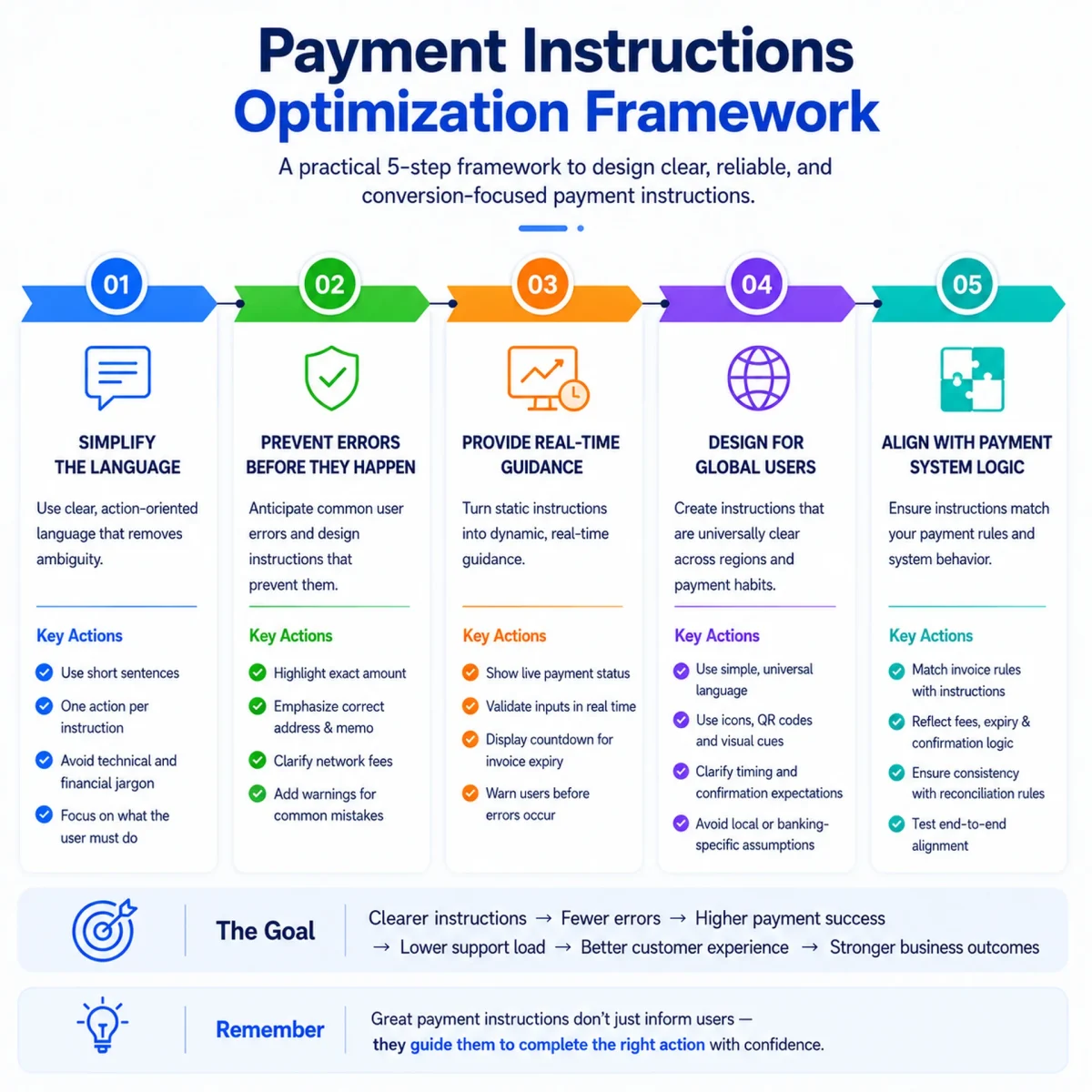
Как писать более эффективные платежные инструкции
Хорошие платежные инструкции не требуют длинных объяснений. В большинстве случаев язык должен быть короче, яснее и ориентирован на действие.
Используйте прямые глаголы: отправьте, отсканируйте, скопируйте, подтвердите, подождите, не изменяйте, оставьте эту страницу открытой.
Лучше
Отсканируйте QR-код и отправьте точную указанную сумму.
Слабее
Пользователи могут продолжить, используя отображаемые платежные данные.
Первая версия побуждает к действию. Вторая звучит формально и заставляет клиента самостоятельно интерпретировать смысл.
Самая важная инструкция также должна идти первой. Для криптоинвойса это обычно сумма и сеть:
Отправьте ровно 100 USDT в сети TRC20.
Предупреждения должны появляться до того, как произойдет ошибка, а не после. Если платеж через неправильную сеть рискован, предупреждение должно находиться рядом с названием сети и адресом кошелька.
Технических терминов также должно быть меньше. Вместо «Финальность транзакции зависит от условий блокчейн-сети» лучше написать: «Подтверждение может занять несколько минут в зависимости от активности сети».
Полный пример инструкций для криптоинвойса
Сильный checkout-блок для криптоинвойса может выглядеть так:
Пример checkout для криптоинвойса
Оплата в USDT
Сумма: 125 USDT
Сеть: TRC20
Отправьте ровно 125 USDT с использованием сети TRC20.
Отсканируйте QR-код или скопируйте адрес кошелька ниже.
Не изменяйте сумму.
Не отправляйте из другой сети.
Ваш кошелек может взимать отдельную сетевую комиссию.
Срок действия этого инвойса — 15 минут.
После отправки платежа оставьте эту страницу открытой, пока статус не изменится на paid.
Такая инструкция работает, потому что дает клиенту всю критически важную информацию в одном месте. Она также защищает бизнес от неправильной суммы, неправильной сети, недопонимания комиссии, оплаты истекшего инвойса, преждевременного закрытия страницы и лишних обращений в поддержку.
Для мерчанта это не просто улучшение UX. Это делает платежные операции более предсказуемыми.
Платежные инструкции — часть надежности платежей
Надежность платежей часто обсуждается как технический вопрос: uptime, API, Webhooks, мониторинг транзакций и отслеживание подтверждений. Но надежность также зависит от того, выполняет ли клиент правильное действие.
Платежная система может точно обнаружить и сопоставить транзакцию только в том случае, если клиент до истечения инвойса отправит правильную сумму на правильный адрес в правильной сети.
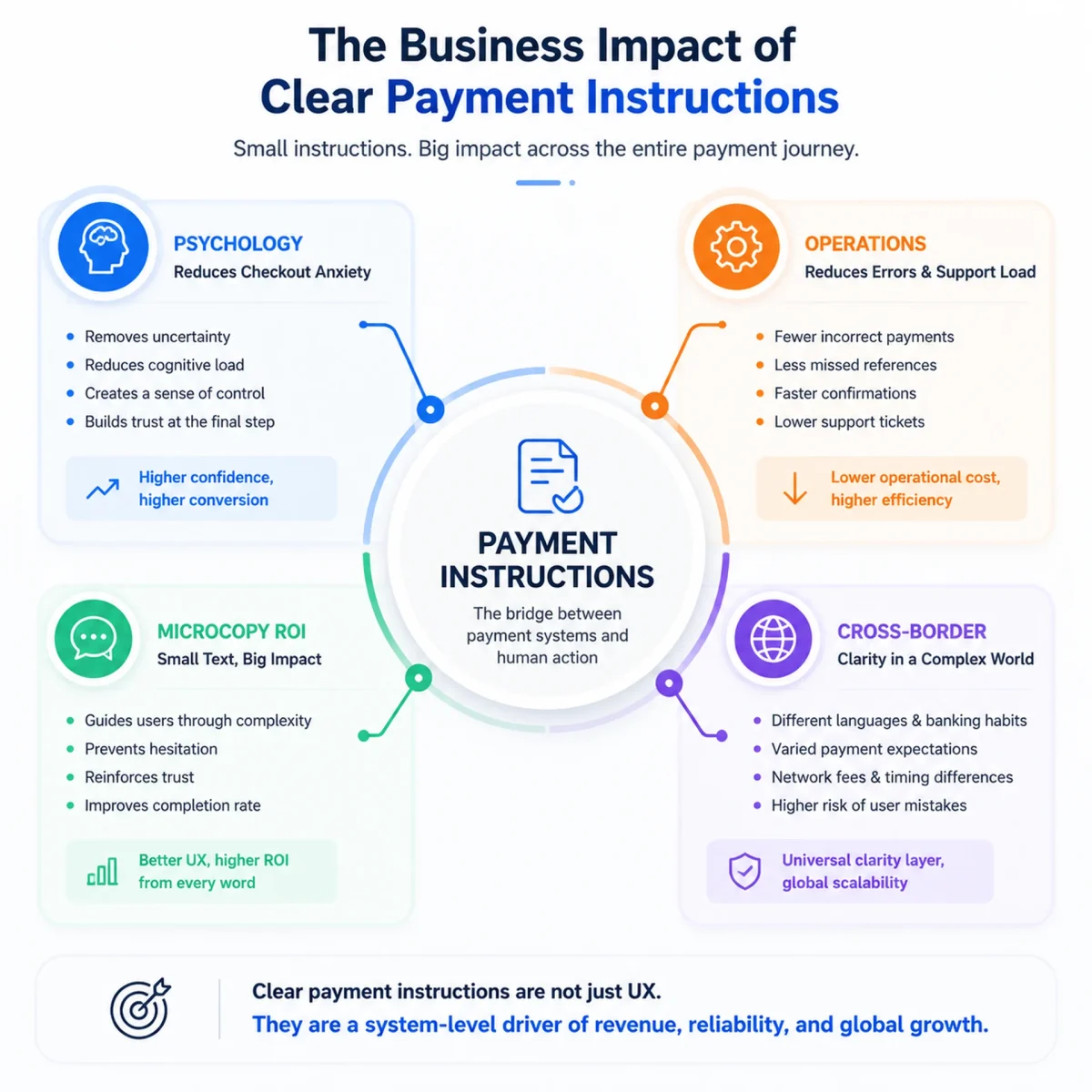
Когда инструкции понятны, клиенты совершают меньше ошибок, платежи проще сопоставлять, инвойсы обновляются точнее, поддержка получает меньше предотвратимых обращений, а мерчанты могут увереннее выполнять заказы.
В реальных платежных операциях ясная коммуникация является частью надежности. Более качественная инструкция может уменьшить количество сбоев без изменения основной инфраструктуры.
Платежные инструкции для глобальных клиентов
Понятные инструкции становятся еще важнее, когда бизнес принимает платежи от клиентов по всему миру.
. У глобальных клиентов могут быть разные ожидания. Кто-то привык к мгновенным банковским платежам, кто-то понимает криптокошельки, а кто-то может не знать, что подтверждения блокчейна занимают время или что один актив может существовать в разных сетях.
Поэтому платежные инструкции не должны предполагать слишком высокий уровень знаний. Хороший глобальный checkout должен просто объяснять следующее действие:
Выберите в своем кошельке ту же сеть, которая указана в этом инвойсе.
Простые универсальные шаблоны обычно работают лучше всего: понятная сумма, видимая валюта, название сети, QR-код, кнопка копирования, таймер, статус платежа и короткие предупреждения.
Как OxaPay применяет этот принцип
В OxaPay платежные инструкции являются частью платежного опыта, а не просто текстом на checkout-странице.
Криптоплатежи включают несколько взаимосвязанных элементов: создание инвойса, выбор монеты и сети, генерацию адреса кошелька, отображение QR-кода, мониторинг платежа, отслеживание подтверждений и финальный статус.
OxaPay помогает мерчантам создавать более плавный процесс криптоплатежей, делая ключевые детали понятными для клиентов: сумму, валюту, сеть, время действия инвойса и статус платежа.
Это помогает компаниям уменьшать платежные ошибки, повышать завершение checkout, снижать нагрузку на поддержку и предлагать глобальным клиентам более понятный опыт оплаты криптовалютой.
Цель проста: клиент не должен потерпеть неудачу при оплате из-за неясных инструкций.
Итог
Платежные инструкции могут казаться небольшой частью checkout, но они напрямую влияют на успех платежа.
Для криптоплатежей это еще важнее. Клиенту может потребоваться отправить точную сумму, выбрать правильную сеть, отсканировать QR-код, понять сетевые комиссии и завершить оплату до истечения инвойса.
Хорошие инструкции не должны быть сложными. Они должны быть понятными, заметными и соответствовать тому, как работает платежная система.
В конечном счете успешный платеж — это не только транзакция между системами, но и действие человека на последнем этапе checkout. Понятные инструкции помогают превратить это действие в завершенный платеж.