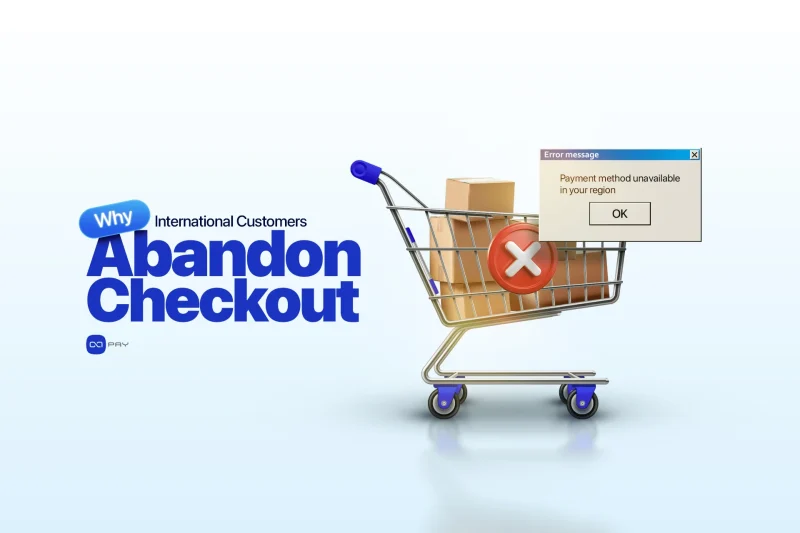
An international customer can want a product, accept its price, and still leave at checkout. A card that fails across borders, an unfamiliar currency, unexpected payment charges, or unclear transaction status can all affect international checkout conversion. These problems do not necessarily indicate weak demand. They may simply prevent interested customers from completing their purchases.
For businesses selling beyond their home market, the useful question is not simply how to attract more visitors. It is whether qualified customers can complete a purchase using a payment method they understand and can access. Improving conversion starts with identifying that gap and addressing the specific payment friction behind it.
International Demand Is Not the Same as Payment Access
Product demand and payment access are separate conditions. A customer may reach checkout after comparing alternatives, yet be unable to use the methods presented there. An online service that accepts only cards, for example, might attract customers who primarily use local bank transfers or digital assets. The interest is real, but the final payment path does not fit those buyers.
This is a payment-market mismatch. It can arise from regional availability, account restrictions, payment preferences, unfamiliar currency presentation, or costs that appear only at the final step. It does not mean every market needs a completely different storefront. It means the payment layer should be evaluated against the markets a business actually serves.
Merchants should first distinguish customers who never wanted to buy from customers who tried to pay but could not complete the process. The distinction matters because a campaign or product change will not fix a missing payment route.
Identify the Payment Friction Behind Checkout Abandonment
Checkout abandonment is an outcome, not a diagnosis. The same abandoned session can come from several different problems. Before adding more payment buttons, connect what customers experience with the relevant payment and order records.
| What the merchant observes | Possible payment problem | What to check next |
|---|---|---|
| Customers reach checkout but do not start payment | Unavailable or unfamiliar methods | Review offered methods by market and customer feedback |
| Customers leave after reviewing the total | Currency or fee uncertainty | Compare displayed prices, conversion disclosures, and final amounts |
| Crypto payment requests frequently expire | Confusing asset, network, or wallet instructions | Examine the choice and instruction screens |
| Customers send funds but contact support | Unclear processing and confirmation states | Check payment events against customer-facing messages |
| Attempts fail mostly in one country | Regional or provider limitations | Check eligibility and available fallback methods |
These signals suggest where to investigate; they do not establish cause on their own. Compare actual payment errors and completed orders before changing checkout settings.
Show the Real Payment Amount Before the Final Step
A product displayed at $100 can feel less predictable to a customer whose account is denominated in EUR, JPY, or TRY. They may need to estimate an exchange rate and wonder whether their bank, card issuer, or payment service will add a charge. Shipping, taxes, and duties can introduce further uncertainty where they apply.
Merchants should identify the transaction currency, explain any known conversion or processing costs, and make the order total consistent from review through payment. If an external issuer or network may impose additional charges that the merchant cannot calculate, say so clearly rather than implying the displayed amount covers every possible cost.
Crypto has similar requirements. The customer needs the exact requested asset amount and a clear explanation of any sender-paid network cost. The guide to blockchain fees explains why network charges can differ. Stablecoins can simplify value interpretation for familiar users, but they do not eliminate conversion, network, or issuer-related costs.
Payment Method Availability Can Block Existing Demand
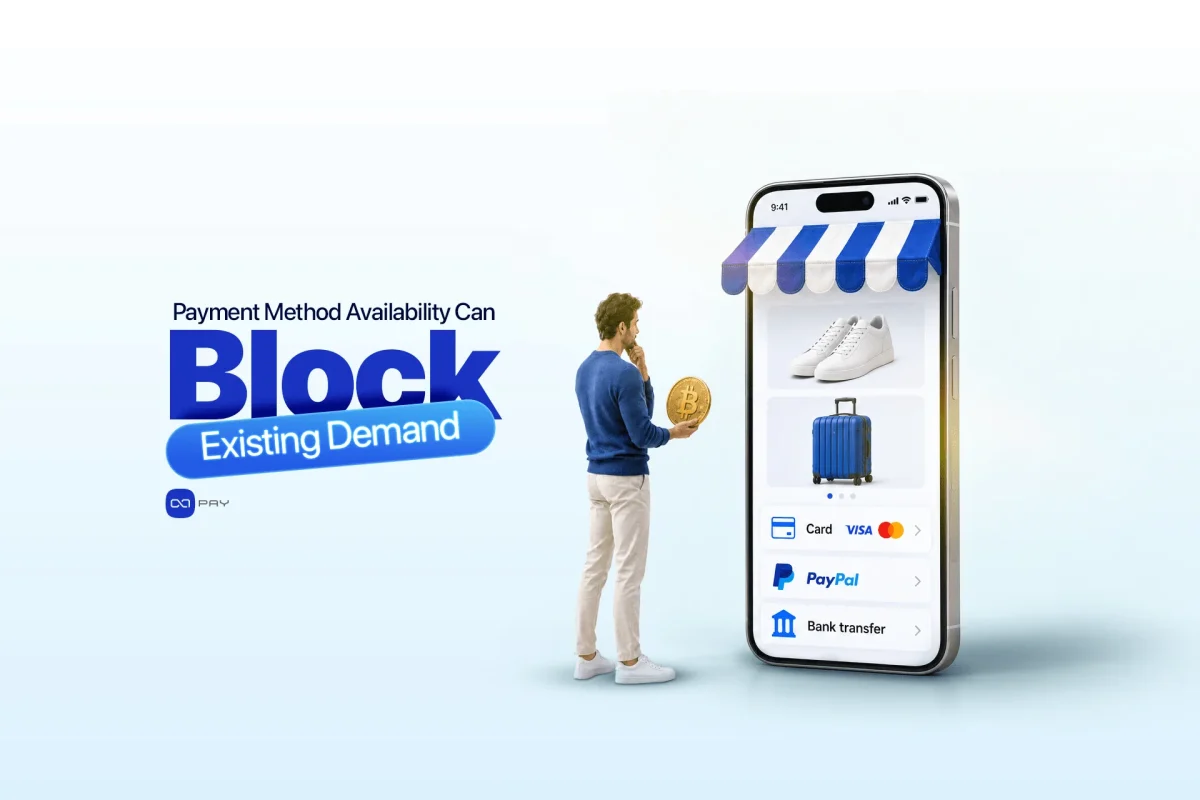
There is an important difference between a preferred payment method and an accessible one. A shopper might prefer a wallet because it is convenient, or need it because the listed alternatives are unavailable to them. Either case deserves attention, but the business response may differ.
The objective is not to display the longest possible list of payment logos. It is to provide useful coverage for the people reaching checkout. Start with traffic and order data from priority markets. Examine payment initiation, error rates, completion, and customer support messages. Then test whether one additional method actually resolves an observed gap.
For online stores evaluating their payment stack, the e-commerce gateway evaluation guide offers additional provider-selection considerations. Payment accessibility also depends on compliance, provider availability, and the customer’s circumstances; no single method works everywhere.
Crypto Can Add Coverage Without Replacing Other Methods
Cryptocurrency may be useful when a customer already holds crypto or stablecoins and wants to use them for an international purchase. An additional crypto route can let that buyer complete a transaction without relying on the same card or domestic banking arrangement as the merchant. That is an accessibility benefit for a specific segment, not a universal solution to cross-border payments.
Crypto introduces its own decisions. A customer selecting USDT may still need to choose a supported blockchain network. If the checkout does not clearly present the asset, network, destination, amount, and expiry time, the extra option can produce new friction rather than remove it. Sending funds on an unsupported network can also create a payment that is difficult or impossible to recover.
Businesses should offer the assets and networks their customers actually use and explain the payment steps in ordinary language. The separate article on инструкциях по оплате, повышающих успешность оформления покупки, covers this customer-facing detail. Cards, local methods, and crypto can coexist where each serves a real audience need.

International Conversion Depends on Payment Predictability
Cross-border shoppers may be dealing with an unfamiliar brand, currency, or payment process. A silent checkout makes that uncertainty worse. Consider a buyer who sends crypto and sees the transfer leave their wallet while the store still displays an unpaid order. They may refresh, attempt another payment, or ask support for help even though confirmation is proceeding normally.
Show distinct, understandable states such as waiting for payment, payment detected, confirming, completed, and action required. The exact labels must reflect the provider and integration in use. Detection alone should not be presented as final payment approval, and a browser redirect should not be used as proof that a payment is complete.
The store also needs to connect verified payment events to the correct order so fulfillment occurs once. For the wider sequence from checkout through settlement, see the руководство по платёжному процессу в электронной коммерции. Clear status feedback protects customer confidence while the underlying systems finish their work.
How to Measure International Checkout Conversion
A single global checkout conversion rate can hide an important problem. A store may convert well overall while customers in one region abandon disproportionately when they reach the payment step. Segment performance by customer market, checkout currency, offered and selected method, and, where relevant, crypto asset and network.
Keep the measurement stages separate: checkout started, payment attempted, payment detected, payment approved, and order completed. Define a consistent observation window and avoid counting repeated attempts by the same buyer as unrelated purchases. Compare these figures with errors, refunds, margin, and support demand before declaring a change successful.
For example, if one market reaches checkout frequently but rarely initiates payment, review method availability and pricing clarity. If another starts crypto payments but has many expired requests, inspect instructions and network choice. If payments complete but support tickets remain high, customer-visible status messages may be the problem. Each pattern calls for a different test.
Where OxaPay Fits in an International Checkout
OxaPay can provide an additional crypto payment route for businesses whose customers already use digital assets. Merchants can create payment requests priced in supported fiat currencies while customers pay in an available cryptocurrency. The OxaPay merchant invoice option and hosted payment pages separate the commercial pricing currency from the asset used for payment, subject to the selected product and its supported settings.
OxaPay payment pages show the calculated crypto amount, payment instructions, an expiry window, and status updates. Merchants can configure accepted cryptocurrencies and supported networks for their integration. The payment pages guide explains the customer experience, while the invoice API documentation covers the programmatic route for custom checkouts.
These capabilities do not remove the merchant’s responsibility to decide which markets to serve, which payment states authorize order fulfillment, how refunds work, and what the customer sees when a payment is delayed. A useful rollout should be tested with the storefront’s real order process, not just a successful transfer.
What Merchants Should Test Before Expanding
Start with a small group of international checkout sessions and examine the gap between intention and completed payment. A practical review should answer:
- Which priority markets have high checkout entry but low payment initiation?
- Can shoppers understand their final payment amount and any known extra charges?
- Do offered methods match the needs and eligibility of customers in those markets?
- Are crypto asset, network, amount, and expiry instructions unambiguous?
- Can the customer see payment progress, and can support trace it to an order?
- Does a new payment route improve completed orders without unacceptable operational costs?
Run a controlled test, review results by market, and expand only when the checkout and post-payment processes work reliably.
Что дальше?
Improving international checkout conversion starts with removing the payment barriers that prevent interested customers from completing purchases. Businesses can address these barriers by making payment amounts predictable, offering accessible methods, explaining transaction progress, and identifying where qualified buyers leave checkout.
For some audiences, crypto and stablecoins can close part of that gap. Their value is greatest when they are a clear, well-supported addition to a broader payment strategy. The goal is not more payment buttons. It is more customers able to complete a legitimate purchase confidently.