Прием криптоплатежа — лишь один этап гораздо более крупного бизнес-процесса.
После того как клиент завершает оплату, компании часто нужно проверить транзакцию, обновить запись заказа, активировать услугу, уведомить команды, синхронизировать внутренние системы, сформировать отчеты и вести точные финансовые записи. На первых этапах эти задачи можно выполнять вручную. Однако по мере роста объема транзакций поддерживать их последовательное выполнение становится все сложнее.
Именно здесь важна автоматизация платежей.
Объединив платежные сервисы OxaPay С n8n по автоматизации рабочих процессов, компании могут напрямую связывать платежные события с операционными процессами. В результате они создают workflows, которые автоматически выполняются во внутренних системах.
Вместо того чтобы рассматривать платежи как изолированные блокчейн-транзакции, компании могут превращать их в автоматизированные операционные процессы.

Как работают автоматизированные платежные workflows
Автоматизация криптоплатежей — это подключение платежной активности к системам и действиям, которые зависят от этого платежа.
Вместо ожидания ручной проверки транзакции и выполнения последующих задач автоматизированные workflows реагируют на платежные события и автоматически запускают следующий бизнес-процесс.
Например, после завершения платежа компания может захотеть:
- Обновить статус заказа
- Активировать подписку
- Уведомить службу поддержки
- Синхронизировать данные клиента
- Сформировать финансовые отчеты
- Запустить процессы исполнения заказа
- Обновить внутренние дашборды
- Инициировать процесс выплаты
Вместо выполнения этих задач по отдельности автоматизация позволяет выполнять их автоматически как часть структурированного процесса.
Типовая архитектура автоматизации платежей
Большинство систем автоматизации платежей строятся вокруг трех основных слоев: платежной инфраструктуры, автоматизации workflows и бизнес-систем.
Платежная инфраструктура обрабатывает такие действия, как создание инвойса, отслеживание платежа и обработка транзакции. Слой автоматизации координирует дальнейшие действия, а бизнес-системы выполняют операционные задачи: обновляют заказы, активируют подписки, формируют отчеты или уведомляют команды.
Такое разделение позволяет эффективнее управлять платежными операциями: платежные события и бизнес-процессы остаются связанными, но не становятся жестко зависимыми от одной системы.
Как выглядит типичный автоматизированный платежный поток
Хотя у каждой компании свои требования, большинство автоматизированных платежных workflows следует похожей схеме.
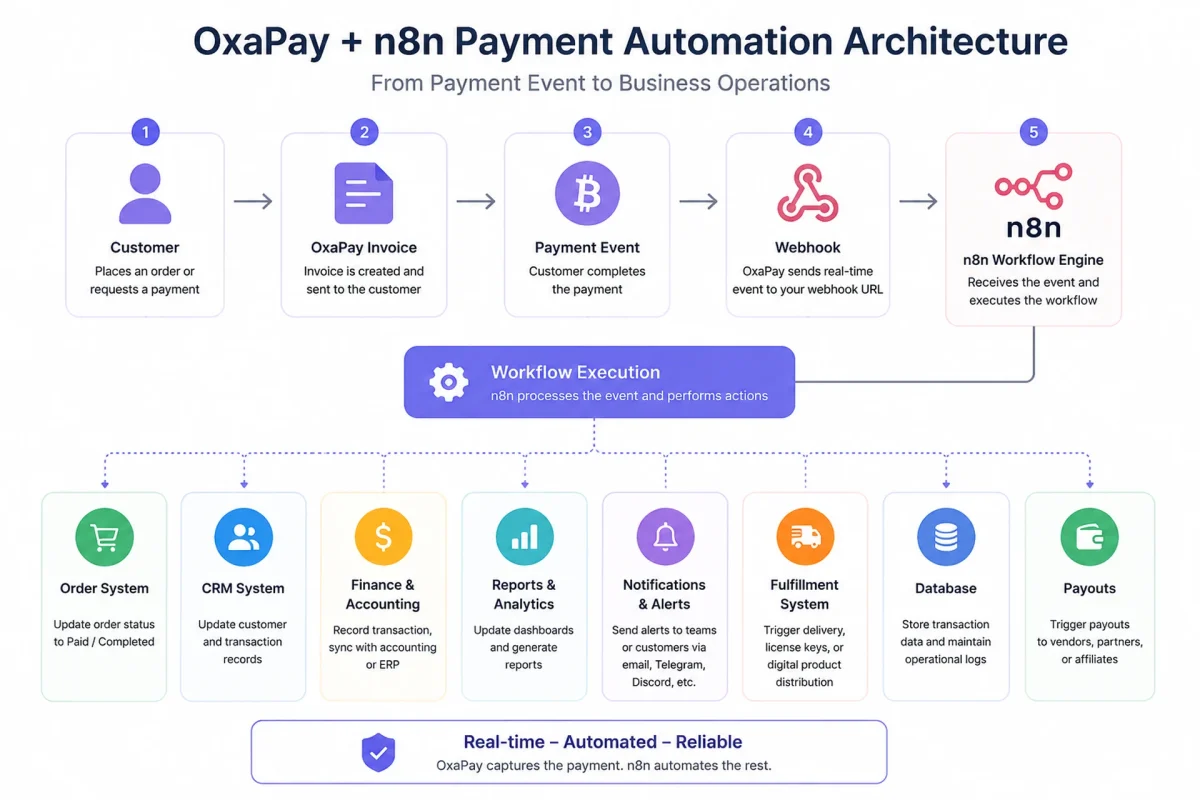
- Происходит событие, связанное с платежом.
- Платеж обнаруживается или обрабатывается.
- Запускается автоматизированный workflow.
- Соответствующие бизнес-системы получают обновленную информацию.
- Операционные действия выполняются автоматически.
В результате платежная информация может перемещаться между несколькими системами без ручной координации. Со временем компании могут расширять такие workflows для исполнения заказов, управления клиентами, финансовой отчетности, подписок и других операционных процессов.
Как OxaPay и n8n работают вместе
OxaPay и n8n решают разные части одного и того же процесса.
OxaPay предоставляет платежную инфраструктуру, включая:
- Создание инвойсов
- Мониторинг платежей
- Отслеживание транзакций
- Webhook-уведомления
- API выплат
n8n предоставляет слой автоматизации workflows, который связывает эти платежные события с бизнес-системами.
Упрощенный workflow обычно выглядит так:
Действие клиента → Платежное событие → OxaPay → Workflow n8n → Бизнес-системы
When a payment-related event occurs, n8n can automatically coordinate the next steps across the organization’s operational infrastructure.
Так создается событийно-ориентированный платежный workflow вместо ручного процесса.
Почему компании автоматизируют платежные операции
Ручная обработка платежей может работать при небольшом объеме транзакций.
По мере роста бизнеса платежи часто одновременно затрагивают несколько систем. Заказы, подписки, финансовые записи, инструменты отчетности, клиентские базы, платформы поддержки и системы исполнения могут зависеть от точной платежной информации.
Команды могут тратить часы на проверку статусов платежей, обновление записей и координацию информации между системами. Со временем поддерживать эту ручную работу последовательно становится все труднее, особенно при продолжающемся росте объема транзакций.
Автоматизация сокращает повторяющиеся задачи и одновременно помогает синхронизировать бизнес-операции.
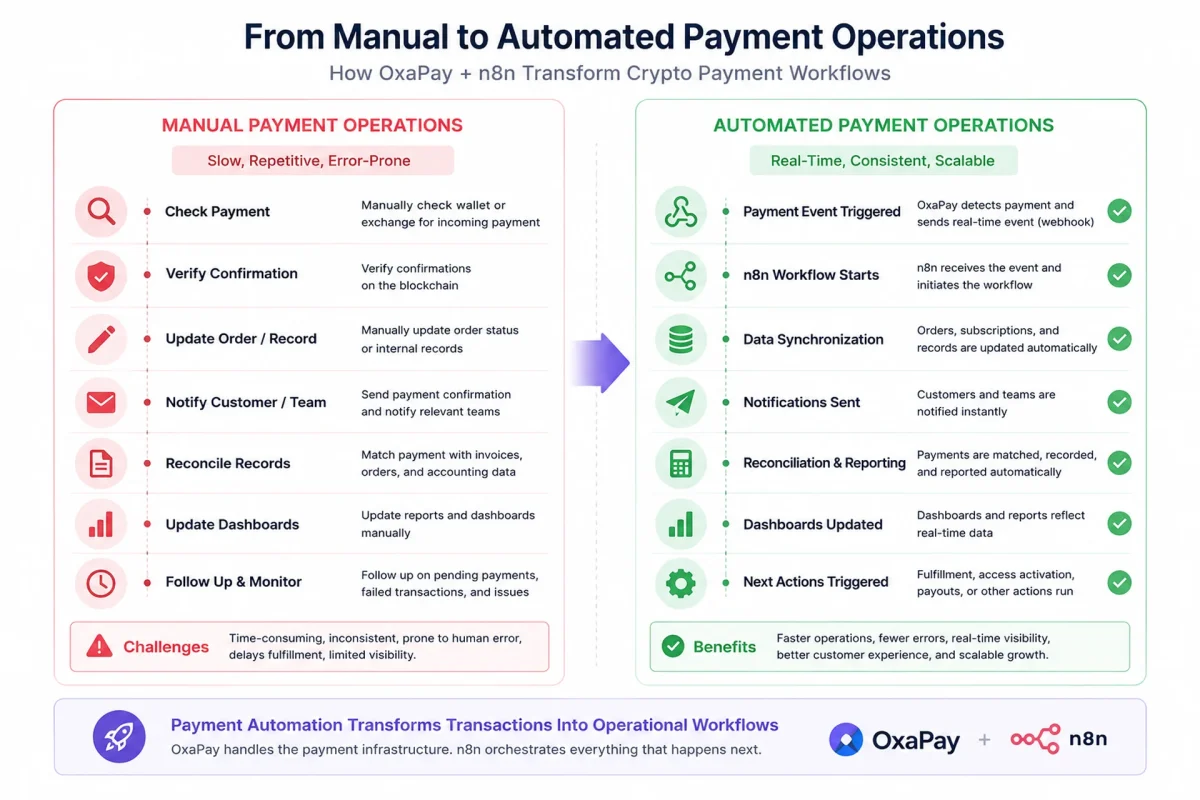
Что можно автоматизировать с OxaPay и n8n?
Одно из преимуществ автоматизации workflows — гибкость.
Разные компании могут автоматизировать разные этапы жизненного цикла платежа в зависимости от своих операционных требований.
Workflows приема платежей
Компании могут автоматизировать такие процессы, как:
- создание инвойса
- Создание платежного запроса
- Уведомления клиентов
- Отслеживание статуса платежа
- Мониторинг неуспешных платежей
Операции с заказами и исполнением
Платежные события могут автоматически запускать:
- Обновление заказа
- Процессы доставки продукта
- Распределение цифровых активов
- активацию услуги
- Внутренние уведомления об исполнении
Управление подписками
Компании с подписочной моделью могут автоматизировать:
- Активацию подписки
- Workflows продления
- Напоминания об оплате
- Управление доступом
- Обновления статуса клиента
Финансовым операциям
Финансовые команды часто автоматизируют:
- Экспорт транзакций
- Workflows сверки
- Синхронизацию бухгалтерского учета
- Внутреннюю отчетность
- Формирование аудиторских записей
Процессы выплат
Организации, управляющие регулярными выплатами, могут автоматизировать:
- Запросы на выплату
- Workflows согласования
- Мониторинг баланса
- Запланированные распределения
- Процессы отчетности
Роль платежных событий в реальном времени
Эффективная автоматизация зависит от своевременной платежной информации.
По мере роста платежной активности компаниям нужны системы, способные быстро реагировать, когда меняются статусы платежей.
Вместо ручного мониторинга платежные события могут автоматически запускать workflows при важных изменениях, например:
- платёж обнаружен
- платёж подтверждён
- Инвойс завершен
- Выплата обработана
Это позволяет операционным системам оставаться синхронизированными и сокращает задержку между завершением платежа и бизнес-действием.
Построение операционных workflows вокруг платежей
Главная польза автоматизации заключается не только в сокращении ручной работы.
Она создает структурированную операционную среду, где платежи интегрированы с остальными бизнес-процессами.
Вместо существования в виде отдельных блокчейн-транзакций платежи подключаются к:
- Управлению клиентами
- Обработке заказов
- Системам подписок
- Финансовым операциям
- Внутреннюю отчетность
- Командным коммуникациям
- Процессам исполнения
Это повышает видимость и согласованность на всем жизненном цикле платежа.
Нужны детали реализации?
Если вы хотите создавать реальные workflows n8n, настраивать платежные события, подключать сервисы OxaPay и строить автоматизированные платежные процессы, обратитесь к документации по интеграции OxaPay с n8n.
Заключительная мысль
Для большинства компаний прием криптоплатежей уже не является самой большой проблемой.
Более сложная задача — управлять всем, что происходит после завершения платежа.
Обработка заказов, клиентский доступ, отчетность, сверка, уведомления и операционная видимость зависят от точного движения платежной информации внутри компании. По мере роста операций синхронизация этих процессов становится все важнее.
Объединив OxaPay’s payment infrastructure with n8n’s workflow automation capabilities, businesses can connect payment events to operational processes. As a result, they can build structured workflows that scale more efficiently and remain easier to manage as transaction volume increases.