What Is Blockchain? Shared State, Trust, and Digital Ownership
A system-level explanation of how independent computers maintain a common record. It also explains how trust moves into rules and verification, and what ownership means when value exists inside a blockchain network.
A blockchain is a shared system for agreeing on history and deriving the current state
A blockchain is a distributed digital ledger maintained by multiple computers. It records validated transactions in an agreed order and links later records to earlier ones. Participants can then use the accepted history to determine the system’s current state.
That definition is more useful than saying a blockchain is only a chain of blocks. The blocks are the storage structure. The larger purpose is coordination: people and software that do not share one database owner can still work from a consistent record.
Distributed ledger technology is the broader category. A blockchain is a distributed ledger design that organizes accepted records into cryptographically connected blocks. Other distributed ledgers can use different data structures or ordering models.
Руководство NIST Blockchain Technology Overview describes blockchains as distributed ledgers that are tamper-evident and tamper-resistant. This wording matters. Blockchain history is difficult to rewrite under normal network operation, but “immutable” should not be treated as a magical or absolute property.

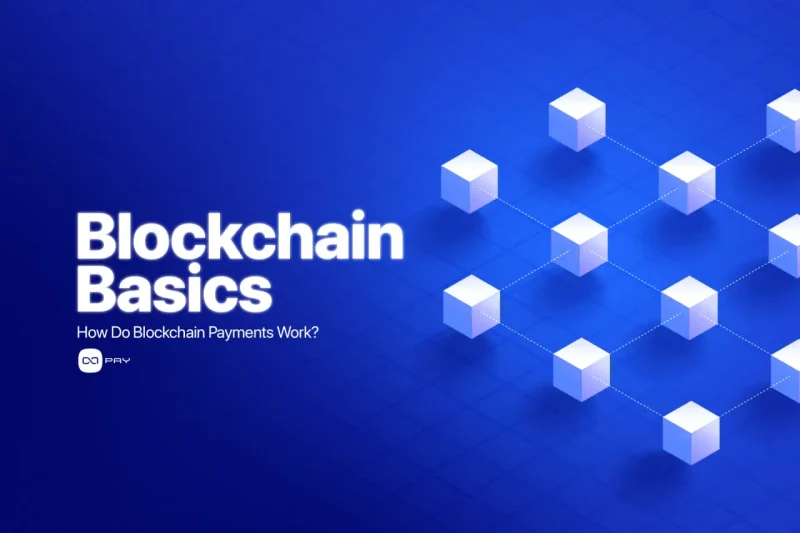
Blocks make history easier to order, verify, and protect against unnoticed changes
Transactions usually arrive continuously, but a network needs an ordered record. Many blockchain systems group accepted transactions into blocks. Each block identifies or commits to the preceding block, which creates a chronological structure.
The cryptographic connection between blocks makes historical modification visible. If earlier data changes, the resulting hashes or commitments change. Later references no longer match, and validating nodes can reject the altered history.
Bitcoin’s developer guide describes its blockchain as an ordered and timestamped public transaction record. The record helps protect against double spending and modification of earlier transactions. Ethereum also batches transactions into blocks and links each block to previous history through cryptographic commitments, as explained in its block documentation.
A chain therefore provides more than storage. It provides an auditable sequence. The system can explain not only what the current state is, but also which accepted changes produced it.
The transaction log and the current state are related, but they are not the same thing
A transaction history records change. The current state records the result of all valid changes up to a particular point. This distinction is essential because different blockchains represent state differently.
Bitcoin uses unspent transaction outputs. A spendable unit exists as an output created by an earlier transaction and not yet consumed by a later one. The Bitcoin transaction guide explains how transactions consume existing outputs and create new outputs.
Ethereum uses an account-based state. Its EVM documentation describes a large state structure containing accounts, balances, contract code, and storage. Valid transactions move the system from one state to another according to the execution rules.
Permissioned systems can separate these concepts more visibly. Hyperledger Fabric’s ledger documentation describes a blockchain history alongside a world-state database that stores current values for efficient access.
Blockchain does not remove trust—it redistributes trust across rules, software, economics, and operations
“Trustless” is often misunderstood. Blockchain does not create a world without trust. It reduces the need to trust one record keeper with unilateral control over the ledger. Trust moves into a broader system.
This redistribution changes risk rather than eliminating it. A user may depend less on one bank ledger. The user may instead depend on secure keys, correct software, sufficient network participation, honest data inputs, and clear recovery procedures.
A useful blockchain analysis therefore asks more than “Is it decentralized?” It asks which powers are distributed and which dependencies remain concentrated. It also identifies what must be trusted for the intended result to remain valid.
Validation checks the rules; consensus resolves which valid history becomes authoritative
Validation and consensus are related, but they solve different problems. Validation asks whether a transaction or block follows protocol rules. Consensus asks which acceptable sequence should be treated as the network’s shared history when several candidates exist.
A node may check signatures, available balances, transaction format, execution results, and block structure. Those checks prevent invalid state transitions. The agreement process then determines ordering and convergence.
Proof of Work, Proof of Stake, Byzantine fault-tolerant voting, delegated models, and permissioned ordering systems answer this second question in different ways. Their trade-offs affect finality, throughput, participation, censorship resistance, and the cost of rewriting history.
On-chain ownership usually means the recognized ability to authorize a future state change
Blockchain ownership is often described as “having coins in a wallet.” That phrase is convenient but technically incomplete. The asset record exists in the shared state. The wallet manages the credentials used to authorize transactions that affect that record.
In a native cryptocurrency system, the ledger may recognize that certain value can be spent only when a transaction satisfies a required cryptographic condition. In an account-based network, the state may associate a balance with an address and accept changes authorized by the relevant key or contract logic.
This creates a powerful form of digital control because the network can verify authorization without contacting a central account administrator. It also creates a hard responsibility: losing or exposing the authorization credentials can remove practical control over the asset.
Wallets manage authorization; the blockchain maintains the asset record
A private key is used to create a digital signature. The signature proves that a request was authorized by the holder of the corresponding secret without revealing that secret. Ethereum’s account documentation explains the relationship between accounts and public-key cryptography.
A wallet can generate keys, display addresses, construct transactions, sign requests, track balances, and connect to network services. Some wallets keep keys on the user’s device. Custodial services may control keys for the customer. Smart-contract wallets can enforce additional authorization rules.
Therefore, “self-custody” is not simply a user-interface choice. It means the user or organization owns the responsibility for key security, backup, recovery, signing policy, and transaction verification.
Native coins and tokens can both represent value, but they exist at different system layers
A native coin belongs to the protocol’s base accounting system. Bitcoin exists through Bitcoin’s transaction rules. Ether exists inside Ethereum’s native account and execution model. These assets are also commonly used to pay network fees.
A token is usually defined by program logic operating on top of a blockchain. For example, the ERC-20 standard defines common functions for token balances, transfers, supply, and approvals. The token contract updates its own records within the wider Ethereum state.
This distinction matters because a familiar asset symbol does not identify the complete payment route. The network, token contract, address format, fee asset, and settlement behavior all matter. OxaPay’s supported-currencies documentation exposes currency metadata together with network details, while the supported-networks endpoint lists blockchain networks separately.
A blockchain can prove what its rules accepted—not whether every external claim was correct
A blockchain can provide strong evidence about its own internal record. It can show that a transaction was signed, validated, ordered, included, and retained under the network’s rules. It can show which state followed from those accepted events.
It cannot independently prove that a shipped product was genuine or that a real-estate transfer was legally valid. It also cannot verify an oracle’s weather data or an issuer’s reserve claim without external evidence. Those facts enter through people, institutions, devices, contracts, auditors, or data services.
Privacy also requires care. Public blockchains can make transactions widely observable. Pseudonymous addresses do not automatically create privacy. NIST notes the tension between tamper-resistant records and privacy requirements in its privacy-enhancing distributed-ledger project.
Public and permissioned blockchains distribute authority in different ways
Public permissionless networks usually allow broad participation in transaction submission, verification, or economic security. Their rules are designed for an open environment where participants may not know or trust one another.
Permissioned networks restrict participation through identity, organizational control, membership policies, or authorized validators. Hyperledger Fabric, for example, is an enterprise permissioned distributed-ledger platform with configurable governance and membership.
| Question | Public permissionless | Permissioned |
|---|---|---|
| Who may participate? | Usually broad or open participation | Approved identities or organizations |
| How is trust distributed? | Protocol, economics, and open verification | Governance, membership, and authorized peers |
| Typical priority | Neutral access and censorship resistance | Privacy, performance, and organizational control |
Neither model is universally superior. The correct design depends on who must verify and update the record. It also depends on dispute governance and whether open participation is a requirement or a risk.
Blockchain is useful when several parties need shared state but do not want one party to control the only record
Blockchain is not automatically the best database. A conventional database is often faster, cheaper, easier to correct, and easier to keep private when one trusted operator already owns the process.
A blockchain becomes more relevant when independent participants need to submit or verify changes. It also helps when history must be auditable and unilateral rewriting is unacceptable. A shared operator may otherwise create excessive control or dependency.
The system must also justify the cost of replication, consensus, key management, governance, monitoring, and integration. A project that needs only a shared spreadsheet should not become a blockchain project because the word sounds more advanced.
In payments, blockchain provides the settlement record while payment infrastructure provides business meaning
A blockchain can record that value moved under its rules. A merchant still needs to identify the customer and the related order. The business must also verify the asset, network, amount, and safe time for fulfillment.
This is the role of payment infrastructure. It connects blockchain state to invoices, order identifiers, exchange-rate logic, status updates, accounting records, and support workflows.
В OxaPay Merchant Service documentation describes tools such as crypto invoicing, white-label payment flows, and static addresses. For custom systems, the OxaPay Merchant Service and Merchant API provide a business-facing layer. They support the creation and tracking of payment flows across supported assets and networks.
Five shortcuts create most misunderstandings about blockchain
The clearest way to understand blockchain is as a shared state machine with an auditable memory
Participants create signed requests. Nodes validate those requests. The network orders valid changes. Blocks or equivalent commitments preserve the accepted history. Every participant can then derive or verify the current state.
Digital ownership emerges inside this process. The network recognizes which conditions must be satisfied before a recorded asset can move. Keys, contracts, multisignature rules, or other authorization systems provide the ability to request that move.
This mental model also explains blockchain’s limits. The system can coordinate internal truth with high integrity. It cannot remove every external dependency, guarantee privacy, correct bad inputs, or replace business and legal processes by itself.
Protocol and institutional sources used in this analysis
The technical definitions and distinctions in this article are grounded in official protocol documentation and institutional publications. These sources provide deeper treatment of blockchain structure, transactions, state, cryptography, and ledger design.