Blockchain transparency has become one of the strongest drivers of trust in paiements cryptographiques. Traditional finance relied on closed ledgers and delayed confirmations, asking customers to accept outcomes they could not verify. Blockchain replaces that model with public, immutable records that anyone can check in seconds using a simple TXID. This shift from institutional trust to verifiable proof transforms each transaction into a clear, visible event, creating deeper and more durable confidence for both users and merchants.
From Institutional Trust to Mathematical Proof
For decades, financial systems relied on institutional authority. Banks and processors held private ledgers, decided when a payment was “confirmed,” and expected users to trust their internal records without ever seeing how transactions were validated. Trust flowed upward toward institutions because customers had no way to verify anything themselves.
Blockchain reversed that model. Instead of depending on a closed ledger, every transaction is recorded on a public, immutable network that anyone can check with a TXID. Verification becomes instant and independent, not delegated to intermediaries. This shift from institutional trust to mathematical proof reduces disputes, strengthens confidence, and gives both customers and merchants a clear, verifiable view of every payment.
Visibility as a Feature, Not a Side Effect
Transparency in blockchain isn’t accidental, it’s built into its DNA. Each transaction produces a traceable, immutable record linking the sender, receiver, amount, and timestamp. Unlike traditional gateways that merely report status like “pending” or “complete,” blockchain payments reveal the full lifecycle of a transaction.
This visibility benefits everyone involved:
- Users can verify payments instantly using the transaction hash (TXID).
- Merchants reduce disputes because confirmations are objective.
- Platforms gain credibility by showing proof instead of status messages.
On high-throughput networks like TRON, confirmations average around three seconds and more than forty million active addresses rely on this real-time transparency daily. This scale makes on-chain verification both normal and effortless.
Transparency as Fraud Prevention
Fraud survives where visibility is limited. Traditional payment systems rely on private ledgers and intermediary checks that create blind spots and make verification slow or uncertain. Blockchain removes those blind spots. Every transaction generates a permanent, public audit trail that prevents double-spending and falsified confirmations.
Industry research shows that transparent on-chain records greatly reduce opportunities for manipulation because data cannot be altered once confirmed. Binance Research notes similar patterns, highlighting how verifiable TXIDs eliminate much of the ambiguity that typically enables payment fraud.
Transparency here is more than a security feature, it is accountability built directly into the structure of the network.
Customer Confidence Through Clarity
Customers trust what they can see. Even when payments slow down because of network congestion, clear and visible progress keeps users confident and patient. Blockchain payments naturally provide this clarity by exposing each stage of a transaction as it moves across the network.
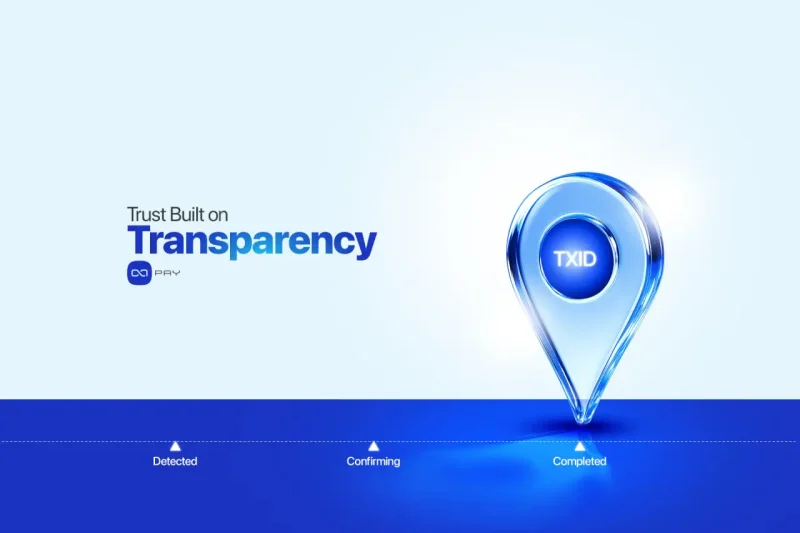
A typical flow is simple and intuitive:
- Detected: The transaction appears on-chain.
- Confirming: Validators are processing it.
- Completed: The payment is fully confirmed.
By turning complex blockchain activity into an understandable sequence of steps, transparency becomes part of the user experience itself rather than a hidden technical detail. Clear visibility reassures customers at every moment, especially during delays.
Comparing Transparency: Blockchain vs Traditional Payments
| Fonctionnalité | Paiements traditionnels | Blockchain Networks | Winner |
| Confirmation Time | 24–72 hours | Seconds to minutes | Blockchain |
| Visibilité | Private internal systems | Public TXID – fully verifiable | Blockchain |
| Chargebacks & Disputes | Common, reversible | None – immutable ledger | Blockchain |
| Fee Logic | Percentage-based, multi-intermediary | Network fee only (gas) | Blockchain |
| Audit Trail | Closed databases | Permanent public ledger | Blockchain |
| Trust Mechanism | “Trust the institution” | “Verify on-chain” | Blockchain |
| Real-time Status | Limited status labels | Full lifecycle visibility | Blockchain |
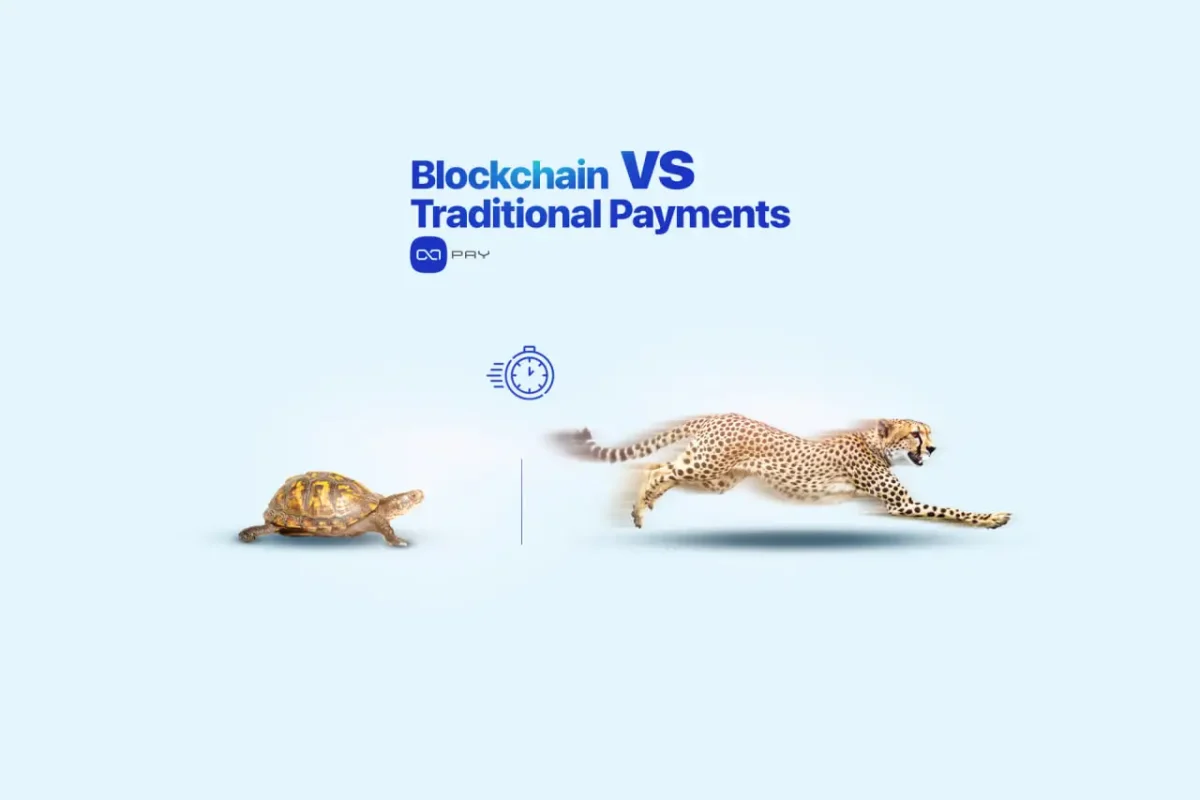
Crypto’s advantage isn’t just speed, it’s verifiable speed. Users can see where their money is at every moment, removing ambiguity and improving satisfaction.
Transparency and Regulatory Alignment (KYC/AML)
A common misconception is that transparency conflicts with privacy or regulatory compliance. In reality, blockchain networks naturally align with global KYC (Connaissez votre client) et LBC (Lutte contre le blanchiment d'argent) standards. On-chain data is visible, but identities remain pseudonymous, creating a balance between verification and privacy.
Modern payment systems increasingly rely on this model: transparency provides verifiable auditability for regulators, while pseudonymity protects individual users. The result is a responsible transparency framework that is open enough for oversight yet private enough to keep sensitive identity details protected.
Data Integrity: The Foundation of Trust
Transparency has value only when the underlying data is accurate. True data integrity means the information users and merchants see must precisely reflect what is happening on-chain. When blockchain confirmations and displayed payment states remain perfectly aligned, transparency becomes more than a concept, it becomes a reliability standard. Consistent accuracy reduces uncertainty, prevents misinterpretation, and strengthens user confidence throughout the entire payment process.
Transparency as Brand Differentiation
For merchants, offering transparent payment tracking is more than a technical improvement, it is a competitive advantage. Businesses that allow customers to verify payments publicly signal accountability and honesty by default.
Customers immediately recognize this difference. A store that enables open verification communicates a simple message:
“We have nothing to hide.”
That subtle but powerful signal builds brand credibility far more effectively than marketing language ever could.
How OxaPay Puts Transparency Into Practice
Everything discussed so far becomes meaningful only when applied in real payment flows. Passerelle cryptographique OxaPay applies these principles across its infrastructure by synchronizing on-chain data with user-facing payment states in real time. Each transaction is monitored from the moment it appears on-chain to its final confirmation, ensuring the dashboard, API responses, and payment pages always reflect the exact blockchain state.
This includes automatic detection of incoming transfers, confirmation tracking across multiple networks, clear status transitions, and verifiable TXIDs for both customers and merchants. Even during network delays, the system updates states instantly so users always see accurate, real-time progress without manual checks.
Conclusion
Blockchain transparency has fundamentally changed trust: it replaced “believe us” with “check it yourself.” Customers no longer accept hidden ledgers and delayed confirmations; they demand visible, immutable proof, and they reward the merchants who deliver it. The outcome is simple: fewer disputes, faster settlements, higher retention, and confidence that lasts far beyond a single transaction. In today’s digital economy, clarity is the real competitive edge.
Utiliser OxaPay to bring this transparency into your own payment flow and give customers the clarity they expect from modern crypto transactions.