Digital Ownership on Blockchain
A practical explanation of what it means to own or control a blockchain asset. It separates ledger records, cryptographic authority, custody, token rights, legal ownership, recovery, and the operational meaning of ownership in payments.
Digital ownership is the recognized ability to control what can happen to a digital asset
On a blockchain, ownership is not the possession of a file stored inside a wallet. The network maintains a shared record. That record identifies which conditions must be satisfied before an asset can be spent, transferred, used, or otherwise changed.
A person has practical control when they can satisfy those conditions. In a simple wallet, that usually means producing a valid digital signature with a private key. In other systems, control may require several signatures, contract logic, time limits, recovery rules, or approval from another account.
This is why the word ownership needs care. Blockchain systems can prove that an authorized state change followed protocol rules. They do not automatically prove identity, lawful title, beneficial ownership, or rights over an external object.
La NIST Blockchain Technology Overview describes blockchains as distributed ledgers that use cryptography and consensus to maintain tamper-evident records. Digital ownership begins with that record, but it becomes meaningful only when we also understand authorization and rights.
Digital ownership becomes clearer when record, control, and rights are separated
Many explanations mix three different questions. The first asks what the network records. The second asks who can authorize a change. The third asks who has a lawful or contractual claim to the asset or to anything linked to it.
These layers often align, but not always. A self-custody user may control a native coin and also be its beneficial owner. A custodian may control assets for clients. A stolen key may give a thief technical control without lawful ownership. A token holder may control a token that represents only a limited contractual claim.
A blockchain asset exists as part of shared state, not as an object inside the wallet
A wallet does not contain coins in the way a physical wallet contains cash. It manages credentials, addresses, transaction construction, signing, and views of blockchain data. The network state records the spendable value or token relationship.
In Bitcoin, the relevant record is a set of unspent transaction outputs. In Ethereum, the state includes accounts, balances, contract code, storage, and token data maintained by contracts. Other networks use different structures, but the ownership principle is similar: the network recognizes a rule for changing state.
This distinction explains why the same asset can appear in several wallet applications. Each compatible wallet can derive or import the same control credentials and read the same public state. The wallet interface changes. The underlying ledger record does not move between applications.
En OxaPay, crypto wallet guide explains the practical difference between custodial and non-custodial wallet use. The deeper technical point is that either model provides access to records maintained outside the wallet application itself.
In a UTXO system, control means satisfying the spending condition attached to an output
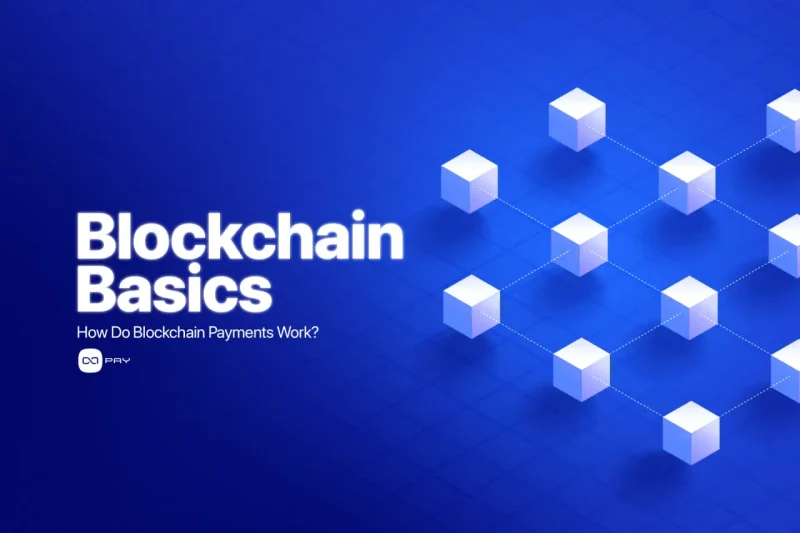
Bitcoin does not maintain one editable account balance for each user. It tracks unspent transaction outputs, commonly called UTXOs. Each output contains value and a condition that must be satisfied before that value can be used in a later transaction.
A common condition requires a valid signature associated with a specific key. More complex scripts can require several signatures, a time delay, a hash preimage, or a combination of conditions. The network does not need to know the person’s civil identity. It checks whether the spending proof satisfies the script.
La Bitcoin whitepaper describes electronic coins through chains of digital signatures. Modern Bitcoin output scripts are more expressive than that early description, but the core model remains useful: control is exercised by authorizing the next valid spend.
In an account system, control depends on the account type and its authorization logic
Account-based networks maintain state associated with addresses or contract accounts. A simple externally owned account is controlled through a private key. A contract account is controlled by code and changes state only when its programmed conditions are met.
Ethereum’s account documentation separates externally owned accounts from contract accounts. Both can hold assets and interact with contracts, but they do not authorize actions in the same way.
This difference matters because digital ownership does not always reduce to one secret key. A contract wallet can require multiple approvers, spending limits, delayed withdrawals, session permissions, recovery guardians, or different rules for different actions.
Account state can also be changed indirectly. A token contract may update an internal balance mapping after receiving an authorized call. The native network account and the token balance are related, but they are not the same record.
A key authorizes; an address identifies a destination or control condition
A private key is secret signing material. A public key allows others to verify signatures. An address is usually derived from a public key, script, or account definition. The details vary by network and address format.
An address should not be treated as a verified personal identity. One person can control many addresses. Several people can jointly control one address. A custodian can manage addresses for many clients. A contract address may be governed by code rather than one key.
OxaPay’s articles on claves públicas y privadas y crypto address types provide practical explanations of these components and the risks of confusing an asset, account, public key, and address.
Blockchain control can be shared, delegated, limited, delayed, or recovered
The simplest ownership model is one key controlling one account. Production systems often need more resilient rules. A business treasury may require two of three approvers. A smart account may impose daily limits. A protocol may allow another contract to spend only a defined amount.
Ethereum’s work on account abstraction shows how account validation can move from fixed key rules toward programmable smart-account logic. Greater flexibility can improve recovery and policy control, but it also introduces contract, configuration, and governance risk.
Custody determines who operates the control mechanism and who carries the recovery burden
Self-custody means the user or organization directly manages the credentials and procedures needed to authorize transactions. Custodial ownership means a service provider operates the keys or account system for the client.
Custody is not a simple choice between freedom and dependence. It reallocates responsibility. Self-custody removes reliance on a custodian but creates backup, access-control, succession, device-security, and incident-response duties. Custody reduces direct key management but adds provider, account, contractual, segregation, and insolvency considerations.
| Model | Who operates control? | Main strength | Main exposure |
|---|---|---|---|
| Single-key self-custody | One user or device | Direct, simple control | Single point of loss or compromise |
| Multisignature | Several independent signers | Shared approval and resilience | Coordination and recovery complexity |
| Smart contract account | Configured keys, modules, or guardians | Programmable policy and recovery | Contract and configuration risk |
| Custodial account | Service provider | Simpler user operations | Provider and account dependency |
En OxaPay, wallet security practices for merchants are useful because merchant custody is an operating system, not only a wallet selection. Access rights, backups, approval limits, withdrawals, and staff changes all affect control.
A native coin and a token can share a wallet address while using different ownership records
A native coin belongs to the base protocol. Bitcoin records BTC through UTXOs. Ethereum records ETH in account state. Transaction fees and protocol incentives usually use the network’s native asset.
A token is normally defined by contract or application logic running on an existing network. An ERC-20 contract, for example, maintains balances and exposes standard transfer and approval functions. The ERC-20 standard makes those functions interoperable across wallets and applications.
This means one address can have a native balance and many token balances. The private key may authorize calls from that address, but each token contract decides how its own state can change. Some contracts can pause transfers, freeze addresses, mint supply, burn tokens, or assign administrative roles.
Before accepting an asset, merchants and developers should verify both its currency identity and its network identity. OxaPay provides current supported currency data y supported network data for payment integrations.
Owning a token does not automatically mean owning the asset, content, or company linked to it
A token is an on-chain record. Its economic or legal meaning comes from contract code, issuer terms, application rules, and sometimes external law. Two technically similar tokens can represent very different rights.
La ERC-721 standard provides an interface for tracking and transferring unique tokens. It can record which address controls a token identifier. It cannot, by itself, establish copyright, authenticity of an external object, or enforce an off-chain promise.
Technical control and legal ownership can support each other without being identical
Blockchain systems can provide strong evidence of state, authorization, and transaction history. Legal systems decide whether that evidence creates, transfers, or proves property rights in a specific jurisdiction.
La UNIDROIT Principles on Digital Assets and Private Law make a useful distinction between control and proprietary rights. A change of control may accompany a transfer of ownership, but one does not automatically prove the other.
Consider a custodian. It may hold the keys and exercise technical control while clients retain beneficial or proprietary rights under the custody agreement and applicable law. A thief may gain control through a stolen key without gaining lawful title. A court order may affect legal rights even when an on-chain record has not changed.
This boundary is especially important for tokenized real-world assets. The blockchain can record token control. The connection to land, shares, invoices, commodities, or intellectual property depends on a reliable legal and operational structure outside the chain.
A bridged token may represent a claim on an asset controlled somewhere else
When value moves between blockchains, the original asset often does not literally cross networks. A bridge may lock or control an asset on one chain and issue a corresponding representation on another.
The holder controls the wrapped or bridged representation according to the destination chain’s rules. Redemption still depends on bridge contracts, validators, custodians, message verification, liquidity, or governance. The ownership path therefore contains more than one control system.
Ethereum’s bridge documentation highlights smart-contract and systemic risks associated with wrapped assets. A token can appear fully transferable while the backing or redemption mechanism carries separate risk.
Strong digital control becomes dangerous when recovery and authority are poorly designed
A private key can be copied, stolen, exposed, or destroyed. A user can sign a malicious transaction. A contract can contain a bug. An administrator can misuse an upgrade key. A custodian account can be compromised even when the underlying blockchain remains secure.
Recovery design should match the value and the owner. An individual may use protected backups and separate devices. A business may require role-based access, multisignature, withdrawal limits, allowlisted destinations, approval logs, and tested staff-offboarding.
Recovery also changes the trust model. A guardian, administrator, custodian, or upgrade authority can restore access, but that party may also gain power over the asset. The design question is not whether trust exists. It is where authority is placed and how misuse is limited.
For merchants, ownership determines who can pay, who receives value, and who controls settlement
A crypto payment moves control from a payer-side condition to a recipient-side condition. The commercial process adds more questions: which asset and network were expected, which address belongs to the payment, when the transfer is accepted, and where the received value will be controlled after settlement.
A merchant does not need to expose raw custody complexity to every customer. Payment infrastructure can generate the correct payment request, identify the required asset and network, monitor the transfer, and map the blockchain record to an order.
Ownership still matters after payment. The merchant must know whether funds remain inside a provider account, move to an external treasury wallet, convert to another asset, or require several approvals before withdrawal. Those choices affect liquidity, security, accounting, and recovery.
| Payment question | Ownership meaning | Operational control |
|---|---|---|
| Did the payer authorize the transfer? | The transaction satisfies the source control condition. | Validate transaction, asset, network, and payment reference. |
| Who can spend the received asset? | The destination condition identifies the new control path. | Define provider access, wallet custody, and withdrawal approvals. |
| What exactly was received? | Asset identity includes contract, network, and token rules. | Prevent wrong-network and look-alike-token acceptance. |
| What happens after receipt? | Control may remain, convert, transfer, or become shared. | Approve settlement, conversion, retention, and treasury policy. |

Evaluate digital ownership by tracing authority from the asset record to the final recovery path
A useful ownership review does not stop at “who has the private key?” It follows every mechanism that can change, block, delegate, recover, or reinterpret control.
- Identify the exact asset record. Confirm native coin, contract address, token identifier, network, and whether the asset is bridged.
- Identify the current control condition. Determine which key, script, contract, signer set, or custodian can authorize a change.
- Map delegated powers. Review allowances, operators, modules, session keys, administrators, and upgrade rights.
- Map custody and beneficial ownership. Record who operates the keys and who is entitled to the economic benefit.
- Read the rights layer. Verify issuer terms, redemption, metadata, legal agreements, and external-asset linkage.
- Test failure and recovery. Model lost credentials, compromised signers, frozen contracts, provider failure, and staff changes.
- Define the next state. Decide what control, settlement, and recordkeeping should exist after a payment or transfer.
Common ownership shortcuts hide important technical and legal differences
Think of ownership as a stack of records, authority, custody, rights, and recovery
Digital ownership is strongest when every layer points in the same direction. The ledger clearly identifies the asset. The control rule is understood. Authorization is protected. Custody responsibilities are assigned. External rights are documented. Recovery does not create uncontrolled authority.
The blockchain contributes a shared and verifiable state machine. It can show which transaction the network accepted and which condition now controls the asset. It cannot replace every legal, commercial, operational, and identity system surrounding that asset.
Informational content only. Property, custody, tax, accounting, consumer, securities, and other legal consequences depend on the asset, agreement, activity, and jurisdiction.